Take a photo of a barcode or cover
2.05k reviews by:
mburnamfink


The Great Man theory of history has been out of favor for a long time, but if there was ever a case that proved the rule, it would be Napoleon. Born to minor nobility in Corsica, an insignificant and backwards island in the Mediterranean caught between French and Italian influences, Napoleon would rise through the ranks of the French Republican Army through ambition and immense military talent to Emperor of France, and then conqueror of most of Europe. Napoleon moved from triumph to triumph, until the disastrous invasion of Russia, the subsequent harrowing 1814 defensive campaign, and his final throw of the dice at Waterloo. In that interval, he redrew the map of Europe, wrote a new code of law and rational administration that swept away the last vestiges of feudalism, and laid the basis for modernity. Without Napoleon, the world would look very different.
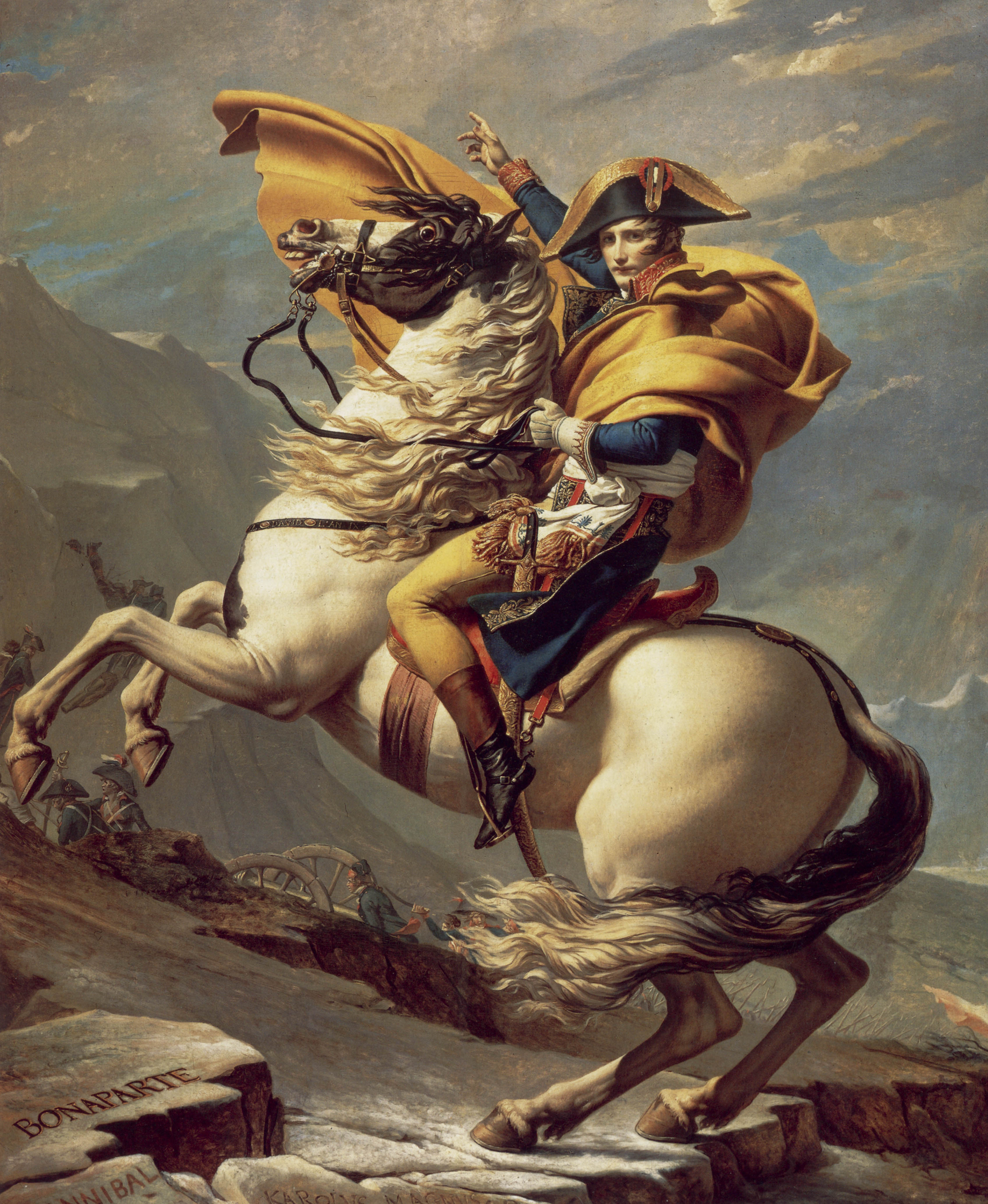
Napoleon Crossing the Alps by Jacques-Louis David.
As Roberts lays out in the introduction, the sheer volume of work about Napoleon makes scholarship difficult. He estimates that one book about Napoleon's life has been published per day since Napoleon's death. In English history, Napoleon was the great enemy, the "Corsican Ogre", while for the French he was the greatest national hero since Joan of Arc. Many cotemporaneous memoirs by people close to Napoleon were ghostwritten and self-serving collections of lies. On the fortunate side, Napoleon was an inveterate letter writer, drafting between 5 and 10 letters a day, both administrative and personal, and all of those letters have recently been collected and published by the French archives. Napoleon frequently exaggerated in his letters, particularly estimate his successes on the day of a battle, but they are the truest and most accurate picture of the man.
Some of the most fascinating parts of the book concern Napoleon the man, where Roberts describes the overwrought essays of a youth trying to make sense of the French Revolution and his own place in a rapidly changing world, and an exiled and dying Napoleon on St. Helena. While supremely self-assured, Napoleon was a man of good humor, passion, immense energy and attention to detail, and real charisma, a far cry from the megalomaniac that he is often portrayed as. A second area that I found fascinating was Napoleon in Egypt, where he flirted with converting to Islam and leading an Arab army through Persia to British India.
Napoleon the general and the emperor come through less well, simply because of the scale of both subjects. With so many battles, it is hard to give them sufficient detail. Roberts captures the genius of Napoleon's corps systems and 'advantage of the central position', where he used the operational agility of his armies to combine and attack his enemies individually before he could respond, but beyond that, the battles are often bloody messes. Administration is perhaps too complex of a subject for a biography to cover in detail.
While a great man, Napoleon's primary perspective as a soldier proved his undoing. The ongoing war with England over Napoleon's Continental System of economic blockade wore away at the financial foundations of his empire. While he reached his zenith with the Treaty of Tilsit, which bound essentially all European powers but Portugal and Sicily to his cause, Napoleon was unable to sustain a peaceful alliance. Pursuit of victory through decisive battle proved elusive in Russia and Spain, and both the Prussians and the Austrians kept returning from their defeats, having learned painful lessons about victory.
Worse, Napoleon proved unable to cultivate human talent. None of his Marshals matched his own strategic brilliance. As his old friends died in battle, no one replaced them, and lack of good advice lead to overconfidence driven disasters in Spain and Russia. Foreign minister Talleyrand betrayed him in complex intrigues. His brothers, who he placed on thrones across Europe, never achieved more than mediocrity. Marshals Bernadotte and Murat both were given thrones by Napoleon, and both joined the 6th Coalition against him.
If I'm going to blow bookrace 2024 in April, no better way to do it than with a 1000 page biography.
Napoleon Crossing the Alps by Jacques-Louis David.
As Roberts lays out in the introduction, the sheer volume of work about Napoleon makes scholarship difficult. He estimates that one book about Napoleon's life has been published per day since Napoleon's death. In English history, Napoleon was the great enemy, the "Corsican Ogre", while for the French he was the greatest national hero since Joan of Arc. Many cotemporaneous memoirs by people close to Napoleon were ghostwritten and self-serving collections of lies. On the fortunate side, Napoleon was an inveterate letter writer, drafting between 5 and 10 letters a day, both administrative and personal, and all of those letters have recently been collected and published by the French archives. Napoleon frequently exaggerated in his letters, particularly estimate his successes on the day of a battle, but they are the truest and most accurate picture of the man.
Some of the most fascinating parts of the book concern Napoleon the man, where Roberts describes the overwrought essays of a youth trying to make sense of the French Revolution and his own place in a rapidly changing world, and an exiled and dying Napoleon on St. Helena. While supremely self-assured, Napoleon was a man of good humor, passion, immense energy and attention to detail, and real charisma, a far cry from the megalomaniac that he is often portrayed as. A second area that I found fascinating was Napoleon in Egypt, where he flirted with converting to Islam and leading an Arab army through Persia to British India.
Napoleon the general and the emperor come through less well, simply because of the scale of both subjects. With so many battles, it is hard to give them sufficient detail. Roberts captures the genius of Napoleon's corps systems and 'advantage of the central position', where he used the operational agility of his armies to combine and attack his enemies individually before he could respond, but beyond that, the battles are often bloody messes. Administration is perhaps too complex of a subject for a biography to cover in detail.
While a great man, Napoleon's primary perspective as a soldier proved his undoing. The ongoing war with England over Napoleon's Continental System of economic blockade wore away at the financial foundations of his empire. While he reached his zenith with the Treaty of Tilsit, which bound essentially all European powers but Portugal and Sicily to his cause, Napoleon was unable to sustain a peaceful alliance. Pursuit of victory through decisive battle proved elusive in Russia and Spain, and both the Prussians and the Austrians kept returning from their defeats, having learned painful lessons about victory.
Worse, Napoleon proved unable to cultivate human talent. None of his Marshals matched his own strategic brilliance. As his old friends died in battle, no one replaced them, and lack of good advice lead to overconfidence driven disasters in Spain and Russia. Foreign minister Talleyrand betrayed him in complex intrigues. His brothers, who he placed on thrones across Europe, never achieved more than mediocrity. Marshals Bernadotte and Murat both were given thrones by Napoleon, and both joined the 6th Coalition against him.
If I'm going to blow bookrace 2024 in April, no better way to do it than with a 1000 page biography.

I've often said that if I were a data scientist with lax ethics designing an app to make people miserable, I'd make Tinder. Fortunately for all y'all, I'm a data scientist with decent ethics. But the swipe-judge-pay up model of modern data apps, where people are locked down to six pictures, a handful of generic prompts, and the whole thing is mediated via algorithmic secret sauce to maximize engagement and profit via swipe activity is deeply fucked up. Logan Ury is the Harvard-educated (

I've got mixed feelings about personality tests, in that I love categories and systematization, and I believe the whole process is psuedoscientific bullshit of the highest order, one step removed from searching for portents in sheep entrails. Are you seriously telling me that a survey of white Americans made during WW2 contains the 16 archetypical personalities?

Can't find my good Myers-Briggs meme showing all the types as the kind of malicious person they are, so have a meme of MBTI Wojaks
Strengths Finders is a little more developed than the MBTI, based on the Strengths Psychology approach of Don Clifton. There are 34 qualities which a person can have, and based on answer a 200 question survey of the form "Would you rather X or Y", the test figures out how to order your strengths. Not surprisingly, I scored a bunch of intellectual and analytical traits, but I also scored very high on relationships, like because I answered that I'd rather be with a small group of friends rather in any other social situation. This may have skewed the results.
The reason why this is three stars is that for your $40 you get a short book with a brief description of each strength and how they approach different workplace situations, and a one use code to take the Gallup Strength Finder test. I "borrowed" this book from my mom, who got it as part of an executive search for a non-profit, and it was moderately interesting, but is it worth your $40? An ordinary person doesn't need this, a good manager already knows it, and a bad manager is going to ignore it.
Can't find my good Myers-Briggs meme showing all the types as the kind of malicious person they are, so have a meme of MBTI Wojaks
Strengths Finders is a little more developed than the MBTI, based on the Strengths Psychology approach of Don Clifton. There are 34 qualities which a person can have, and based on answer a 200 question survey of the form "Would you rather X or Y", the test figures out how to order your strengths. Not surprisingly, I scored a bunch of intellectual and analytical traits, but I also scored very high on relationships, like because I answered that I'd rather be with a small group of friends rather in any other social situation. This may have skewed the results.
The reason why this is three stars is that for your $40 you get a short book with a brief description of each strength and how they approach different workplace situations, and a one use code to take the Gallup Strength Finder test. I "borrowed" this book from my mom, who got it as part of an executive search for a non-profit, and it was moderately interesting, but is it worth your $40? An ordinary person doesn't need this, a good manager already knows it, and a bad manager is going to ignore it.

Nutureshock is a fascinating synthesis of the best available research by a pair of journalists on paradoxes in childrearing. Despite raising children for, well, as long as there have been people, there is a lot of diversity of opinion about how best to do it. Even with decades of research, we still don't really know how to best raise children.
The good news is that children are resilient. Short of outright abuse, it's hard to really mess a child up. The bad news is that children are resilient. There's very little evidence of any intervention or change in condition that leads to better outcomes for kids.
I will focus on some paradoxes. In the past 16 years since this book was first published, it's become broadly accepted that praising children for intelligence leads to fragile perfectionists, and that it is much better to praise children for grit.
Social aptitude is also a mixed bag. Increased social aptitude is associated with lying in very small children, around five or six. In elementary school, children with high social aptitude score very high in both empathetic and relational aggression, using a mixture of kindness and cruelty to shape the norms and social hierarchy of their classrooms. This extends into the teenage years. While most parents believe that their teens would talk to them about anything, teens routinely lie about topics from the serious, like drug and alcohol use and older boyfriends, to the medium, like is homework done, to the irrelevant, like what you did after school, when the options are hang out at the mall or the park.
What does strike as true through the paradox is that teens arguing is a sign of respect, not disrespect. What is important is not to be permissive or strict, but to have a finite number of well-enforced rules, and an open and contextual process for debating them so that teens feel like participants in their own growth and developing autonomy.
Another area where the book hits at conventional thinking is in gifted classrooms. Educational tracking is a third rail in American politics, where providing the best resources for talented kids runs into serious concerns about equity and racial discrimination. Either way, most districts start gifted programs far too early, with initial sorting at or before kingergarten. IQ scores vary wildly in young children over time, and don't really settle down until third grade.
Surveys of new curriculums and teaching methods to develop both cognitive and emotional skills is a litany of null results, except for the Tools of the Mind curriculum, which apparently boasted astonishing results. I use past tense, because a 2021 survey shows no result, again.
Finally, there are some real head scratchers. The authors have no opinion on corporal punishment, and note a racial divide, that White kids find spanking traumatic and Black kids don't. This hints at some of the worst "Black people don't experience pain the same way" racist psuedoscience, though the explanation, that African-American culture more broadly accepts getting whooped a few times as something that just happens, and that the moral exclusion from the family signified by spanking is what is traumatic, is at least cultural and not biological. I do wonder if the authors would be okay with me taking a swing at their kids.
As an older book, NutureShock has little to say about whatever the fuck has happened to kids since 2010. Jonathan Haidt blames cellphones, I think a little called the Global Financial Crisis might be to blame, but whatever the cause, mental health is DOWN and Skibidi Toilet is UP.

Plot from The Atlantic, End the Phone Based Childhood Now
And again, returning to the use of evidence, while the authors provide citations and ably discuss the research, epistemic closure on interactive kinds is impossible. Or without the STS jargon, as much as we try to determine the truth about people, they change as we examine them. For any topic as politically fraught as education, there will be ample room to disagree.
The good news is that children are resilient. Short of outright abuse, it's hard to really mess a child up. The bad news is that children are resilient. There's very little evidence of any intervention or change in condition that leads to better outcomes for kids.
I will focus on some paradoxes. In the past 16 years since this book was first published, it's become broadly accepted that praising children for intelligence leads to fragile perfectionists, and that it is much better to praise children for grit.
Social aptitude is also a mixed bag. Increased social aptitude is associated with lying in very small children, around five or six. In elementary school, children with high social aptitude score very high in both empathetic and relational aggression, using a mixture of kindness and cruelty to shape the norms and social hierarchy of their classrooms. This extends into the teenage years. While most parents believe that their teens would talk to them about anything, teens routinely lie about topics from the serious, like drug and alcohol use and older boyfriends, to the medium, like is homework done, to the irrelevant, like what you did after school, when the options are hang out at the mall or the park.
What does strike as true through the paradox is that teens arguing is a sign of respect, not disrespect. What is important is not to be permissive or strict, but to have a finite number of well-enforced rules, and an open and contextual process for debating them so that teens feel like participants in their own growth and developing autonomy.
Another area where the book hits at conventional thinking is in gifted classrooms. Educational tracking is a third rail in American politics, where providing the best resources for talented kids runs into serious concerns about equity and racial discrimination. Either way, most districts start gifted programs far too early, with initial sorting at or before kingergarten. IQ scores vary wildly in young children over time, and don't really settle down until third grade.
Surveys of new curriculums and teaching methods to develop both cognitive and emotional skills is a litany of null results, except for the Tools of the Mind curriculum, which apparently boasted astonishing results. I use past tense, because a 2021 survey shows no result, again.
Finally, there are some real head scratchers. The authors have no opinion on corporal punishment, and note a racial divide, that White kids find spanking traumatic and Black kids don't. This hints at some of the worst "Black people don't experience pain the same way" racist psuedoscience, though the explanation, that African-American culture more broadly accepts getting whooped a few times as something that just happens, and that the moral exclusion from the family signified by spanking is what is traumatic, is at least cultural and not biological. I do wonder if the authors would be okay with me taking a swing at their kids.
As an older book, NutureShock has little to say about whatever the fuck has happened to kids since 2010. Jonathan Haidt blames cellphones, I think a little called the Global Financial Crisis might be to blame, but whatever the cause, mental health is DOWN and Skibidi Toilet is UP.
Plot from The Atlantic, End the Phone Based Childhood Now
And again, returning to the use of evidence, while the authors provide citations and ably discuss the research, epistemic closure on interactive kinds is impossible. Or without the STS jargon, as much as we try to determine the truth about people, they change as we examine them. For any topic as politically fraught as education, there will be ample room to disagree.

The Suez Crisis is one of those weeks where decades almost happen, to paraphrase Lenin. The overall situation is rather unbelievable: two simultaneous international crises, one a meticulously planned fiasco and one a spontaneous revolt, right before an American Presidential election. And yet it all happened, and came very close to overturning 20th century order as we know it.
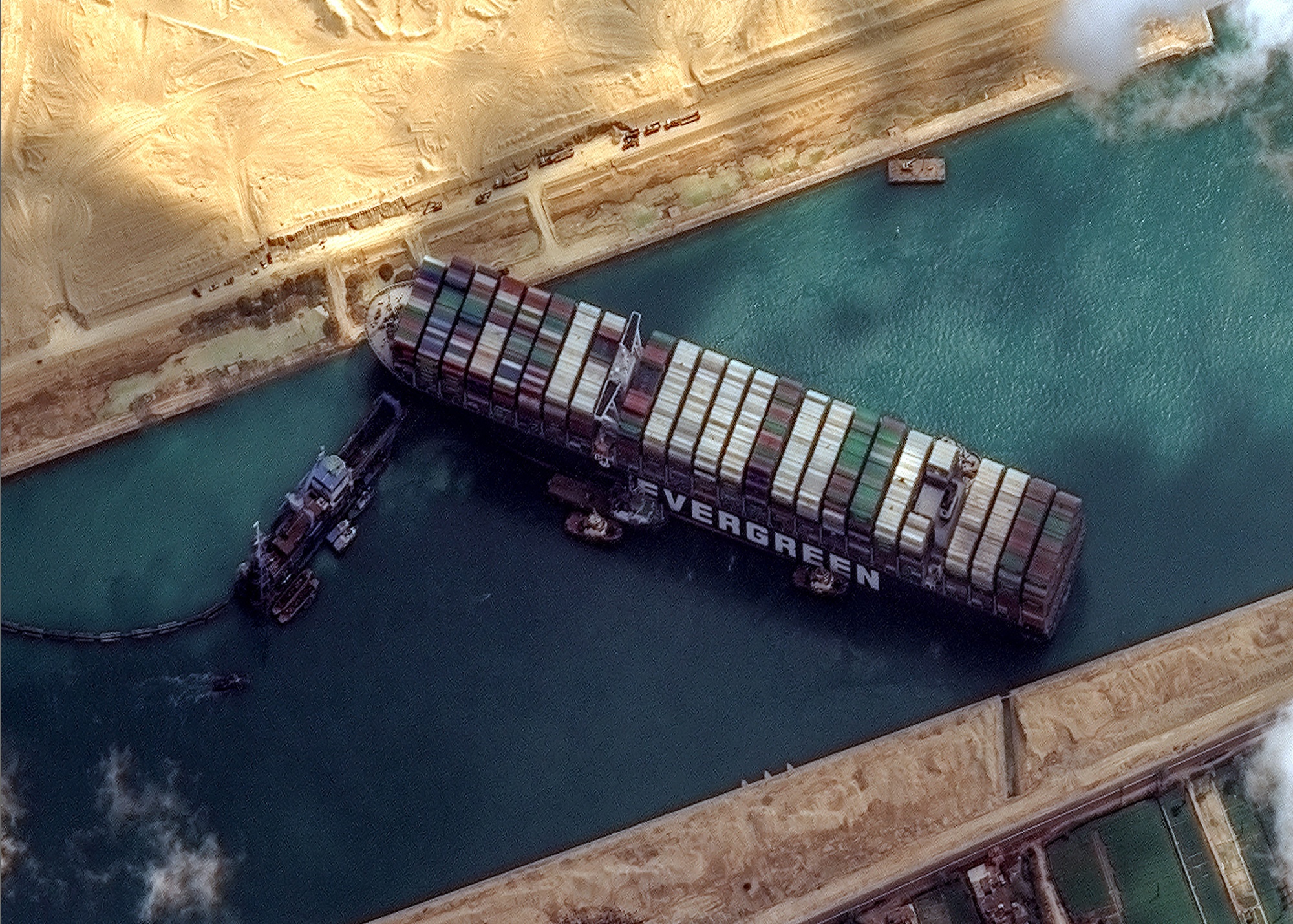
The Ever Given stuck in the Suez Canal in 2021. Don't cry because it's over. Smile because it happened.
Blood and Sand is a day-by-day account of the crisis, with events well contextualized with both their origins and later consequences. Tunzelmann frames the Suez Crisis as a personal battle of wills between British Prime Minister Anthony Eden and Egyptian President Gamal Abdul Nasser. Nasser was an ambitious able Egyptian patriot, and one of his actions as part of policy of de-colonization was nationalizing the Suez Canal. In practical terms, the effects were basically nil. Egypt ran the canal effectively, fees were stable, and Nasser even allowed the transit of Israel-bound cargo, though not Israeli flagged ship. But Suez was the trachea of the British economy, the channel through which vital supplies of Arab and Iranian oil flowed. What if Nasser's ambitions lead him to put pressure on that oil supply?
So Eden embarked on a scheme to seize control of the canal and hopefully depose Nasser, enlisting France and Israel as allies. Each nation had their own reason for participating. David Ben-Gurion of Israel identified Nassar as the most dangerous Arab leader to Israeli security, and saw this as an opportunity to attack with cover from great powers. France's Guy Mollet had problems with Algerian independence fighters who were supported by Nasser.
However, this unlikely alliance couldn't just do the thing. Rather, Eden orchestrated an elaborate plan where Israel would attack, and then the British and French forces would intervene as "peace-keepers". To carry this act of outright imperialism under a lawful casus belli, Eden wove an elaborate and farcical web of deceit, lying to the international community, the British people, his own ministers, and the officers who were to carry out the invasion.
By the time everything had come together, it was months after the nationalization of the Suez Canal, and in the midst of the Hungarian Revolution. A spontaneous nationalist gathering in Budapest was fired upon by the Secret Police, and rather than dispersing the crowd found their mustard and comprehensive threw the hardline Stalinists and Soviets out.
It's unclear that Khrushchev would have let Hungary leave the Warsaw Pact, but when he saw Britain and France lurch into Egypt, and America leave them out to dry in the UN, there was nothing stopping Soviet armored divisions from rolling back into Budapest and smashing the Hungarian Revolution permanently.
Meanwhile, the Suez invasion was haltingly failing its military objectives, and utterly failing in its political ones. Israeli troops struck deep into the Sinai, achieving their main geopolitical objective at the Straits of Tiran. The French and British amphibious attack on Port Said was dilatory and piecemeal. Egypt had sunk blockships throughout the canal well before forces from the alliance reached it. Meanwhile, Britain's allies through the Muslim world, including Jordan, Iraq, Iran, and Pakistan, all violently denounced it.
Eisenhower, in the midst of a tense reelection campaign and kept out of the l0op, refused to allow American power, prestige, or money to be used to support the British effort, in Tunzelmann's argument maintaining a moral clarity through the whole mess that was one of the higher points of American Cold War policy. With the pound falling and oil rationing in the future, Eden backed off, failing in all of his objectives and showing once and for all that the British Empire was done.
This is the first book I've read on Suez, so I'm not sure how well the personality-driven framing works, but it makes for an engaging read.
The Ever Given stuck in the Suez Canal in 2021. Don't cry because it's over. Smile because it happened.
Blood and Sand is a day-by-day account of the crisis, with events well contextualized with both their origins and later consequences. Tunzelmann frames the Suez Crisis as a personal battle of wills between British Prime Minister Anthony Eden and Egyptian President Gamal Abdul Nasser. Nasser was an ambitious able Egyptian patriot, and one of his actions as part of policy of de-colonization was nationalizing the Suez Canal. In practical terms, the effects were basically nil. Egypt ran the canal effectively, fees were stable, and Nasser even allowed the transit of Israel-bound cargo, though not Israeli flagged ship. But Suez was the trachea of the British economy, the channel through which vital supplies of Arab and Iranian oil flowed. What if Nasser's ambitions lead him to put pressure on that oil supply?
So Eden embarked on a scheme to seize control of the canal and hopefully depose Nasser, enlisting France and Israel as allies. Each nation had their own reason for participating. David Ben-Gurion of Israel identified Nassar as the most dangerous Arab leader to Israeli security, and saw this as an opportunity to attack with cover from great powers. France's Guy Mollet had problems with Algerian independence fighters who were supported by Nasser.
However, this unlikely alliance couldn't just do the thing. Rather, Eden orchestrated an elaborate plan where Israel would attack, and then the British and French forces would intervene as "peace-keepers". To carry this act of outright imperialism under a lawful casus belli, Eden wove an elaborate and farcical web of deceit, lying to the international community, the British people, his own ministers, and the officers who were to carry out the invasion.
By the time everything had come together, it was months after the nationalization of the Suez Canal, and in the midst of the Hungarian Revolution. A spontaneous nationalist gathering in Budapest was fired upon by the Secret Police, and rather than dispersing the crowd found their mustard and comprehensive threw the hardline Stalinists and Soviets out.
It's unclear that Khrushchev would have let Hungary leave the Warsaw Pact, but when he saw Britain and France lurch into Egypt, and America leave them out to dry in the UN, there was nothing stopping Soviet armored divisions from rolling back into Budapest and smashing the Hungarian Revolution permanently.
Meanwhile, the Suez invasion was haltingly failing its military objectives, and utterly failing in its political ones. Israeli troops struck deep into the Sinai, achieving their main geopolitical objective at the Straits of Tiran. The French and British amphibious attack on Port Said was dilatory and piecemeal. Egypt had sunk blockships throughout the canal well before forces from the alliance reached it. Meanwhile, Britain's allies through the Muslim world, including Jordan, Iraq, Iran, and Pakistan, all violently denounced it.
Eisenhower, in the midst of a tense reelection campaign and kept out of the l0op, refused to allow American power, prestige, or money to be used to support the British effort, in Tunzelmann's argument maintaining a moral clarity through the whole mess that was one of the higher points of American Cold War policy. With the pound falling and oil rationing in the future, Eden backed off, failing in all of his objectives and showing once and for all that the British Empire was done.
This is the first book I've read on Suez, so I'm not sure how well the personality-driven framing works, but it makes for an engaging read.

It is 1521 by the Frankish year, and Eli ben Abram is unsettled. His world is much like ours, with the key difference being that the Reconquista of Spain never happened, and the discovery of the New World was made by merchants working for the Caliphate of Cordoba, here to trade rather than conquer.
In Tenochtitlan, Eli is an outsider twice over: a Moor among the Mexica, a Jew among the Moors. He is married to the Nahua translator Malinala (an alternative version of Cortez' translator La Malinche). Amidst the bustling trade and human sacrifices of the city, Eli has carved out a little slice of peace, and a world where his boundaries are much wider than they are under the Caliph's Laws--boundaries so wide he can almost forget them.
Yet, rumors are unsettled. The Moorish fanatic Benmassoud is reported to have arrived on the coast with an army to end the trade in sinful goods like tobacco and chocolate. Plague is spreading through Tenochtitlan. Popocatépetl is erupting. The other merchants have requested that Eli gain an audience with the Emperor Moctezuma. And worst of all, Malinala is evasive, often absent on business she will not explain, and Eli will not ask.
Red Smoking Mirror is a fantastic piece of mood and setting, a mediation on exile and the ties that bind very different people. Yet it is also not really a novel, Eli is a great observer, but a shockingly passive protagonist. This is a really good book, but it's missing some element that would make it great.
In Tenochtitlan, Eli is an outsider twice over: a Moor among the Mexica, a Jew among the Moors. He is married to the Nahua translator Malinala (an alternative version of Cortez' translator La Malinche). Amidst the bustling trade and human sacrifices of the city, Eli has carved out a little slice of peace, and a world where his boundaries are much wider than they are under the Caliph's Laws--boundaries so wide he can almost forget them.
Yet, rumors are unsettled. The Moorish fanatic Benmassoud is reported to have arrived on the coast with an army to end the trade in sinful goods like tobacco and chocolate. Plague is spreading through Tenochtitlan. Popocatépetl is erupting. The other merchants have requested that Eli gain an audience with the Emperor Moctezuma. And worst of all, Malinala is evasive, often absent on business she will not explain, and Eli will not ask.
Red Smoking Mirror is a fantastic piece of mood and setting, a mediation on exile and the ties that bind very different people. Yet it is also not really a novel, Eli is a great observer, but a shockingly passive protagonist. This is a really good book, but it's missing some element that would make it great.

Nona the Ninth continues from Harrow in featuring a character who is continuous to Harrowhawk Nonagesimus from the first book, but also very much not the same person. While Harrow from book 2 deliberately edited her memory to avoid eating Gideon Nav's soul, Nona is a child in the same body. She's been alive for about six months, living an underground childhood in a city outside the control of the Houses, but very much not under control.
Nona is an inexperienced and partial narrator, but I loved seeing what life was like for ordinary people in this setting. And the answer is, mostly very awful. The Houses necromancy takes an irreversible toll on planetary biospheres. This takes centuries, but on a social timescale, centuries are not actually all that long. Ordinary people have been shuffled from resettlement to resettlement, perennial traumatized refugees seeking solace in the bloody answers of the anti-necromancy resistance group Blood of Eden. The low-level civil war on Nona's new home is going towards high-level, because a Resurrection Beast has it's awful gaze on the planet, and the forces of the Empire are going to show up to Do Something About That, whatever the locals want.
A third of the book is Nona's cozy domesticity, living with Pyrrha Dve and Camilla/Palamedes, going to a local school and being friends with an unlikely gang of tough survivor kids. Another third is interludes from the past, John Gaius reminiscing about how he became the Necrolord Prime, the bad old days when he was just a late 21st century scientist trying to figure out how to save everybody on a dying Earth. His plan involved cryogenic suspension and FTL evacuation, against the suspicious that a bunch of trillionaires were planning to get themselves off-planet and leave everyone else to die. John is a monster, but he's also just this guy, you know. Someone facing impossible circumstances with bad options. Is necessity an excuse? Is it possible to find forgiveness in immortality?
And the last third of the book is high octane intrigue, swordfights, and necromancy, as Ianthe the First, a revenant of Gideon Nav, now claimed as Prince of the Empire and Heir to God, the Blood of Eden, Nona, and everybody collide on the Locked Tomb, seeking the power that made necromancy possible.
On this plus, as always Muir is a master of tone and style. On the minus, this series is getting pantsed as hell, and I'm not sure if it's incredibly clever or incredibly lucky. The thing is that I know Muir is very very good at short fiction. The appendix material in both this book and Harrow are better than the book itself. Undercover was one of the best things I've read. But I'm not sure you can build a marathon out of linked sprints.
Nona is an inexperienced and partial narrator, but I loved seeing what life was like for ordinary people in this setting. And the answer is, mostly very awful. The Houses necromancy takes an irreversible toll on planetary biospheres. This takes centuries, but on a social timescale, centuries are not actually all that long. Ordinary people have been shuffled from resettlement to resettlement, perennial traumatized refugees seeking solace in the bloody answers of the anti-necromancy resistance group Blood of Eden. The low-level civil war on Nona's new home is going towards high-level, because a Resurrection Beast has it's awful gaze on the planet, and the forces of the Empire are going to show up to Do Something About That, whatever the locals want.
A third of the book is Nona's cozy domesticity, living with Pyrrha Dve and Camilla/Palamedes, going to a local school and being friends with an unlikely gang of tough survivor kids. Another third is interludes from the past, John Gaius reminiscing about how he became the Necrolord Prime, the bad old days when he was just a late 21st century scientist trying to figure out how to save everybody on a dying Earth. His plan involved cryogenic suspension and FTL evacuation, against the suspicious that a bunch of trillionaires were planning to get themselves off-planet and leave everyone else to die. John is a monster, but he's also just this guy, you know. Someone facing impossible circumstances with bad options. Is necessity an excuse? Is it possible to find forgiveness in immortality?
And the last third of the book is high octane intrigue, swordfights, and necromancy, as Ianthe the First, a revenant of Gideon Nav, now claimed as Prince of the Empire and Heir to God, the Blood of Eden, Nona, and everybody collide on the Locked Tomb, seeking the power that made necromancy possible.
On this plus, as always Muir is a master of tone and style. On the minus, this series is getting pantsed as hell, and I'm not sure if it's incredibly clever or incredibly lucky. The thing is that I know Muir is very very good at short fiction. The appendix material in both this book and Harrow are better than the book itself. Undercover was one of the best things I've read. But I'm not sure you can build a marathon out of linked sprints.

Condition Red is a contemporary memoir of life on a World War 2 destroyer, written and published by a destroyer captain in the middle of the war to give the folks back home some idea of what it was like at the front. Bell commanded the USS Grayson, referred to as the G-- throughout the book for security reasons. It's a pretty fine tale, though not one that's particularly thrilling for anyone without a specific interest in the period.

The Grayson, star of this book
Bell's overall picture is one of dedicated professionalism and endurance. "Condition Red" is the call for the ship to go to battle stations: guns manned, damage control parties on standby, and every eye searching the skies and seas for targets. For more than six months in the waters around Guadalcanal, the Grayson was on constant alert and frequent Condition Red, as it escorted convoys, swept the channels for the survivors of lost ships, fending off Japanese bombers, and conducted shore bombardment.
Again and again, Bell applauds the crew of the Grayson as clever and dedicated men who do their duty under arduous circumstances, ready to go to battle at an instant. The basic message to the home front is "don't worry, and send more ammo!", your sons and husbands are surrounded by brave sailors, commanded by skill professionals, and supplied with every necessity. While the Grayson and its crew are the star, other US Navy ships, Marines, merchant sailors, and allies from the Netherlands and New Zeeland receive praise as well.
Some of the descriptions of battle, such as the action alongside the USS Enterprise which opens the book, are quite thrilling. But there's not much of that, and there's a lot more of the day-to-day work of keeping the destroyer in fighting trim while taking care of the innumerable tasks of being in the Navy. It sounds like hard work, and while destroyermen do get three hot meals and a cot, there isn't much time to enjoy them, or to do anything but work, scrub, and sleep.
The Grayson, star of this book
Bell's overall picture is one of dedicated professionalism and endurance. "Condition Red" is the call for the ship to go to battle stations: guns manned, damage control parties on standby, and every eye searching the skies and seas for targets. For more than six months in the waters around Guadalcanal, the Grayson was on constant alert and frequent Condition Red, as it escorted convoys, swept the channels for the survivors of lost ships, fending off Japanese bombers, and conducted shore bombardment.
Again and again, Bell applauds the crew of the Grayson as clever and dedicated men who do their duty under arduous circumstances, ready to go to battle at an instant. The basic message to the home front is "don't worry, and send more ammo!", your sons and husbands are surrounded by brave sailors, commanded by skill professionals, and supplied with every necessity. While the Grayson and its crew are the star, other US Navy ships, Marines, merchant sailors, and allies from the Netherlands and New Zeeland receive praise as well.
Some of the descriptions of battle, such as the action alongside the USS Enterprise which opens the book, are quite thrilling. But there's not much of that, and there's a lot more of the day-to-day work of keeping the destroyer in fighting trim while taking care of the innumerable tasks of being in the Navy. It sounds like hard work, and while destroyermen do get three hot meals and a cot, there isn't much time to enjoy them, or to do anything but work, scrub, and sleep.

Tehanu is the most challenging of the Earthsea books so far, a story of maturity and redemption rather than youth and power.
We catch up with Tenar. After the events of The Tombs of Atuan, Tenar went to Gont, lived with the wizard Ogion for a year, and then lived an ordinary life. She became the Goodwife Goha, had children, and then became the Widow Goha when her husband died. The story begins with her taking in a horribly burned and abused girl, who she names Therru. Therru was maimed by a group of rogues that included her mother and father, pushed into a fire and left to die. Her scarred half-face and fused hand attest to damage that will never heal. After this introduction, Ogion summons Tenar to his hut as he dying. Tenar witness the old wizard pass, and then Ged returns on the back of a dragon, no longer Archmage after the events of The Farthest Shore, and almost dead himself.
In a lot of respects, this is an awkward and non-traditional story. Tenar spends a lot of it powerless. Fairly so in the cases of Therru, Ged, and Ogion, all of whom have suffered wounds no one can heal. But also unfairly as she deals with the sexism of Gontish society, which treats middle-aged women as adjunct beings, and with the curses of the corrupt mage working for the Lord of Re Alba, and the violence of the bandits who maimed Therru and threaten to return to finish the job. The first three quarters of the book stumbles, but the last section is a dark and fantastic return to form, and there are good bits scattered throughout.
Many critics have focused on the difference between male and female power, and the character of Auntie Moss, a witch who says that "A wizard without his power is like a nut with the meat scooped out. Is there anything left after that?" and who contrasts wizardly power by saying that her roots go deep into the dark, deeper than she knows. Le Guin, in her excellent closing essay, notes that Moss is not her authorial voice. If her true (Taoist) beliefs are in this book, it is that power is in potentiality, in the emptiness that might be filled. And that seeking after dominion in any way is a false power.
We catch up with Tenar. After the events of The Tombs of Atuan, Tenar went to Gont, lived with the wizard Ogion for a year, and then lived an ordinary life. She became the Goodwife Goha, had children, and then became the Widow Goha when her husband died. The story begins with her taking in a horribly burned and abused girl, who she names Therru. Therru was maimed by a group of rogues that included her mother and father, pushed into a fire and left to die. Her scarred half-face and fused hand attest to damage that will never heal. After this introduction, Ogion summons Tenar to his hut as he dying. Tenar witness the old wizard pass, and then Ged returns on the back of a dragon, no longer Archmage after the events of The Farthest Shore, and almost dead himself.
In a lot of respects, this is an awkward and non-traditional story. Tenar spends a lot of it powerless. Fairly so in the cases of Therru, Ged, and Ogion, all of whom have suffered wounds no one can heal. But also unfairly as she deals with the sexism of Gontish society, which treats middle-aged women as adjunct beings, and with the curses of the corrupt mage working for the Lord of Re Alba, and the violence of the bandits who maimed Therru and threaten to return to finish the job. The first three quarters of the book stumbles, but the last section is a dark and fantastic return to form, and there are good bits scattered throughout.
Many critics have focused on the difference between male and female power, and the character of Auntie Moss, a witch who says that "A wizard without his power is like a nut with the meat scooped out. Is there anything left after that?" and who contrasts wizardly power by saying that her roots go deep into the dark, deeper than she knows. Le Guin, in her excellent closing essay, notes that Moss is not her authorial voice. If her true (Taoist) beliefs are in this book, it is that power is in potentiality, in the emptiness that might be filled. And that seeking after dominion in any way is a false power.

I picked this book up purely because one of my favorite phrases when writing my dissertation was "It's like climbing a mountain, but the mountain is yourself."

Also, 'Death is certain. Passing is not'
This book is brief pop-psychology claptrap. Wiest identifies Resistance (see Pressfield's fantastic The War of Art for more) as a key barrier between the life you are leading, and the life you want to lead, but does not offer much about how to conquer resistance, how to know the difference between times when you should push forward and times you should draw back. The advice is to trust your instincts, not intrusive and misleading repetitive thoughts, but the end result is a kind of anodyne "BONG, you are now enlightened."
Also, 'Death is certain. Passing is not'
This book is brief pop-psychology claptrap. Wiest identifies Resistance (see Pressfield's fantastic The War of Art for more) as a key barrier between the life you are leading, and the life you want to lead, but does not offer much about how to conquer resistance, how to know the difference between times when you should push forward and times you should draw back. The advice is to trust your instincts, not intrusive and misleading repetitive thoughts, but the end result is a kind of anodyne "BONG, you are now enlightened."