You need to sign in or sign up before continuing.
Take a photo of a barcode or cover
2.05k reviews by:
mburnamfink


I'm a nice guy. Not a Nice Guy, you know, that festering pile of insecurities and resentments, but I genuinely try to make myself pleasant and charming. Also, I'll tell on myself here and admit that I'm still spectacularly unsuccessful with the ladies, to the extent that maybe I should just wear cargo shorts (comfy, practical), a fedora (stylish), and study the blade (cool).

M'Lady
So assuming that you're sitting in front of an attractive woman, the book is basically a suggestion that you should make her feel your cock, both metaphorically and then literally. The concrete advice focuses on breathing exercises (fucking breathing exercises) and imposing the authentic strength of your character on her. In you're a pleasant, passive, somewhat scared guy, this can be hard, because women are socialized to not do any pursuing themselves, but what's the worst that can happen? You get rejected?
Okay, there is some other good advice there about focusing on all the sensual aspects of sex, relaxation to delay orgasm, and the proper way to pull on a woman's hair, but I guess I have to do more breathing exercises.
M'Lady
So assuming that you're sitting in front of an attractive woman, the book is basically a suggestion that you should make her feel your cock, both metaphorically and then literally. The concrete advice focuses on breathing exercises (fucking breathing exercises) and imposing the authentic strength of your character on her. In you're a pleasant, passive, somewhat scared guy, this can be hard, because women are socialized to not do any pursuing themselves, but what's the worst that can happen? You get rejected?
Okay, there is some other good advice there about focusing on all the sensual aspects of sex, relaxation to delay orgasm, and the proper way to pull on a woman's hair, but I guess I have to do more breathing exercises.

Those Who Hold Bastogne is fine military history that will satisfy both war buffs and serious historians, without pushing forward the edges of scholarship in a substantial way. This is no fault of the author, The Battle the Bulge is one of the more covered events in a very thoroughly covered war. Schrijvers has ably covered a massive battle with hundreds of thousands of participants.
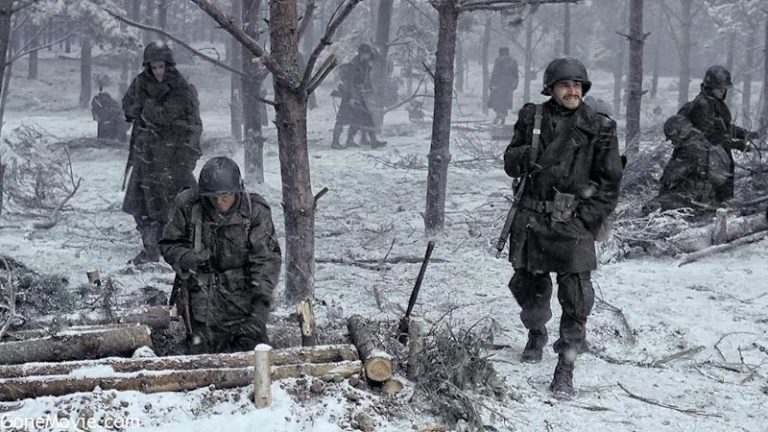
Bastogne, from the Band of Brothers series
The basic story is pretty clear. In December 1944, Hitler launched a desperate last gasp offensive to split the British and Americans and secure a truce in the west. Mighty panzer armies once again smashed through the Ardennes, overrunning weak Allied divisions assigned to what was predicted to be a quiet sector. The only available reinforcements, the 101st Airborne Division, were rushed to the key Belgian crossroads town of Bastogne, where they held off the Nazis until relived by Patton's 3rd Army.
And that is the story, pretty much. Schrijvers is careful to note that while the airborne gets much of the glory, plenty of other units contributed to the fighting, and suffered heavily casualties as well, including a unit of African-American gunners. Neither side had superiority and the battle turned into a months long attritional grind that saw Allied logistics and firepower ultimately triumph. Schrijvers interleaves the movement of divisions with on-the-ground stories of individual soldiers culled from medal citations and oral history projects, skillfully blending the macro and the micro.
Two moments stand out. First, Belgian civilians, especially around Bastogne, suffered terribly from indiscriminate firepower, much of which was deployed by the Allies. P-47 fighter bombers burnt out Nazi fighting positions and Belgian cellar shelters alike with Napalm. Families were gunned down by trigger-happy machinegunners firing at dark shapes against the snow. War is tragedy.
Second, we all know General McAuliffe's famous reply of "NUTS" to the German offer of surrender. What I did not know is that the general was asleep when the offer came in, catching a moment of rest after several days of constant action, and "nuts" was a mumble on awakening, that his staff decided was the best response to the offer.
Bastogne, from the Band of Brothers series
The basic story is pretty clear. In December 1944, Hitler launched a desperate last gasp offensive to split the British and Americans and secure a truce in the west. Mighty panzer armies once again smashed through the Ardennes, overrunning weak Allied divisions assigned to what was predicted to be a quiet sector. The only available reinforcements, the 101st Airborne Division, were rushed to the key Belgian crossroads town of Bastogne, where they held off the Nazis until relived by Patton's 3rd Army.
And that is the story, pretty much. Schrijvers is careful to note that while the airborne gets much of the glory, plenty of other units contributed to the fighting, and suffered heavily casualties as well, including a unit of African-American gunners. Neither side had superiority and the battle turned into a months long attritional grind that saw Allied logistics and firepower ultimately triumph. Schrijvers interleaves the movement of divisions with on-the-ground stories of individual soldiers culled from medal citations and oral history projects, skillfully blending the macro and the micro.
Two moments stand out. First, Belgian civilians, especially around Bastogne, suffered terribly from indiscriminate firepower, much of which was deployed by the Allies. P-47 fighter bombers burnt out Nazi fighting positions and Belgian cellar shelters alike with Napalm. Families were gunned down by trigger-happy machinegunners firing at dark shapes against the snow. War is tragedy.
Second, we all know General McAuliffe's famous reply of "NUTS" to the German offer of surrender. What I did not know is that the general was asleep when the offer came in, catching a moment of rest after several days of constant action, and "nuts" was a mumble on awakening, that his staff decided was the best response to the offer.

Before enlightenment, chop wood and carry water. After enlightenment, chop wood and carry water.
Okay, so Mastery is an explanation of Zen principles by a white dude for other white people. It is still a fairly interesting book, drawing on Leonard's long work in the 60s human potential movement, and specifically becoming a Aikido black belt, as well as an early life as a bomber pilot instructor in World War 2.
Most of us are okay at many things, few of us are genuine masters. Moderately skilled non-masters fall into one of three archetypes. Dabblers rush to try new things, enjoying the rush of new gear and new jargon and communities, but at the slightest friction retreat. Obsessives double down, always demanding results and increased performance while ignoring the toll of injuries until burnout. And hackers develop One Good Trip and stay in their comfortable spot without ever getting to the core of the activity. (I'm a hacker, for what it's worth).
Mastery is instead the focus on process over product, on finding the simple pleasure in focus and doing it right until you can do it perfectly. It is about the slow path and enjoying the plateau.
There are five keys to mastery (which I've stolen from another review. Hacker, remember :p)
Okay, so Mastery is an explanation of Zen principles by a white dude for other white people. It is still a fairly interesting book, drawing on Leonard's long work in the 60s human potential movement, and specifically becoming a Aikido black belt, as well as an early life as a bomber pilot instructor in World War 2.
Most of us are okay at many things, few of us are genuine masters. Moderately skilled non-masters fall into one of three archetypes. Dabblers rush to try new things, enjoying the rush of new gear and new jargon and communities, but at the slightest friction retreat. Obsessives double down, always demanding results and increased performance while ignoring the toll of injuries until burnout. And hackers develop One Good Trip and stay in their comfortable spot without ever getting to the core of the activity. (I'm a hacker, for what it's worth).
Mastery is instead the focus on process over product, on finding the simple pleasure in focus and doing it right until you can do it perfectly. It is about the slow path and enjoying the plateau.
There are five keys to mastery (which I've stolen from another review. Hacker, remember :p)
- Instruction-Get first rate instruction. The best instructor balances praise and correction, never scolds, and splits attention between beginners, experts, the gifted, and clods. Check their lineage and especially their students
- Practice-This is the path. For how long? As long as you are alive. Every single day, with discipline and focus and joy.
- Surrender-Learning involves certain indignities, you will not look good from the get-go. Surrendering means there are no experts, only learners. Expect to be clumsy and foolish
- Intentionality-To avoid falling into a spineless fluffy practice, you need a clear vision of where you want to get to. Visualize your mastery, then enact it.
- The Edge-This is where the master distances himself from the rest. There is tinge of craziness, the pursuit of the impossible, that distinguishes the master from the mere expert
What is also interesting is the forces that work against mastery. Consumerism, and the quick fix via distraction and the numbing pleasures of drugs and media are the obvious one, but their are more subtle foes of mastery as well. The demand for profits, for wins, for quick success erodes true mastery. A measure becomes both a goal and limit--why exceed what is required? And your life is part of a balanced, homeostatic system, and there will be resistance to changes in its patterns that manifests in innumerable ways as you pursue mastery.
This book is often inspiring, sometimes digressive, and definitely worth reading.

Coming Together: Embracing your Core Desires for Sexual Fulfillment and Long-Term Compatibility
Danielle Harel, Celeste Hirschman
Well, this one was interesting. Again, as someone who's had more than their fare share of crappy sex (ugh, telling on myself on the internet, again), the authors, cofounders of the Somatica sex-and-relationship coaching network, offer a take that better sex is mostly a matter of psychology, rather than mechanics or communication, though both those parts matter.
The two inwards directed parts are core desires, what really turns you on, and your hottest sex movie, the specific details of sexual fantasy you go to. Most people have at the surface at least, pretty standard core desires to feel wanted, to feel sexy, and perhaps a slight orientation towards leading or being pursued. Where this gets tricky is for people who have core desires that are a little more complex.

Is forming a testudo with 40-50 of your closest friends the cure to loneliness?
Assuming that you can be honest with yourself about your core desires and hottest movie, the next step is sharing that with your partner and vice versa, and then finding a way to bridge the gaps. If you're both lucky, it'll be pretty easy and everybody does something they might not consider individually, but are happy to do when asked, to help both people have a great time.
The case studies of trickier cases were some of the better parts of the book, showcasing the creativity needed to save a relationship. One woman who had been punished for masturbating as a small child found that she needed to feel innocent as part of sex. A man's desire to explore group sex was a proxy for a core desire to be engulfed, and one that could be mostly satisfied by describing an imaginary orgy to his strictly monogamous wife.
The two inwards directed parts are core desires, what really turns you on, and your hottest sex movie, the specific details of sexual fantasy you go to. Most people have at the surface at least, pretty standard core desires to feel wanted, to feel sexy, and perhaps a slight orientation towards leading or being pursued. Where this gets tricky is for people who have core desires that are a little more complex.
Is forming a testudo with 40-50 of your closest friends the cure to loneliness?
Assuming that you can be honest with yourself about your core desires and hottest movie, the next step is sharing that with your partner and vice versa, and then finding a way to bridge the gaps. If you're both lucky, it'll be pretty easy and everybody does something they might not consider individually, but are happy to do when asked, to help both people have a great time.
The case studies of trickier cases were some of the better parts of the book, showcasing the creativity needed to save a relationship. One woman who had been punished for masturbating as a small child found that she needed to feel innocent as part of sex. A man's desire to explore group sex was a proxy for a core desire to be engulfed, and one that could be mostly satisfied by describing an imaginary orgy to his strictly monogamous wife.

In the Long Run is an apology for democracy and the importance of the future in the face of the escalating polycrisis of the early 21st Century. It gestures towards some important ideas while unfortunately falling short of what I wish it could be, a futures-oriented version of Benedict Anderson's classic Imaginary Communities. Those are massive expectations, unfair for any book, but is there anything more important than the future?
White's basic contention is that futurity is a key resource for democracy, dating back to the experiments of the French Revolution. He describes political parties as shared visions of the future, ideas capable of holding party members together against the various forces that would separate them, as well as linking the temporal frailty of a human lifespan to any grand project to create a new world. The issue is that today, the future is foreshortening, with climate change on one side, authoritarian revanchism on the other, and slow and ineffective democratic institutions in between. Iterated prisoner's dilemma (a useful model for any social choice that breaks down to cooperation or exploitation) unwinds from the end, and if a person sincerely believes that the electoral game is nearing a conclusion, either because of climate change, because one side is child-murdering Satanists, or because you're being called a child-murdering Satanist for just vibing, democracy becomes a lot less appealing.
White runs through several stages of futurity and democracy, though without much of the specific heat that characterizes a truly convincing argument. The first debate was on the Left, between the various utopian socialist factions of the 19th century on one side who envisioned a better world buttressed by incremental social change, and the Marxist revolutionaries who demanded a specific and pragmatic plan to organize workers and overthrow capitalism.
This was echoed by the Italian Futurists, who celebrated machines, speed, masculinity, and death in the lead-up to the First World War, and who's surviving members evolved into the Fascist movement afterwards. Italian Futurists demanded an end to rule by antiquarians and traditions, a strong statement from people living in a country defined by the Catholic Church and the remnants of the Roman Empire. Fascism is difficult to define, but I find the political aesthetics of violence to be at its core. A fascist has to hurt someone now, because rapid destruction defines their worldview. For White, while fascists can appeal to tradition, their future is about a complete breach with the past; continual reinvention in the furnace.
The Cold War and the rise of strategic planning and foresight created a new kind of future, the classified prediction which could not be released for the sake of state security. Operational secrecy has always been an element of war, but the conditions of the Cold War meant that nuclear war plans could not be publicly discussed, even if the basic premise, that a thermonuclear war was omnicidal, was of undeniable public concern. And as much as profitability requires sensitivity to changes in the market, corporate plans are also secret.
The final chapters, on emergencies and how the demand for response to the coming crisis prevents both long-term planning and democratic participation, is some of the better scholarship in the book, though still vague and frustrating. I think White makes an excellent point that contemporary political parties have decayed to a median center-right platform of hundreds of individual micro-issues rather than coherent visions. However, his reforms, increased recalls and more citizen "participation", seem at odds with the way that "fuck you and not this!" towards anything is the dominant political ideology everywhere.
I do believe we need a better idea of the future as a resource. And I think the problem is not with the ideology of democracy, per se, but with the processes of democracy in practice. What if we spent time writing good laws as opposed to grandstanding?
White's basic contention is that futurity is a key resource for democracy, dating back to the experiments of the French Revolution. He describes political parties as shared visions of the future, ideas capable of holding party members together against the various forces that would separate them, as well as linking the temporal frailty of a human lifespan to any grand project to create a new world. The issue is that today, the future is foreshortening, with climate change on one side, authoritarian revanchism on the other, and slow and ineffective democratic institutions in between. Iterated prisoner's dilemma (a useful model for any social choice that breaks down to cooperation or exploitation) unwinds from the end, and if a person sincerely believes that the electoral game is nearing a conclusion, either because of climate change, because one side is child-murdering Satanists, or because you're being called a child-murdering Satanist for just vibing, democracy becomes a lot less appealing.
White runs through several stages of futurity and democracy, though without much of the specific heat that characterizes a truly convincing argument. The first debate was on the Left, between the various utopian socialist factions of the 19th century on one side who envisioned a better world buttressed by incremental social change, and the Marxist revolutionaries who demanded a specific and pragmatic plan to organize workers and overthrow capitalism.
This was echoed by the Italian Futurists, who celebrated machines, speed, masculinity, and death in the lead-up to the First World War, and who's surviving members evolved into the Fascist movement afterwards. Italian Futurists demanded an end to rule by antiquarians and traditions, a strong statement from people living in a country defined by the Catholic Church and the remnants of the Roman Empire. Fascism is difficult to define, but I find the political aesthetics of violence to be at its core. A fascist has to hurt someone now, because rapid destruction defines their worldview. For White, while fascists can appeal to tradition, their future is about a complete breach with the past; continual reinvention in the furnace.
The Cold War and the rise of strategic planning and foresight created a new kind of future, the classified prediction which could not be released for the sake of state security. Operational secrecy has always been an element of war, but the conditions of the Cold War meant that nuclear war plans could not be publicly discussed, even if the basic premise, that a thermonuclear war was omnicidal, was of undeniable public concern. And as much as profitability requires sensitivity to changes in the market, corporate plans are also secret.
The final chapters, on emergencies and how the demand for response to the coming crisis prevents both long-term planning and democratic participation, is some of the better scholarship in the book, though still vague and frustrating. I think White makes an excellent point that contemporary political parties have decayed to a median center-right platform of hundreds of individual micro-issues rather than coherent visions. However, his reforms, increased recalls and more citizen "participation", seem at odds with the way that "fuck you and not this!" towards anything is the dominant political ideology everywhere.
I do believe we need a better idea of the future as a resource. And I think the problem is not with the ideology of democracy, per se, but with the processes of democracy in practice. What if we spent time writing good laws as opposed to grandstanding?

Isaac's Storm is a masterpiece of narrative non-fiction, tracing the systematic arrogance of the US weather service at the end of the 19th century and the devastating Galveston Hurricane of 1900 through the figure of Isaac Cline, the US Weather Service bureau chief in the city.
First, the systematic arrogance. America at the end of the 19th century was a country coming into its own power, having conquered a continent, beaten the Spanish, and (mostly) buried the strife of the Civil War. Americans were rational, muscular, confident, and ready to conquer the world. The nascent weather service was a mirror of society, taking in observations from sober and skilled young men across the country and spitting out reliable reports. Well, definitely reports, reliability was another problem.
The basic issue was that given the technology of the period, good forecasts were more a matter of luck than skill. Particularly for hurricanes, there was no way to observe them at sea, and damaging storms tended to down telegraph lines to transmit warnings back to headquarters. In typical period racism, American officials discounted the skills of Cuban meteorologists as emotional superstition, and banned them from using the telegraph system. In order to prevent politically damaging false alarms, the phrase 'hurricane' could only be used on expressed orders from Washington DC.
The city of Galveston was a second order of arrogance, built on a sandy island barely above sea level between the Gulf of Mexico and an interior bay. Objectively, Galveston was fantastically vulnerable to flooding. City officials argued that hurricanes would never strike Galveston, and if they did, various hydrographic features would protect the city. This was a matter of pride and of wealth, as Galveston and Houston were engaged in a race to be Texas' primary city.
Hurricanes that enter the Gulf of Mexico are rare compared to Atlantic hurricanes, but can be especially devastating because the Gulf is an expanse of humid heat that hits the cyclone engine of the hurricane like a nitrous oxide boost. The Great Storm slammed into Galveston on the evening of September 8th like a divinely ordained missile.
At first the inhabitants delighted at the unexpected coolness in the midst of a summer heatwave, and the entertainment of immense waves. Then the buildings on the shore started to collapse, water rose in the streets, and slate roof tiles whipped through the air like bullets. At the storm intensified, people sought shelter wherever they could. And then all too often, the buildings they sheltered in gave up against the forces that assaulted the city, and the people were cast out into the night to die. Families were torn apart by wind and water, some groups expiring entirely and others leaving a traumatized survivor to make sense of the devastation. Isaac lost his wife and several children, though some of his family survived.
Isaac's Storm is compelling and masterfully written, and though it came out years before Katrina, Harvey, and Sandy wrecked their havoc, it remains a prescient warning in an age of larger storms and rising seas. Compared to Isaac's generation, we have better tools to see the storm coming, but prediction is still not safety.
First, the systematic arrogance. America at the end of the 19th century was a country coming into its own power, having conquered a continent, beaten the Spanish, and (mostly) buried the strife of the Civil War. Americans were rational, muscular, confident, and ready to conquer the world. The nascent weather service was a mirror of society, taking in observations from sober and skilled young men across the country and spitting out reliable reports. Well, definitely reports, reliability was another problem.
The basic issue was that given the technology of the period, good forecasts were more a matter of luck than skill. Particularly for hurricanes, there was no way to observe them at sea, and damaging storms tended to down telegraph lines to transmit warnings back to headquarters. In typical period racism, American officials discounted the skills of Cuban meteorologists as emotional superstition, and banned them from using the telegraph system. In order to prevent politically damaging false alarms, the phrase 'hurricane' could only be used on expressed orders from Washington DC.
The city of Galveston was a second order of arrogance, built on a sandy island barely above sea level between the Gulf of Mexico and an interior bay. Objectively, Galveston was fantastically vulnerable to flooding. City officials argued that hurricanes would never strike Galveston, and if they did, various hydrographic features would protect the city. This was a matter of pride and of wealth, as Galveston and Houston were engaged in a race to be Texas' primary city.
Hurricanes that enter the Gulf of Mexico are rare compared to Atlantic hurricanes, but can be especially devastating because the Gulf is an expanse of humid heat that hits the cyclone engine of the hurricane like a nitrous oxide boost. The Great Storm slammed into Galveston on the evening of September 8th like a divinely ordained missile.
At first the inhabitants delighted at the unexpected coolness in the midst of a summer heatwave, and the entertainment of immense waves. Then the buildings on the shore started to collapse, water rose in the streets, and slate roof tiles whipped through the air like bullets. At the storm intensified, people sought shelter wherever they could. And then all too often, the buildings they sheltered in gave up against the forces that assaulted the city, and the people were cast out into the night to die. Families were torn apart by wind and water, some groups expiring entirely and others leaving a traumatized survivor to make sense of the devastation. Isaac lost his wife and several children, though some of his family survived.
Isaac's Storm is compelling and masterfully written, and though it came out years before Katrina, Harvey, and Sandy wrecked their havoc, it remains a prescient warning in an age of larger storms and rising seas. Compared to Isaac's generation, we have better tools to see the storm coming, but prediction is still not safety.

A mighty empire at the peak of its' power, the center of an increasingly interconnected world, suddenly crumbles under the combined weight of an erratic and idiotic ruler, the blowback from decades of unrealistic policy, and a sudden pandemic. It's not America 2020, it's Rome AD 165, and though the parallels are perhaps somewhat stretched, there's still a lot of valuable lessons, and a good ancient medical and economic mystery around the Antonine Plague.
Rome in 160 was at the height of the Pax Romana, a century and a half of expansion and peace since Augustus turned the Republic into the Empire. The empire was ruled by Marcus Aurelius and Lucius Verus, adopted brothers who seemed uncommonly able to split the duties and benefits of the Imperium.
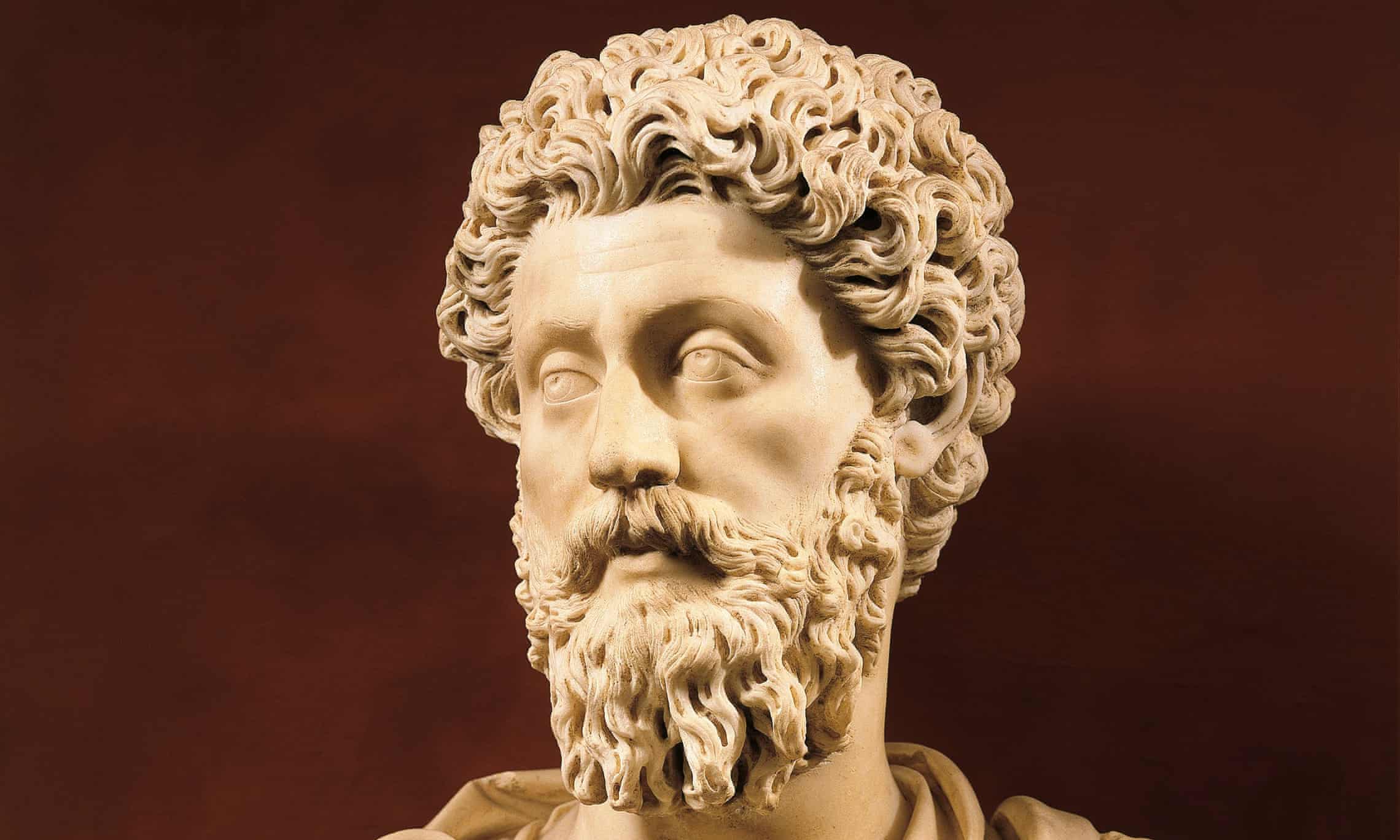
Marcus Aurelius. Be suspicious of dudes with this as their profile pic
Elliott spends plenty of time setting the stage, and makes a convincing argument that the Pax Romana was more of a gilded age than a golden age. While the imperial core was peaceful and prosperous, that prosperity did not reach to the masses of urban poor, who either slept rough or in crude and unsafe tenement apartments. Sanitation was poor, despite investment in aqueducts and sewers. Administration was ad hoc, the semi-private affairs of local elites and imperial delegates, who lacked training, data, and resources to react to crises. And crucially, the grain supply in Rome was dependent on Egyptian harvests, and the Nile floods had been either too little or too much for decades prior. So in 165, when victorious soldiers returning from Parthia came back with an unknown disease, it was a more fragile empire than appearances suggest that took the blow.
And the disease is truly unknown. Elliott makes a convincing case for an orthopox virus, like smallpox but not modern smallpox, though measles is another common suggestion. Despite being associated with the great physician Galen, descriptions of symptoms is vague, including fever, rashes, and then in fatal cases bloody coughs and stools. How many people died is another unknown, with ranges between 1 million and over 25 million. For such a massive event, there is little direct evidence.
Yet the indirect evidence is compelling, including tangled mass graves in cities corresponding to the dates of the plague. Census records show declines across the period, as cities shrunk and entire towns disappeared. Mines and quarries ceased production, coinage was debased, the military had trouble recruiting for wars and peacekeeping against raiders, and conflict between orthodox Pagans and early Christians who refused to perform public sacrifices to appease the gods is recorded.
Though Elliott argues for a deathcount at the lower end of the range, he makes a case that the plague really did a number on the Roman economy, and more explicitly, the Roman political system. Commodus, who succeeded Marcus Aurelian, was a clown rather than a stoic, and his assassination triggered ongoing political stability on the basis that whoever could best bribe the army deserved to rule. The Crisis of 3rd century was clearly set up by the plague.
I will note that one thing that seems amiss is when Elliott draws more direct connection between the Antonine Plague and COVID-19, which is set in a very orthodox Chicago school economic framework. Roman macro-economics were surely bad, but it seems unfair to fault them for not reading Hayek. Similarly, the failures of pre-germ theory divine intervention have little bearing on evidence-informed public health measures. But I will say that while Elliott and I likely have significant differences in perspective over the recent pandemic, he is a gentleman and a scholar, so I'll avoid concluding this review with a rant.
After all, we probably don't spend enough time thinking about Rome.
Rome in 160 was at the height of the Pax Romana, a century and a half of expansion and peace since Augustus turned the Republic into the Empire. The empire was ruled by Marcus Aurelius and Lucius Verus, adopted brothers who seemed uncommonly able to split the duties and benefits of the Imperium.
Marcus Aurelius. Be suspicious of dudes with this as their profile pic
Elliott spends plenty of time setting the stage, and makes a convincing argument that the Pax Romana was more of a gilded age than a golden age. While the imperial core was peaceful and prosperous, that prosperity did not reach to the masses of urban poor, who either slept rough or in crude and unsafe tenement apartments. Sanitation was poor, despite investment in aqueducts and sewers. Administration was ad hoc, the semi-private affairs of local elites and imperial delegates, who lacked training, data, and resources to react to crises. And crucially, the grain supply in Rome was dependent on Egyptian harvests, and the Nile floods had been either too little or too much for decades prior. So in 165, when victorious soldiers returning from Parthia came back with an unknown disease, it was a more fragile empire than appearances suggest that took the blow.
And the disease is truly unknown. Elliott makes a convincing case for an orthopox virus, like smallpox but not modern smallpox, though measles is another common suggestion. Despite being associated with the great physician Galen, descriptions of symptoms is vague, including fever, rashes, and then in fatal cases bloody coughs and stools. How many people died is another unknown, with ranges between 1 million and over 25 million. For such a massive event, there is little direct evidence.
Yet the indirect evidence is compelling, including tangled mass graves in cities corresponding to the dates of the plague. Census records show declines across the period, as cities shrunk and entire towns disappeared. Mines and quarries ceased production, coinage was debased, the military had trouble recruiting for wars and peacekeeping against raiders, and conflict between orthodox Pagans and early Christians who refused to perform public sacrifices to appease the gods is recorded.
Though Elliott argues for a deathcount at the lower end of the range, he makes a case that the plague really did a number on the Roman economy, and more explicitly, the Roman political system. Commodus, who succeeded Marcus Aurelian, was a clown rather than a stoic, and his assassination triggered ongoing political stability on the basis that whoever could best bribe the army deserved to rule. The Crisis of 3rd century was clearly set up by the plague.
I will note that one thing that seems amiss is when Elliott draws more direct connection between the Antonine Plague and COVID-19, which is set in a very orthodox Chicago school economic framework. Roman macro-economics were surely bad, but it seems unfair to fault them for not reading Hayek. Similarly, the failures of pre-germ theory divine intervention have little bearing on evidence-informed public health measures. But I will say that while Elliott and I likely have significant differences in perspective over the recent pandemic, he is a gentleman and a scholar, so I'll avoid concluding this review with a rant.
After all, we probably don't spend enough time thinking about Rome.

36 Streets is gritty retro cyberpunk set in the Old Quarter of 21st century Hanoi. Lin, our protagonist, is a senior leg-breaker for the Binh Xuyen gang. Her boss dumps a novel assignment on her, acting as a private detective for a Herbert, wealthy Englishman, which draws her into a political intrigue.
The setting, while nominally futuristic, is a flipped version of The Second Indochina War, what Americans call The Vietnam War. This time, China has been attempting to reconquer what they regard as the province of Jiaozhi from a resurrected Viet Minh for 20 years. China is swollen on the arrogance of its population, military, and being the country that defeated climate change. And despite their wealth and power, Vietnam will still not submit.

A Vietnam War photo redone in vaporwave style
In this environment, one oddly popular immersive video game is called Fat Victory, which puts you in the boots of an American soldier in the historical Vietnam War. Fat Victory is a mashup of tropes, the Vietnamese classic The Sorrow of War, Dispatches, Platoon, etc, which ends with the players inevitable death at the hands of implacable Viet Cong soldiers. Herbert was one of the three creators of Fat Victory. Of the other two, one is dead and one is missing. Lin's boss at the Binh Xuyen, Bao, banned the game in the district he controls. Whatever is at the end of Herbert's mystery might reveal something important about the nature of the war.
The key technology of 36 Streets is memory editing. Most people rely on an exo-memory, digital backups of what they see and hear, tagged and trawled by friendly AIs. Both digital and natural memories can be edited and erased through various techniques. The Binh Xuygen and other criminal gangs specialize in providing alibis and erasing all evidence of their activities. Chinese Ommissioner operate on an even higher level, chopping out PTSD-inducing memories from their soldiers and sending them back into the fight. Herbert's memory is tatters, a few worn strips over an enigma, and on a grander scale, Fat Victory is a psychological warfare agent to destroy the memory of Vietnam as an independent nation.
There's plenty of style and action to be had. Even in a genre noted for damaged protagonists, Lin is exceptionally damaged. She's a drunk, addicted to an anesthetic drug called Ice-Seven, outcast from the mostly male Binh Xuyen gang due to her Australian upbringing, and deliberately provokes her twin sister (a respected pillar of the community) and adopted mother. Lin is a void surrounded by rage at the world and a demand for respect which leads her into repeated self-destructive confrontations with Passaic Powell, an immense American tough for several rival mobs.
However, the plot kind of ambles along, a drunken brawl rather than intrigue. T.R. Napper, though a white Australian, spent a lot of time in Southeast Asia and lived in the real 36 Streets district of Old Hanoi, which gives this book a bronze authenticity. However, the setting is less imaginative than something like The Windup Girl, the memory editing technology important, but not central. The finale and various revelations at the end, are explosive but also feel unearned given what has happened before. If you like cyberpunk, you'll probably enjoy this book. I believe Napper has a truly great novel inside him, he just needs a little more time to find his voice.
The setting, while nominally futuristic, is a flipped version of The Second Indochina War, what Americans call The Vietnam War. This time, China has been attempting to reconquer what they regard as the province of Jiaozhi from a resurrected Viet Minh for 20 years. China is swollen on the arrogance of its population, military, and being the country that defeated climate change. And despite their wealth and power, Vietnam will still not submit.
A Vietnam War photo redone in vaporwave style
In this environment, one oddly popular immersive video game is called Fat Victory, which puts you in the boots of an American soldier in the historical Vietnam War. Fat Victory is a mashup of tropes, the Vietnamese classic The Sorrow of War, Dispatches, Platoon, etc, which ends with the players inevitable death at the hands of implacable Viet Cong soldiers. Herbert was one of the three creators of Fat Victory. Of the other two, one is dead and one is missing. Lin's boss at the Binh Xuyen, Bao, banned the game in the district he controls. Whatever is at the end of Herbert's mystery might reveal something important about the nature of the war.
The key technology of 36 Streets is memory editing. Most people rely on an exo-memory, digital backups of what they see and hear, tagged and trawled by friendly AIs. Both digital and natural memories can be edited and erased through various techniques. The Binh Xuygen and other criminal gangs specialize in providing alibis and erasing all evidence of their activities. Chinese Ommissioner operate on an even higher level, chopping out PTSD-inducing memories from their soldiers and sending them back into the fight. Herbert's memory is tatters, a few worn strips over an enigma, and on a grander scale, Fat Victory is a psychological warfare agent to destroy the memory of Vietnam as an independent nation.
There's plenty of style and action to be had. Even in a genre noted for damaged protagonists, Lin is exceptionally damaged. She's a drunk, addicted to an anesthetic drug called Ice-Seven, outcast from the mostly male Binh Xuyen gang due to her Australian upbringing, and deliberately provokes her twin sister (a respected pillar of the community) and adopted mother. Lin is a void surrounded by rage at the world and a demand for respect which leads her into repeated self-destructive confrontations with Passaic Powell, an immense American tough for several rival mobs.
However, the plot kind of ambles along, a drunken brawl rather than intrigue. T.R. Napper, though a white Australian, spent a lot of time in Southeast Asia and lived in the real 36 Streets district of Old Hanoi, which gives this book a bronze authenticity. However, the setting is less imaginative than something like The Windup Girl, the memory editing technology important, but not central. The finale and various revelations at the end, are explosive but also feel unearned given what has happened before. If you like cyberpunk, you'll probably enjoy this book. I believe Napper has a truly great novel inside him, he just needs a little more time to find his voice.

Michael Lewis showing up for an interview should probably one of those ominous signs, like the ravens leaving the Tower of London. When he started this book, Sam Bankman-Fried was the hottest thing in cryptocurrency, a rumpled financial wunderkind who's very lack of charm was charming, who was making money hand over fist, was making crypto legitimate, and using the profits to change the world for the better via his ideology of effective altruism. And then a few months later the whole thing collapsed, as Binance, a competing exchange, began dumping FTX's backing token, and it turned out that Sam's crypto exchange FTX had transferred billions of dollars of its clients' holdings to his trading firm Alameda Research (run by his secret-former-sort-of-poly-girlfriend Caroline Ellison), and that money was gone. FTX suffered a classic bank run, everything fell apart, Sam was arrested, and as of March 2024, sentenced to 25 years in jail.
Fin.
So what the hell actually happened? Where did the money go? Did we learn anything? Who the hell is Sam Bankman-Fried?
One thing that become clears is that Sam was and is a profoundly weird dude, and I say this as member of the Guild of Weird Dudes. He drifted through childhood without any close friends, an outsider even in quantitative environment of Silicon Valley. His guiding principal, that most of what people believe in is bullshit, seems to have been present from a young age. He went to math camp and MIT, where two things happened that set him on his path. First, he met William MacAskill, who converted his general utilitarianism into focused effective altruism, a specific philosophy that argues that smart people should focus on earning as much money as possible to spend on alleviating universal harms (a critique of effective altruism is beyond the scope of this review), and he landed an internship at Jane Street Capital.
Jane Street Capital was a profoundly weird environment that precisely matched Sam's temperament and abilities. It was a place where the employees played games where the major object of manipulation was the rules of the games themselves. Interns were encouraged to bet against each other on everything, finely honing their Bayesian reasoning to sniff out hidden inefficiencies in the market. Sam worked hard at Jane Street, but found it unfulfilling. Bitcoin was entering its second major boom then, and as he studied the the crypto markets, Sam realized that crypto traders were using sticks and stones compared to the financial stealth fighters Jane Street had at its' disposal. If he could capture even a small percentage of the wealth sloshing around cryptocurrency, it would be billions of dollars, enough to make all the effective altruist dreams come true.
So he founded Alameda Research, and then he moved to Hong Kong and founded FTX. And then he moved to the Bahamas and bought millions of dollars of real estate, and donated millions more to various political causes and spent yet more millions on advertising. And then the wheels came off.
Having read the book, for the life of me I cannot understand how the whole thing took off and lasted as long as it did. Alameda Research appeared to make lots of money, but not through any deliberate effort, as both Sam, and Caroline appeared to actively avoid involvement in what they were nominally leading. FTX was mostly coded by one reclusive genius who operated in parallel to the engineering staff, and was just as vulnerable to hacks as any other crypto exchange (perhaps a billion dollars was flat out stolen from FTX by outsiders). There was no org chart, no accounting, no sense of what anybody was doing.
Everybody agrees there was a crime, but if so, Sam and his colleagues at FTX are some of the most incompetent fraudsters in history. At least one of them should have had a plan to rugpull and run, to convert the assets into fiat and disappear into a non-extradition country. For all the expensive tropical real-estate and lurid poly rumors, Sam and co hardly had a good time. They turned the luxury penthouse for the inner circle of effective altruists into a nerd flophouse where the main activity was boardgames. There were no parties on the beaches with models, no Scarface piles of drugs. While Sam rubbed shoulders with the rich and famous, he seemed to take no pleasure in name dropping, seeing it as an entirely transactional venture to advance FTX. During the critical last year, he spent most of the time saying "Yuuuup" on Zoom calls while playing video games on a second monitor. Sam could have had the exact same lifestyle indefinitely on his parent's money for no more effort than typing "Vegan Poly Shared Housing Berkeley" into a search bar, and he wouldn't be disgraced and in jail.
Being scammed by Sam Bankman-Fried seems like being mauled by a golden retriever puppy, and yet it happened. I think there are two reasons. First, his innate total disregard of what other people thought of him, combined with the practiced agreeableness he developed at Jane Street, where he realized that persuasion was mostly wasted effort and just saying "Yes" and then doing whatever was more efficient, operated as a kind of social hack. We're used to social dynamics of desire, of chasing and being chased. Sam never chased people, and when he popped up on the Forbes list out of nowhere, people who should have known better chased him.
Second, (and this is where I get on my soap box), the cryptocurrency ecosystem as a whole is a grotesque fraud. Value is built on belief, on trust. Real money is backed by governments, by banks, and ultimately by the faith that the future will be more prosperous than the present. Bitcoin and Ethereum offer one quote-unquote useful service, which is paying ransomware hackers, but their fantastic run-up in value has inspired a legion of gamblers who hope to earn riches from thin air. All of this "wealth" isn't backed by code, it's backed by faith in the crypto-ecosystem as a whole. And this thing is real money constantly drains out of it, because mining Bitcoin and Ethereum takes a lot of electricity and field-programmable gate arrays, and those can only be bought with actual money. The value of crypto is backed up by the utterly fictitious amounts of stablecoins like Tether, by a constant flow of new suckers, and a desperate desire by those who know to keep the party going.
This is a fun book, but somewhat unsatisfying. Lewis's judgement is a non-judgement, that the whole venture was basically sound and everybody just got confused. The courts clearly disagree. Sam decided from a young age that a lot of what people care about is bullshit. And frankly, as a Weird Dude myself, I'm not going to argue. But the thing about a lot of people is that ultimately, we live in a society, and that means
BOTTOM TEXT

Fin.
So what the hell actually happened? Where did the money go? Did we learn anything? Who the hell is Sam Bankman-Fried?
One thing that become clears is that Sam was and is a profoundly weird dude, and I say this as member of the Guild of Weird Dudes. He drifted through childhood without any close friends, an outsider even in quantitative environment of Silicon Valley. His guiding principal, that most of what people believe in is bullshit, seems to have been present from a young age. He went to math camp and MIT, where two things happened that set him on his path. First, he met William MacAskill, who converted his general utilitarianism into focused effective altruism, a specific philosophy that argues that smart people should focus on earning as much money as possible to spend on alleviating universal harms (a critique of effective altruism is beyond the scope of this review), and he landed an internship at Jane Street Capital.
Jane Street Capital was a profoundly weird environment that precisely matched Sam's temperament and abilities. It was a place where the employees played games where the major object of manipulation was the rules of the games themselves. Interns were encouraged to bet against each other on everything, finely honing their Bayesian reasoning to sniff out hidden inefficiencies in the market. Sam worked hard at Jane Street, but found it unfulfilling. Bitcoin was entering its second major boom then, and as he studied the the crypto markets, Sam realized that crypto traders were using sticks and stones compared to the financial stealth fighters Jane Street had at its' disposal. If he could capture even a small percentage of the wealth sloshing around cryptocurrency, it would be billions of dollars, enough to make all the effective altruist dreams come true.
So he founded Alameda Research, and then he moved to Hong Kong and founded FTX. And then he moved to the Bahamas and bought millions of dollars of real estate, and donated millions more to various political causes and spent yet more millions on advertising. And then the wheels came off.
Having read the book, for the life of me I cannot understand how the whole thing took off and lasted as long as it did. Alameda Research appeared to make lots of money, but not through any deliberate effort, as both Sam, and Caroline appeared to actively avoid involvement in what they were nominally leading. FTX was mostly coded by one reclusive genius who operated in parallel to the engineering staff, and was just as vulnerable to hacks as any other crypto exchange (perhaps a billion dollars was flat out stolen from FTX by outsiders). There was no org chart, no accounting, no sense of what anybody was doing.
Everybody agrees there was a crime, but if so, Sam and his colleagues at FTX are some of the most incompetent fraudsters in history. At least one of them should have had a plan to rugpull and run, to convert the assets into fiat and disappear into a non-extradition country. For all the expensive tropical real-estate and lurid poly rumors, Sam and co hardly had a good time. They turned the luxury penthouse for the inner circle of effective altruists into a nerd flophouse where the main activity was boardgames. There were no parties on the beaches with models, no Scarface piles of drugs. While Sam rubbed shoulders with the rich and famous, he seemed to take no pleasure in name dropping, seeing it as an entirely transactional venture to advance FTX. During the critical last year, he spent most of the time saying "Yuuuup" on Zoom calls while playing video games on a second monitor. Sam could have had the exact same lifestyle indefinitely on his parent's money for no more effort than typing "Vegan Poly Shared Housing Berkeley" into a search bar, and he wouldn't be disgraced and in jail.
Being scammed by Sam Bankman-Fried seems like being mauled by a golden retriever puppy, and yet it happened. I think there are two reasons. First, his innate total disregard of what other people thought of him, combined with the practiced agreeableness he developed at Jane Street, where he realized that persuasion was mostly wasted effort and just saying "Yes" and then doing whatever was more efficient, operated as a kind of social hack. We're used to social dynamics of desire, of chasing and being chased. Sam never chased people, and when he popped up on the Forbes list out of nowhere, people who should have known better chased him.
Second, (and this is where I get on my soap box), the cryptocurrency ecosystem as a whole is a grotesque fraud. Value is built on belief, on trust. Real money is backed by governments, by banks, and ultimately by the faith that the future will be more prosperous than the present. Bitcoin and Ethereum offer one quote-unquote useful service, which is paying ransomware hackers, but their fantastic run-up in value has inspired a legion of gamblers who hope to earn riches from thin air. All of this "wealth" isn't backed by code, it's backed by faith in the crypto-ecosystem as a whole. And this thing is real money constantly drains out of it, because mining Bitcoin and Ethereum takes a lot of electricity and field-programmable gate arrays, and those can only be bought with actual money. The value of crypto is backed up by the utterly fictitious amounts of stablecoins like Tether, by a constant flow of new suckers, and a desperate desire by those who know to keep the party going.
This is a fun book, but somewhat unsatisfying. Lewis's judgement is a non-judgement, that the whole venture was basically sound and everybody just got confused. The courts clearly disagree. Sam decided from a young age that a lot of what people care about is bullshit. And frankly, as a Weird Dude myself, I'm not going to argue. But the thing about a lot of people is that ultimately, we live in a society, and that means
BOTTOM TEXT

Theology is really not my thing, is what I'm coming around to. I and Thou is one of the masterpieces of 20th century philosophy, written in the aftermath of the modernist slaughter of World War I, and gaining new relevance in decades since. In looping elliptical sentences masterfully translated by Walter Kaufman, Buber describes a transition between an I-It view of the world, one of finite systems and ends, towards an infinite I-Thou conversation with the divine spirit.
It's a gorgeous book, and mostly reinforces my take that you either get spirituality, or you don't. And a lot of people who claim to do, probably don't. It's not really something you can put into words. Buber got it.
I'll close with a story. My grandmother was working at the American Jewish Committee in New York when Martin Buber made his first visit to the United States in 1951. Every single one of the rabbinical students was desperate to be his secretary for the visit, which is why the director gave it to my grandmother (22 years old, definitely not going to be rabbi, carried herself as a bit of ditz). All of the boys were furious. And as for the great Jewish theologian, well as my grandmother put, "I never felt like more of an 'it' than when I worked for Martin Buber."
It's a gorgeous book, and mostly reinforces my take that you either get spirituality, or you don't. And a lot of people who claim to do, probably don't. It's not really something you can put into words. Buber got it.
I'll close with a story. My grandmother was working at the American Jewish Committee in New York when Martin Buber made his first visit to the United States in 1951. Every single one of the rabbinical students was desperate to be his secretary for the visit, which is why the director gave it to my grandmother (22 years old, definitely not going to be rabbi, carried herself as a bit of ditz). All of the boys were furious. And as for the great Jewish theologian, well as my grandmother put, "I never felt like more of an 'it' than when I worked for Martin Buber."