Take a photo of a barcode or cover
2.05k reviews by:
mburnamfink


Spin Control follows up the first book with a John le Carré espionage plot set in the never-ending war between Israel and Palestine, and some very 2000s scientific ideas that still manage to be provocative and relevant 20 years on.
Arkady is a defector from the Syndicates, a survivor of a terraforming expedition gone horribly wrong. He's been shipped to an Israeli private security firm, with the explicit cover that he is selling knowledge of a deadly biological weapon to gain the freedom of his creche mate Arkasha, another member of the expedition. The plot extends in two parallel strands, the revelation of how the shoestring expedition went wrong, and the multifaceted bargaining as we find what Arkady is really selling, and who is buying it.
The first plot thread reveals more about the subtle politics of the Syndicates, who we mostly glimpsed through gunsights in the first book. The Syndicates are lines of genetic clones, each generation a single model designed for a specific task and carefully kept within norms through euthanasia and culling. Even though every line is genetically identical and Syndicate ideology holds to a sociobiological Marxism, there is still love and politics every bit as fraught as in baseline humanity. Arkady is an ant specialist, a politically fraught role since ants hold the same symbolic space for Syndicates as primates do for us. And while most planets are technically habitable in that there is liquid water on the surface and the atmosphere won't kill you immediately, the one he's assigned to, Novalis, is something else entirely. Novalis is covered by impossible forests full of animals extinct in Earth's ravaged biosphere. And the expedition, under-crewed, lead by non-scientists, and full of contrary impulses submerged within Syndicate solidarity, is unready to deal with the impossible.
In the 'present', Arkady is dropped into a deadly spy game which he has to survive and Cohen, the AI from the first book, has to unravel. Israel and Palestine had peace, centuries of peace, and then for whatever reason, and there are plenty on a dying and blockaded Earth, relations broke down and war started again. But this isn't the raw violence of the Intifadas. Both sides are symmetrically, with able spymasters and a key military technology of Enderbots. Infantry conscripts don't have the skills to survive a modern battlefield, and combat AIs are notoriously unstable, so soldiers on both sides are avatars of an AI that thinks its just playing a simulation-and when it figures out what's going on their plug is pulled.
The Israelis have been slowly losing this war, and the top of the Mossad suspects that they have a mole, codenamed Absalom. The Tel Aviv fiasco with Cohen mentioned in the first book was about uncovering Absalom, and it ended with multiple UN agents dead and more questions than answers, ruining the reputations of several people involved. Cohen and Li are working to find the truth about Absalom, and Arkady is a naïf out of his depths just trying to survive in the bizarre world of humans.
The espionage stuff is well done, and I enjoyed the 25th century Israel-Palestine stuff more than the Irish miners of the first book. But where this Spin Control gets cool is grabbing the big picture of evolution, ecosystems, and emergence. The things that matter, war and peace, artificial intelligence, terraforming, life itself, cannot be dictated from above. They emerge from below, complexity forming from the behavior of simpler elements.
The problem is one of local maxima, of matching the need to maintain a stable identity with the ability to adapt to changing circumstances. Arkady, Arkasha, and author Moriarty postulate that is is about the ability to search an evolutionary space, that survival depends on the strategies available to you and the speed at which you can explore them. The Syndicates understand their own fragility very well, living in epidemic-prone space habs or domes on worlds with sparse ecosystems that might fall apart at any moment. Earthers understand it as well on a bone-level, living on dying planet with a dwindling population surrounded by the ghosts of extinct species. And the fat and powerful UN rulers in their glittering ring around Earth don't get it at all. Earth was a kind mother, but space is cruel and capricious, and on a big enough time scale we all live in space.
Arkady isn't selling a weapon, he is the weapon, a vector carrying a virus that executes an idea called Turing Soup. DNA/RNA is definitely complex enough to run a Turing machine, and the virus hits your genetic code and searches for... something outside the understanding of their best scientists. This might be certain doom, or the only chance at post-human survival.
Spin Control extends on and improves Spin State, and I'm excited to see where the story goes.
Arkady is a defector from the Syndicates, a survivor of a terraforming expedition gone horribly wrong. He's been shipped to an Israeli private security firm, with the explicit cover that he is selling knowledge of a deadly biological weapon to gain the freedom of his creche mate Arkasha, another member of the expedition. The plot extends in two parallel strands, the revelation of how the shoestring expedition went wrong, and the multifaceted bargaining as we find what Arkady is really selling, and who is buying it.
The first plot thread reveals more about the subtle politics of the Syndicates, who we mostly glimpsed through gunsights in the first book. The Syndicates are lines of genetic clones, each generation a single model designed for a specific task and carefully kept within norms through euthanasia and culling. Even though every line is genetically identical and Syndicate ideology holds to a sociobiological Marxism, there is still love and politics every bit as fraught as in baseline humanity. Arkady is an ant specialist, a politically fraught role since ants hold the same symbolic space for Syndicates as primates do for us. And while most planets are technically habitable in that there is liquid water on the surface and the atmosphere won't kill you immediately, the one he's assigned to, Novalis, is something else entirely. Novalis is covered by impossible forests full of animals extinct in Earth's ravaged biosphere. And the expedition, under-crewed, lead by non-scientists, and full of contrary impulses submerged within Syndicate solidarity, is unready to deal with the impossible.
In the 'present', Arkady is dropped into a deadly spy game which he has to survive and Cohen, the AI from the first book, has to unravel. Israel and Palestine had peace, centuries of peace, and then for whatever reason, and there are plenty on a dying and blockaded Earth, relations broke down and war started again. But this isn't the raw violence of the Intifadas. Both sides are symmetrically, with able spymasters and a key military technology of Enderbots. Infantry conscripts don't have the skills to survive a modern battlefield, and combat AIs are notoriously unstable, so soldiers on both sides are avatars of an AI that thinks its just playing a simulation-and when it figures out what's going on their plug is pulled.
The Israelis have been slowly losing this war, and the top of the Mossad suspects that they have a mole, codenamed Absalom. The Tel Aviv fiasco with Cohen mentioned in the first book was about uncovering Absalom, and it ended with multiple UN agents dead and more questions than answers, ruining the reputations of several people involved. Cohen and Li are working to find the truth about Absalom, and Arkady is a naïf out of his depths just trying to survive in the bizarre world of humans.
The espionage stuff is well done, and I enjoyed the 25th century Israel-Palestine stuff more than the Irish miners of the first book. But where this Spin Control gets cool is grabbing the big picture of evolution, ecosystems, and emergence. The things that matter, war and peace, artificial intelligence, terraforming, life itself, cannot be dictated from above. They emerge from below, complexity forming from the behavior of simpler elements.
The problem is one of local maxima, of matching the need to maintain a stable identity with the ability to adapt to changing circumstances. Arkady, Arkasha, and author Moriarty postulate that is is about the ability to search an evolutionary space, that survival depends on the strategies available to you and the speed at which you can explore them. The Syndicates understand their own fragility very well, living in epidemic-prone space habs or domes on worlds with sparse ecosystems that might fall apart at any moment. Earthers understand it as well on a bone-level, living on dying planet with a dwindling population surrounded by the ghosts of extinct species. And the fat and powerful UN rulers in their glittering ring around Earth don't get it at all. Earth was a kind mother, but space is cruel and capricious, and on a big enough time scale we all live in space.
Arkady isn't selling a weapon, he is the weapon, a vector carrying a virus that executes an idea called Turing Soup. DNA/RNA is definitely complex enough to run a Turing machine, and the virus hits your genetic code and searches for... something outside the understanding of their best scientists. This might be certain doom, or the only chance at post-human survival.
Spin Control extends on and improves Spin State, and I'm excited to see where the story goes.

Mind Map Mastery is written in a tone of breathless enthusiasm, which is only reasonable, since Buzan spent half a century promoting his idea. I'm a big fan of non-linear information organization*, enough so that I would up entirely reorienting my career around the idea of using social network analysis and graphs to understand research collaborations.
Mind maps are subtly different from other chart-like forms of presentation. A mind map starts with a central concept image, with curvy radiating branches going out in all direction. The first level of branches are thick and curvy, but subsequent levels trace graceful arcs. A proper mind map uses lots of colors, single word labels along the branches, and small drawings. Notably, a Mind Map is distinct from a spider chart, the more conventional graph with straight spindly lines connecting bubbles with words in them, and something I use a lot.
This book has some tables of exercises to help build your mind mapping skills. I'm skeptical of the absolute benefits in terms of memory, creativity, and organization that Buzan promises with his tool, and this brief book definitely isn't worth the $12 Amazon is charging for it (I got it for $3), but it's an idea that's interesting enough to make me track down some markers.
*Actually, the best form of data is bulk columnar, but every day Excel exists we stray further from God's Divine Light.
Mind maps are subtly different from other chart-like forms of presentation. A mind map starts with a central concept image, with curvy radiating branches going out in all direction. The first level of branches are thick and curvy, but subsequent levels trace graceful arcs. A proper mind map uses lots of colors, single word labels along the branches, and small drawings. Notably, a Mind Map is distinct from a spider chart, the more conventional graph with straight spindly lines connecting bubbles with words in them, and something I use a lot.
This book has some tables of exercises to help build your mind mapping skills. I'm skeptical of the absolute benefits in terms of memory, creativity, and organization that Buzan promises with his tool, and this brief book definitely isn't worth the $12 Amazon is charging for it (I got it for $3), but it's an idea that's interesting enough to make me track down some markers.
*Actually, the best form of data is bulk columnar, but every day Excel exists we stray further from God's Divine Light.

The Best Way to Rob a Bank is to Own One is an important book about one of the most pressing issues facing America, and indeed the world. It is also frustratingly dense and unclear, so close to the trees that the forest barely comes through.
Black was a lawyer for the Federal Home Loan Bank Board and affiliated agencies, with positions including litigation director and vice president and general counsel for the Federal Home Loan Bank of San Francisco. As such, he was a key participant in the Savings and Loan (S&L) crisis of the 1980s and 1990s, with a key role in taking down major players such as Charles Keating and Don R. Dixon. Black's experiences lead him to get a PhD in criminology and coin the term 'control fraud' to describe the behavior of his adversaries. A control fraud is someone who suborns an entire organization, typically the CEO of a business, and uses his power to loot the business for personal gain while leaving the losses as someone else's problem.
The saving and loans sector was in genuine trouble in the early 1980s. Fed Chairman Paul Volcker dramatically raised interest rates to combat inflation, making many S&Ls insolvent as value of their portfolio of fixed rate mortgages declined. The potential losses were in the tens to hundreds of billions of dollars, far outstripping the federal insurance fund backing the S&Ls. The Reagan administration, with its shaky commitment to truth, antiregulation stance, and strong desire to avoid adding another hundred billion or so of deficit to the federal budget in light of their no-tax and spend-anyway plan, decided that the whole industry could grow out of it's problems if regulations were weakened.
The exact details are fairly arcane, but basically, S&Ls got radically more forgiving accounting standards to make them fictionally liquid. Capital reporting requirements were made more forgiving for new S&Ls, letting them push a day of reckoning off into the future. S&Ls were allowed to make much more speculative investments than before, including massive direct investments in speculative real estate development. And finally, the intangible quality of 'reputation' was valued in the hundreds of millions to billions of dollars for insolvent S&Ls, conveniently erasing debts.
The lax regulatory environment let a group of frauds seize control of failing S&Ls and turn them into Ponzi schemes, trading back and forth grossly overvalued commercial properties and junk bonds until the music ran out, hopefully with someone else holding the bag. Control frauds were truly colorful characters. Texan Don R. Dixon had an air force of business jets, a navy of fancy yachts, and an army of prostitutes, which he used to suborn first his own board, and then major politicians. Charles Keating got his start in politics as an anti-pornography crusader (he convinced the Justice Department to devote significant resources to chasing down smut, which meant reduced focus on financial crimes), and moved up to the grandest levels of S&L fraud, including building a ridiculous luxury hotel in Phoenix and threatening Black and his fellow regulators with personal lawsuits.
Political corruption was vital to the whole process. Control frauds had easy access to the deregulation friendly Reagan administration, with political appointees sometimes able to cut out the civil service. Democrats also acted poorly. Four of the five "Keating Five" senators were Democrats, and Speaker Jim Wright was a key ally of the control frauds, having been bought for shockingly cheap political contributions in the range of a few million dollars, which was nothing compared to the billions stolen, and the trillion of dollars in broader economic damage.
Black's broader point is that while control frauds often appear to be legitimate businessmen, they are anything but. Control frauds first aim to expel potential whistleblowers from their organizations, and can easily suborn external auditors and outwit regulators who are often overworked and under-budgeted. The easiest mode of detection is outstanding growth and profitability in excess of industry averages, because companies operated by control frauds are Ponzi schemes and die when they stop growing. It is vital to stop control frauds, because their thefts are massive and systemic, and we're all left holding the bag. Direct victims lose their money, but entire sectors can be shattered by bubbles popping, and even healthy firms can fall. The erosion of social trust is literally priceless.
The law is often inadequate. In an irony so black that only Anish Kapoor is allowed to use it, Black coined the phrase "too big to prosecute" to shame Attorney General Eric Holder into going after the executives responsible for the 2008 banking crisis, and Holder used the phrase as an excuse not to take action. White collar crime is large under-prosecuted, with only the lowest level and stupidest people prosecuted. No federal agency has a chief criminologist, and free market dogma says that reputation damage contains fraud when it clearly does not. Indeed, the entire financial and political system often seems designed to protect fraudsters at the highest levels.
Unfortunately, as much as this book needs to be persuasive, it is so opaquely written that I had to wade through it on sheer grit, and I work for a bank that failed a week ago! I can't imagine the average person making it more than five pages in before giving up.
There has to be a short incisive summary of this book, and even with all the shit that is going on a new public movement around the simple idea that BOSSES GO TO JAIL.
Can we eat just one billionaire?
Black was a lawyer for the Federal Home Loan Bank Board and affiliated agencies, with positions including litigation director and vice president and general counsel for the Federal Home Loan Bank of San Francisco. As such, he was a key participant in the Savings and Loan (S&L) crisis of the 1980s and 1990s, with a key role in taking down major players such as Charles Keating and Don R. Dixon. Black's experiences lead him to get a PhD in criminology and coin the term 'control fraud' to describe the behavior of his adversaries. A control fraud is someone who suborns an entire organization, typically the CEO of a business, and uses his power to loot the business for personal gain while leaving the losses as someone else's problem.
The saving and loans sector was in genuine trouble in the early 1980s. Fed Chairman Paul Volcker dramatically raised interest rates to combat inflation, making many S&Ls insolvent as value of their portfolio of fixed rate mortgages declined. The potential losses were in the tens to hundreds of billions of dollars, far outstripping the federal insurance fund backing the S&Ls. The Reagan administration, with its shaky commitment to truth, antiregulation stance, and strong desire to avoid adding another hundred billion or so of deficit to the federal budget in light of their no-tax and spend-anyway plan, decided that the whole industry could grow out of it's problems if regulations were weakened.
The exact details are fairly arcane, but basically, S&Ls got radically more forgiving accounting standards to make them fictionally liquid. Capital reporting requirements were made more forgiving for new S&Ls, letting them push a day of reckoning off into the future. S&Ls were allowed to make much more speculative investments than before, including massive direct investments in speculative real estate development. And finally, the intangible quality of 'reputation' was valued in the hundreds of millions to billions of dollars for insolvent S&Ls, conveniently erasing debts.
The lax regulatory environment let a group of frauds seize control of failing S&Ls and turn them into Ponzi schemes, trading back and forth grossly overvalued commercial properties and junk bonds until the music ran out, hopefully with someone else holding the bag. Control frauds were truly colorful characters. Texan Don R. Dixon had an air force of business jets, a navy of fancy yachts, and an army of prostitutes, which he used to suborn first his own board, and then major politicians. Charles Keating got his start in politics as an anti-pornography crusader (he convinced the Justice Department to devote significant resources to chasing down smut, which meant reduced focus on financial crimes), and moved up to the grandest levels of S&L fraud, including building a ridiculous luxury hotel in Phoenix and threatening Black and his fellow regulators with personal lawsuits.
Political corruption was vital to the whole process. Control frauds had easy access to the deregulation friendly Reagan administration, with political appointees sometimes able to cut out the civil service. Democrats also acted poorly. Four of the five "Keating Five" senators were Democrats, and Speaker Jim Wright was a key ally of the control frauds, having been bought for shockingly cheap political contributions in the range of a few million dollars, which was nothing compared to the billions stolen, and the trillion of dollars in broader economic damage.
Black's broader point is that while control frauds often appear to be legitimate businessmen, they are anything but. Control frauds first aim to expel potential whistleblowers from their organizations, and can easily suborn external auditors and outwit regulators who are often overworked and under-budgeted. The easiest mode of detection is outstanding growth and profitability in excess of industry averages, because companies operated by control frauds are Ponzi schemes and die when they stop growing. It is vital to stop control frauds, because their thefts are massive and systemic, and we're all left holding the bag. Direct victims lose their money, but entire sectors can be shattered by bubbles popping, and even healthy firms can fall. The erosion of social trust is literally priceless.
The law is often inadequate. In an irony so black that only Anish Kapoor is allowed to use it, Black coined the phrase "too big to prosecute" to shame Attorney General Eric Holder into going after the executives responsible for the 2008 banking crisis, and Holder used the phrase as an excuse not to take action. White collar crime is large under-prosecuted, with only the lowest level and stupidest people prosecuted. No federal agency has a chief criminologist, and free market dogma says that reputation damage contains fraud when it clearly does not. Indeed, the entire financial and political system often seems designed to protect fraudsters at the highest levels.
Unfortunately, as much as this book needs to be persuasive, it is so opaquely written that I had to wade through it on sheer grit, and I work for a bank that failed a week ago! I can't imagine the average person making it more than five pages in before giving up.
There has to be a short incisive summary of this book, and even with all the shit that is going on a new public movement around the simple idea that BOSSES GO TO JAIL.
Can we eat just one billionaire?

Last time I went up for tech jobs, I know I definitely lost positions because I bombed the system design interview. That won't happen again.
Xu's book provides wonderful examples of how to get through one of these, with examples of the right questions to ask in terms of scale, queries, and reliability, and examples of practical questions, from a simple rate limiter to complex infrastructure Youtube and Google Drive. The 16 examples are clearly explained with increasingly detailed diagrams and extensive notes.
This isn't a deep dive, more of a wave at key ideas like horizontal scaling, stateless web servers, caching, and load balancing. As other reviewers have pointed out, Kleppman's Designing Data Intensive Systems gets at the gritty implementation of these things in a cursed world of fallible hardware and network connections in a much deeper way. But System Design Interview is a worthy companion to Cracking the Coding Interview for flimflamming the asshole standing between you and a salary.
Xu's book provides wonderful examples of how to get through one of these, with examples of the right questions to ask in terms of scale, queries, and reliability, and examples of practical questions, from a simple rate limiter to complex infrastructure Youtube and Google Drive. The 16 examples are clearly explained with increasingly detailed diagrams and extensive notes.
This isn't a deep dive, more of a wave at key ideas like horizontal scaling, stateless web servers, caching, and load balancing. As other reviewers have pointed out, Kleppman's Designing Data Intensive Systems gets at the gritty implementation of these things in a cursed world of fallible hardware and network connections in a much deeper way. But System Design Interview is a worthy companion to Cracking the Coding Interview for flimflamming the asshole standing between you and a salary.

I'll admit that I picked up this series because I knew I'd need a little help with #Bookrace 2023, given all the shit going on in my life this year, and five urban fantasy novellas seemed pretty good.
The town of Lychford seems like an ordinary English village on the surface, but it is in fact at the crossroads of many worlds. And now a terrible force plans to break the ancient barriers that allow peaceful transit across the realms and create chaos. It's up to three women to stop them: Judith, the elderly actual witch, and Lizzie and Autumn, two former friends who drifted apart when Lizzie became a vicar and Autumn spent a year with the fairies. To save the universe, these three women will have to manipulate the forces of magic to... defeat a local vote about building a new supermarket chain with a triangular logo!

fictional characters depicted etc etc
The mix of magical high-stakes and small town politics works wonderfully. Sovo, the adversary, of course isn't just about discount groceries and ongoing austerity. The corporation is the front for something larger, darker, and far more arcane. The three women and their relationships and traumas are also wonderfully depicted. The magic is, well, it's fine and sufficiently weird. Urban fantasy isn't really my thing, but this does enough new that I'm enjoying it.
The town of Lychford seems like an ordinary English village on the surface, but it is in fact at the crossroads of many worlds. And now a terrible force plans to break the ancient barriers that allow peaceful transit across the realms and create chaos. It's up to three women to stop them: Judith, the elderly actual witch, and Lizzie and Autumn, two former friends who drifted apart when Lizzie became a vicar and Autumn spent a year with the fairies. To save the universe, these three women will have to manipulate the forces of magic to... defeat a local vote about building a new supermarket chain with a triangular logo!
fictional characters depicted etc etc
The mix of magical high-stakes and small town politics works wonderfully. Sovo, the adversary, of course isn't just about discount groceries and ongoing austerity. The corporation is the front for something larger, darker, and far more arcane. The three women and their relationships and traumas are also wonderfully depicted. The magic is, well, it's fine and sufficiently weird. Urban fantasy isn't really my thing, but this does enough new that I'm enjoying it.

Lost Child takes a small but definite step back in quality from the first book, with our three witches facing off against a new supernatural threat, but mostly their own indecision and confusion. Autumn has brought Judith on as an employee, and Autumn is Judith's proper apprentice, but the relationships are much the same. A small child is haunting Lizzie, not a ghost but a premonition of a future horror. And everybody is too wrapped up in Christmas business to notice that Eldritch Horrors from Beyond Space and Time are planning a horrible ritual to destroy the town and take its supernatural nexus.
While villainous, compared to the first book the foes are little generic, and we already know the parameters.
While villainous, compared to the first book the foes are little generic, and we already know the parameters.

A few months ago out of a sense of boredom I hopped onto some of dating apps after a decade in a relationship. At first it went pretty well: the women I was seeing were genuine babes, and when I switched to guys to scope out the competition, well, heterosexual men are not sending their best. I'm not exactly 90s Nicolas Cage in real-life, but I'm better than those mopes. But I got about two connections for all my swiping, and the quality of the matches started going downhill. If computerized dating has always been a bit of a scam, even back to the Harvard-based mainframe era Operation Match, modern monetization apps are a quagmire of dark patterns. If I were a data scientist with questionable ethics (oh dang, I am), and I controlled the horizontal and vertical via the recommender system, I could do some messed up things to get desperate people to buy-in in the hopes of finding true love, never letting them find it, while providing just enough of a drip of hope to keep them swiping and spending.
Getting laid these days requires not just good l0oks, charm, and a little luck. It takes hacking your way through a hostile platform. Webb is writing about the ancient days of 2005, but the fundamentals are pretty similar. Having skimmed the reviews, a lot of the variance comes down to how much you like Webb herself, and frankly, she is just my type: an intelligent type-A neurotic Jewish woman with wide ranging interests and a few obsessions.

Saint Motel - My Type
Webb is also nuttier than my grandma's ruggelach. She's the kind of person who when starting therapy creates a dossier of all the psychological trauma she's experienced, color coded by theme, charted by year and severity, and cross-referenced. A professional futurist and spreadsheet fanatic, she doesn't do things by halves, and after a series of absolutely awful dates, she decided to tackle this problem in a data-driven way.
Step one was to envision her ideal man, brainstorming a 70 item list of the things she wanted, and then distilling those down to 10 major and 25 minor area, along with a set of dealbreakers, all of which were given numerical point values, along with a personal promise not to go out with anyone who scored too low.
Step two was to get inside the user-experience of her ideal man via what we now call catfishing. She made 10 Jdate profiles of different versions of her tall, handsome, professional match, a variety of doctors, lawyers, stockbrokers, and other professionals, and saw what kind of women messaged them. For ethical reasons and time, her interactions were minimal
Basically, the competition was a bunch of blond shiksas lying about their height; every single one of the roughly 100 women who bite her hooks was less than the American average height of 5' 4". The general vibe was a kind of Cameron Diaz girl next door, being fun and approachable without being too ambitious. Webb's current profile, with bad pictures and her insanely ambitious resume copied-pasted verbatim, looked both sad and crazy.
So, smash cut, Webb starts working out six days a week, gets a very expensive haircut, buys a whole new wardrobe, takes new photos, rewrites her profile to fit in 150 non-threatening words, and does the geek-to-glam transformation. Then she waits, chats, and meets her perfect doctor husband, and they get married and have kids and move to New York, where she runs a futurist consulting agency.
Now, Webb had a lot of advantages. She was 31, had enough spare time and cash to do a makeover, and is definitely in the top half for brains, personality, and looks (likely higher, but I'm going to draw some generous lines that more of us might fit into). And the relatively open data policies of dating websites circa 2005 made it easier for her to do her research. 18 years later, the whole field has changed, but it can still be hacked.
The biggest change is swipe-based matching. While online dating was never exactly about thoughtful analysis, these days it's entirely instinctual, decisions made in seconds. And in that very old mammalian part of our brain, guys go for looks and girls go for status. So you have to hack the other gender's swipe behavior with a visual story that communicates the right things.
And good swipes matter, because according to some reliable sources, Hinge, Tinder, and so on use a kind of collaborative filtering recommender system. Basically, you get shown people who are like the people who swiped on you, so if your profile is bad you slide down the slope from perfectly tanned people who divide their time between high profile professional life and extreme sports towards people with regrettable facial tattoos who can absolutely explain those parole violations and why their last three relationships ended in literal flames.
I really enjoyed this book, and it provided some solid background to what the other side saw. If your tastes diverge strongly from Webb's, you probably won't like it nearly as much.
Getting laid these days requires not just good l0oks, charm, and a little luck. It takes hacking your way through a hostile platform. Webb is writing about the ancient days of 2005, but the fundamentals are pretty similar. Having skimmed the reviews, a lot of the variance comes down to how much you like Webb herself, and frankly, she is just my type: an intelligent type-A neurotic Jewish woman with wide ranging interests and a few obsessions.
Saint Motel - My Type
Webb is also nuttier than my grandma's ruggelach. She's the kind of person who when starting therapy creates a dossier of all the psychological trauma she's experienced, color coded by theme, charted by year and severity, and cross-referenced. A professional futurist and spreadsheet fanatic, she doesn't do things by halves, and after a series of absolutely awful dates, she decided to tackle this problem in a data-driven way.
Step one was to envision her ideal man, brainstorming a 70 item list of the things she wanted, and then distilling those down to 10 major and 25 minor area, along with a set of dealbreakers, all of which were given numerical point values, along with a personal promise not to go out with anyone who scored too low.
Step two was to get inside the user-experience of her ideal man via what we now call catfishing. She made 10 Jdate profiles of different versions of her tall, handsome, professional match, a variety of doctors, lawyers, stockbrokers, and other professionals, and saw what kind of women messaged them. For ethical reasons and time, her interactions were minimal
Basically, the competition was a bunch of blond shiksas lying about their height; every single one of the roughly 100 women who bite her hooks was less than the American average height of 5' 4". The general vibe was a kind of Cameron Diaz girl next door, being fun and approachable without being too ambitious. Webb's current profile, with bad pictures and her insanely ambitious resume copied-pasted verbatim, looked both sad and crazy.
So, smash cut, Webb starts working out six days a week, gets a very expensive haircut, buys a whole new wardrobe, takes new photos, rewrites her profile to fit in 150 non-threatening words, and does the geek-to-glam transformation. Then she waits, chats, and meets her perfect doctor husband, and they get married and have kids and move to New York, where she runs a futurist consulting agency.
Now, Webb had a lot of advantages. She was 31, had enough spare time and cash to do a makeover, and is definitely in the top half for brains, personality, and looks (likely higher, but I'm going to draw some generous lines that more of us might fit into). And the relatively open data policies of dating websites circa 2005 made it easier for her to do her research. 18 years later, the whole field has changed, but it can still be hacked.
The biggest change is swipe-based matching. While online dating was never exactly about thoughtful analysis, these days it's entirely instinctual, decisions made in seconds. And in that very old mammalian part of our brain, guys go for looks and girls go for status. So you have to hack the other gender's swipe behavior with a visual story that communicates the right things.
And good swipes matter, because according to some reliable sources, Hinge, Tinder, and so on use a kind of collaborative filtering recommender system. Basically, you get shown people who are like the people who swiped on you, so if your profile is bad you slide down the slope from perfectly tanned people who divide their time between high profile professional life and extreme sports towards people with regrettable facial tattoos who can absolutely explain those parole violations and why their last three relationships ended in literal flames.
I really enjoyed this book, and it provided some solid background to what the other side saw. If your tastes diverge strongly from Webb's, you probably won't like it nearly as much.

Savage Wars of Peace is a decent, if unsystematic study of American military interventions prior to 1941, wedded to an ideology that has aged like a burn-pit outside Bagram Air Base.
I'll tackle the first bit. America has a long history of deploying force overseas, in gunboat diplomacy and putative expeditions stretching back to the wars against the Barbary Corsairs: "...to the shores of Tripoli", as the Marine corps hymn goes. As Toll's magisterial Six Frigates discusses, these early wars were at the pivot of a debate about the power of the Federal government and America's role in the world. The 18th century was marked by constant, if limited use of the Navy and Marines to open Japan, Korea, and China to American trade, and to punish various groups in Malaysia and the Caribbean who had decided that plundering American merchants was better than trading with them.
The Spanish-American War marked a distinct change in American policy, with the Philippines and Puerto Rico now directly ruled colonies, Cuba a protectorate, and a newly more assertive posture worldwide. A combination of Teddy Roosevelt's imperialism, and Woodrow Wilson's moralism, summed up in the statement that 'America should teach Latin Americans to elect good men', resulted in repeated interventions in Haiti and Nicaragua, as well as a protracted counter-insurgency in the Philippines, Pershing's putative expedition against Pancho Villa, which nearly resulted in an actual shooting war with Mexico, and the gunboat operations of the China patrol. Generally, small groups of American Marines outfought their local opponents with superior training and armaments. Boot takes a universally uncritical view of the American role in all these operations, arguing that American intervention was broadly popular because Americans provided hygiene and displaced local corrupt strongmen. I'm sure a historian who bothered to read what the locals involved thought would consider otherwise.
The final chapter is a brief skip through the latter half of the 20th century. Boot's take is that Vietnam was lost because Westmoreland's war of attrition destroyed American morale at home, and that the COIN side of the Combined Action Patrol (see Bing West's The Village) and Phoenix Program (Herrington's Stalking The Vietcong) showed that the war could be won. If America had the will to intervene as decisively in 1975 as it did in 1972, there'd still be a South Vietnam. This is a conclusion that I'm skeptical of. I think America would have had to intervene again in 1978, 81, etc. There's a brief skip through Desert Storm and Clinton's operations of the 90s.
This pure history isn't a bad one, per se, as a military history of forgotten American interventions. My problems are twofold, first Boot agrees completely with Kipling's 'white man's burden' thesis of history, without managing to capture any of the actual zeitgest of period, what I consider to be the highest aim of history. Second, this book includes nothing on the US Army and the Indian Wars, certainly the most protracted and decisive of American Small Wars. The relationship between the genocide of American Indians, the Federal government, and historiography is a complex one, but to write an entire book on Small Wars without discussing Custer or Geronimo is a curious choice-perhaps because it's impossible to fit genocide into Boot's theoretical framework that imperialism is both authentically American and generally good for all concerned.
And that theoretical framework is where this book stinks. The book was written in that halcyon 'End of History' prior to 9/11, and published immediately afterwards, before the true nature of the quagmire of Afghanistan and the fiasco of Iraq had sunk in to public perception. Assessing the total cost of the War of Terror and its children is foolhardy, but the total cost cannot be considered anything less than high. Around $45 billion per year, as the Afghanistan War becomes old enough vote, according to the Pentagon's numbers. Perhaps $5.9 TRILLION, according to the Crawford Report.
If these are Small Wars, I shudder to think of what a big one would look like. And that doesn't even include the human costs to American soldiers, and to especially the Afghans, Iraqis, and Yemeni (among many others) on the receiving end of "American liberty".
Since publishing this book, Boot has gone on to a successful career as a chickenhawk Washington Post columnist and perpetually owned twitter figure. He lacks the truly sublime idiocy of a Thomas Friedman or David Brooks, but he's still out there, saying America should bomb some more people, and getting wrecked on Twitter. I picked this book up for a dollar at a used book sale, I almost decided to toss it away unread when I saw Boot's name on. And I persisted in reading just so I could write a very sarcastic review.
I'll tackle the first bit. America has a long history of deploying force overseas, in gunboat diplomacy and putative expeditions stretching back to the wars against the Barbary Corsairs: "...to the shores of Tripoli", as the Marine corps hymn goes. As Toll's magisterial Six Frigates discusses, these early wars were at the pivot of a debate about the power of the Federal government and America's role in the world. The 18th century was marked by constant, if limited use of the Navy and Marines to open Japan, Korea, and China to American trade, and to punish various groups in Malaysia and the Caribbean who had decided that plundering American merchants was better than trading with them.
The Spanish-American War marked a distinct change in American policy, with the Philippines and Puerto Rico now directly ruled colonies, Cuba a protectorate, and a newly more assertive posture worldwide. A combination of Teddy Roosevelt's imperialism, and Woodrow Wilson's moralism, summed up in the statement that 'America should teach Latin Americans to elect good men', resulted in repeated interventions in Haiti and Nicaragua, as well as a protracted counter-insurgency in the Philippines, Pershing's putative expedition against Pancho Villa, which nearly resulted in an actual shooting war with Mexico, and the gunboat operations of the China patrol. Generally, small groups of American Marines outfought their local opponents with superior training and armaments. Boot takes a universally uncritical view of the American role in all these operations, arguing that American intervention was broadly popular because Americans provided hygiene and displaced local corrupt strongmen. I'm sure a historian who bothered to read what the locals involved thought would consider otherwise.
The final chapter is a brief skip through the latter half of the 20th century. Boot's take is that Vietnam was lost because Westmoreland's war of attrition destroyed American morale at home, and that the COIN side of the Combined Action Patrol (see Bing West's The Village) and Phoenix Program (Herrington's Stalking The Vietcong) showed that the war could be won. If America had the will to intervene as decisively in 1975 as it did in 1972, there'd still be a South Vietnam. This is a conclusion that I'm skeptical of. I think America would have had to intervene again in 1978, 81, etc. There's a brief skip through Desert Storm and Clinton's operations of the 90s.
This pure history isn't a bad one, per se, as a military history of forgotten American interventions. My problems are twofold, first Boot agrees completely with Kipling's 'white man's burden' thesis of history, without managing to capture any of the actual zeitgest of period, what I consider to be the highest aim of history. Second, this book includes nothing on the US Army and the Indian Wars, certainly the most protracted and decisive of American Small Wars. The relationship between the genocide of American Indians, the Federal government, and historiography is a complex one, but to write an entire book on Small Wars without discussing Custer or Geronimo is a curious choice-perhaps because it's impossible to fit genocide into Boot's theoretical framework that imperialism is both authentically American and generally good for all concerned.
And that theoretical framework is where this book stinks. The book was written in that halcyon 'End of History' prior to 9/11, and published immediately afterwards, before the true nature of the quagmire of Afghanistan and the fiasco of Iraq had sunk in to public perception. Assessing the total cost of the War of Terror and its children is foolhardy, but the total cost cannot be considered anything less than high. Around $45 billion per year, as the Afghanistan War becomes old enough vote, according to the Pentagon's numbers. Perhaps $5.9 TRILLION, according to the Crawford Report.
If these are Small Wars, I shudder to think of what a big one would look like. And that doesn't even include the human costs to American soldiers, and to especially the Afghans, Iraqis, and Yemeni (among many others) on the receiving end of "American liberty".
Since publishing this book, Boot has gone on to a successful career as a chickenhawk Washington Post columnist and perpetually owned twitter figure. He lacks the truly sublime idiocy of a Thomas Friedman or David Brooks, but he's still out there, saying America should bomb some more people, and getting wrecked on Twitter. I picked this book up for a dollar at a used book sale, I almost decided to toss it away unread when I saw Boot's name on. And I persisted in reading just so I could write a very sarcastic review.

Pax Romana is a comprehensive study of the Roman imperium through its phases of expansion and stability. Rome forms the model for our current understanding of imperial power, and the Romans were masters of both hard and soft power, going from one Iron Age city-state among many to unquestioned masters of the known world.
Roman expansion was driven by several related factors. The simplest was strength of arms. Roman legions were better drilled, better supplied, and had higher morale than comparable Mediterranean heavy infantry forces, leading to victories over their Italian neighbors, Gallic and Celtic tribes to the north, Seleucid Greeks to the east, and finally the Carthaginians.
Hard power achieved victories, but Roman soft power made them durable. Roman citizenship was surprisingly flexible and expansive, and granted to conquered peoples and allies. Latin, Roman dress and items, and Roman religion were prestigious, capturing local aristocratic cultures.
The third factor in expansion was the very idiosyncratic Roman republican political system, which in the words of a contemporary chronicler combined the best features of democracy, despotism, and aristocracy. Consuls and governors had the entire weight of the state behind them, but typically only a year in office, encouraging aggressive action by leaders posted to the frontier to demonstrate their accomplishments. Until the chaos of the civil war, this ambition was mostly directed outwards. Once the Republic was replaced by the Augustan principate, the borders became relatively fixed, and new provinces were rarely added.
Roman administration on the ground was surprisingly light. Senatorial governors and later Imperial legates travelled with small staffs, bolstered by friends and the ability to request support from the legions, who also served in variety of non-military roles. Cities were mostly governed under local laws, with Romans working with local magistrates. Cultural integration was a process of centuries.
Another aspect of this book is revolt and invasion. Many provinces experienced a revolt a generation or so after incorporation, which was invariably bloodily suppressed. Only Germany east of the Rhine was successful in breaking away. The province of Palestine was remarkable in revolting multiple times and being highly documented in doing so, given the relationship between Roman Jews and later Christianity, and conflicts between ardent monotheism and usually flexible imperial cult.
And finally, while the Roman border was very real, it was not exactly a rigid line as we might expect from modern borders. A military province, such as Germany, would have a line of forts and supporting settlements, a natural barrier such as a river, a depopulated zone, and then layers of allied tribes and kinds external to the border. The primary role of the border was to deter raiding, which was destructive to lives, property, and prestige. Even the imperial army had difficulty preventing all raids, but killing raiders as they retreated with their loot and organizing retaliatory raids was within the capabilities of distributed frontier forces. There was no strategic reserve in a modern sense. Romans expected that the time taken to gather up a major invading force would allow time for the legions to form up and meet in open battle, an expectation that held true into the 5th century.
Roman expansion was driven by several related factors. The simplest was strength of arms. Roman legions were better drilled, better supplied, and had higher morale than comparable Mediterranean heavy infantry forces, leading to victories over their Italian neighbors, Gallic and Celtic tribes to the north, Seleucid Greeks to the east, and finally the Carthaginians.
Hard power achieved victories, but Roman soft power made them durable. Roman citizenship was surprisingly flexible and expansive, and granted to conquered peoples and allies. Latin, Roman dress and items, and Roman religion were prestigious, capturing local aristocratic cultures.
The third factor in expansion was the very idiosyncratic Roman republican political system, which in the words of a contemporary chronicler combined the best features of democracy, despotism, and aristocracy. Consuls and governors had the entire weight of the state behind them, but typically only a year in office, encouraging aggressive action by leaders posted to the frontier to demonstrate their accomplishments. Until the chaos of the civil war, this ambition was mostly directed outwards. Once the Republic was replaced by the Augustan principate, the borders became relatively fixed, and new provinces were rarely added.
Roman administration on the ground was surprisingly light. Senatorial governors and later Imperial legates travelled with small staffs, bolstered by friends and the ability to request support from the legions, who also served in variety of non-military roles. Cities were mostly governed under local laws, with Romans working with local magistrates. Cultural integration was a process of centuries.
Another aspect of this book is revolt and invasion. Many provinces experienced a revolt a generation or so after incorporation, which was invariably bloodily suppressed. Only Germany east of the Rhine was successful in breaking away. The province of Palestine was remarkable in revolting multiple times and being highly documented in doing so, given the relationship between Roman Jews and later Christianity, and conflicts between ardent monotheism and usually flexible imperial cult.
And finally, while the Roman border was very real, it was not exactly a rigid line as we might expect from modern borders. A military province, such as Germany, would have a line of forts and supporting settlements, a natural barrier such as a river, a depopulated zone, and then layers of allied tribes and kinds external to the border. The primary role of the border was to deter raiding, which was destructive to lives, property, and prestige. Even the imperial army had difficulty preventing all raids, but killing raiders as they retreated with their loot and organizing retaliatory raids was within the capabilities of distributed frontier forces. There was no strategic reserve in a modern sense. Romans expected that the time taken to gather up a major invading force would allow time for the legions to form up and meet in open battle, an expectation that held true into the 5th century.

I'm going to be blunt. I've spent my entire life having awful to bad sex, with occasional diversions into decent sex. There are a lot of reasons for that, but the most basic is that I never asked any of my partners to do the things I wanted to do. The thesis of this book is that if you can get over the weird American-Protestant shame hang-ups around sex to think clearly about what you want and then ask other people to help, you can have good sex.
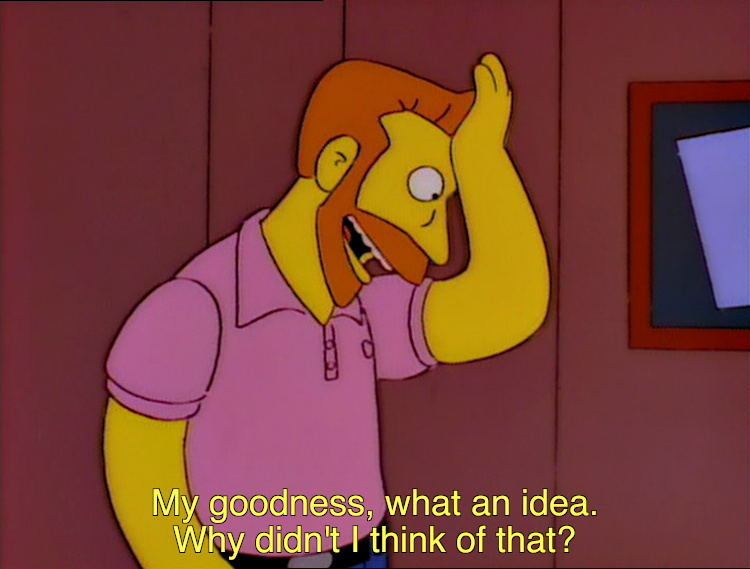
My goodness, what an idea. Why didn't I think of that
Harris is a professional sex coach and intimacy educator, so her idea of good sex is pretty adventurous, with parties, multiple partners, and a lot of toys. But even if you're much much more vanilla, or only gradually looking to spice things up, this is a clear and easy book for working through your issues and getting to better sex.
My goodness, what an idea. Why didn't I think of that
Harris is a professional sex coach and intimacy educator, so her idea of good sex is pretty adventurous, with parties, multiple partners, and a lot of toys. But even if you're much much more vanilla, or only gradually looking to spice things up, this is a clear and easy book for working through your issues and getting to better sex.