Take a photo of a barcode or cover
2.05k reviews by:
mburnamfink


Campbell's Lost Fleet series got me through a bout with Covid-19 last summer, and I say this with a lot of kindness, but that series is distinctly mid. Decent action, strong moral foundations, and a lot of generic space opera with the good moments spread out over too many books.
This short story collection is a lot of the same mid space opera vibes, but instead of being spread out over too many pages, they're boiled down to a sticky sludge of scifi dank. The opening story, "Lady Be Good" is a genuine classic of a hardluck tramp freighter trying to make do. The other stories don't rise quite to that level, but even the weakest ones, a pair of NASA satires, at least don't overstay their welcome.
This short story collection is a lot of the same mid space opera vibes, but instead of being spread out over too many pages, they're boiled down to a sticky sludge of scifi dank. The opening story, "Lady Be Good" is a genuine classic of a hardluck tramp freighter trying to make do. The other stories don't rise quite to that level, but even the weakest ones, a pair of NASA satires, at least don't overstay their welcome.

The Vanishing Neighbor straddles the line between pop and academic sociology to propose, but not quite prove, a grand theory of what's gone wrong in America since World War 2. Dunkelman's thesis is that the traditional organization of American life is the township, whether an actual rural small town, or an urban microneighborhood of a few blocks, and this 'middle ring' of frequent casual relationships and commitments is something which drives social cohesion and innovation.
What definitely feels true is that something has changed since the 1950s. Dunkelman describes growing up in Cleveland in a dense web of connections, which he hasn't experienced since. Personally, I know between 0 and 3 of my neighbors, and I live in a dense neighborhood. My parents know more, but they're both avid walkers, and even then they wouldn't rely on their neighbors for anything critical. This reduction in neighborliness comes even as American communities become more culturally homogenous as part of the Big Sort, where the vehicles parked on the street and flags on the windows tell you exactly who you'll be living next to, and if you'll fit in. As the middle rings have become the missing rings, in the book's terminology, we've focused more and more time on the inner rings of family and our closest friends, and the outer rings of commercial and mediated transactions.
Where this book falls short is it's assumption of the pre-war status quo, and an over-commitment to a diversity of casual mechanisms. Dunkelman draws heavily and uncritically on Tocqueville's Democracy in America, and forces his township model on to a diversity of lived experiences across regions, population density, and ethnic groups without solid support from the scholarly literature. A reading of an idyllic America glosses over real concerns around immigration driven cultural changes in the early 1900s, gangsterism during Prohibition, the very real crisis of the Great Depression, and of course racism, to begin with concerns in the 50s and 60s that the new generations were either overly conformist or too free-willed, unlike their properly 'gritty' elders.
There's a lot of techno-material reasons why neighborliness has disappeared. Automobile commutes make it impossible to interact with other people in a positive way. Television ate up social time, then exploded from a network monoculture to the dense garden of cable and the ultimate individualization of social media. Blue-collar middle class jobs vanished with out-shoring of industry, replaced by services and information technology. Culture has also changed. Relationships became increasingly segregated by education, with few marriages between people with college degrees and those without. General purpose fraternal groups are out of vogue, with mission driven NGOs acting on specific causes. And politics has become increasing harsh and part of a universal culture war.
About a decade on from when this book was published, I think the situation has only gotten worse. I didn't much care for Tea Party era Republicans, but the GQP is an actual existential threat. And conversely, I've probably gone from an annoying lib peacenik to a Pedo-Marxist Out to Groom America in their mind. There's no easy answer, but also given the Big Sort, we should feel more comfortable making casual connections in our own communities.
What definitely feels true is that something has changed since the 1950s. Dunkelman describes growing up in Cleveland in a dense web of connections, which he hasn't experienced since. Personally, I know between 0 and 3 of my neighbors, and I live in a dense neighborhood. My parents know more, but they're both avid walkers, and even then they wouldn't rely on their neighbors for anything critical. This reduction in neighborliness comes even as American communities become more culturally homogenous as part of the Big Sort, where the vehicles parked on the street and flags on the windows tell you exactly who you'll be living next to, and if you'll fit in. As the middle rings have become the missing rings, in the book's terminology, we've focused more and more time on the inner rings of family and our closest friends, and the outer rings of commercial and mediated transactions.
Where this book falls short is it's assumption of the pre-war status quo, and an over-commitment to a diversity of casual mechanisms. Dunkelman draws heavily and uncritically on Tocqueville's Democracy in America, and forces his township model on to a diversity of lived experiences across regions, population density, and ethnic groups without solid support from the scholarly literature. A reading of an idyllic America glosses over real concerns around immigration driven cultural changes in the early 1900s, gangsterism during Prohibition, the very real crisis of the Great Depression, and of course racism, to begin with concerns in the 50s and 60s that the new generations were either overly conformist or too free-willed, unlike their properly 'gritty' elders.
There's a lot of techno-material reasons why neighborliness has disappeared. Automobile commutes make it impossible to interact with other people in a positive way. Television ate up social time, then exploded from a network monoculture to the dense garden of cable and the ultimate individualization of social media. Blue-collar middle class jobs vanished with out-shoring of industry, replaced by services and information technology. Culture has also changed. Relationships became increasingly segregated by education, with few marriages between people with college degrees and those without. General purpose fraternal groups are out of vogue, with mission driven NGOs acting on specific causes. And politics has become increasing harsh and part of a universal culture war.
About a decade on from when this book was published, I think the situation has only gotten worse. I didn't much care for Tea Party era Republicans, but the GQP is an actual existential threat. And conversely, I've probably gone from an annoying lib peacenik to a Pedo-Marxist Out to Groom America in their mind. There's no easy answer, but also given the Big Sort, we should feel more comfortable making casual connections in our own communities.

At the time this book was written, there had been no to almost no recorded attacks by wild orcas on humans (captive orcas are a different matter). As of 2023, the subtitle takes on a rather different tone.

Touching grass is not enough. I need to sink yachts with the orcas
Neiwart is Pacific Northwest journalist, and this account focuses on the highly studied Southern Resident orcas of the Salish Sea between Vancouver and Washington. Orcas are of course the exemplars of charismatic megafauna, apex predators with their dramatic coloring, physical prowess, and agility. People around the world have venerated and feared orcas. The native people of the Pacific Northwest regarded orcas as fellow-people, and their stories are full of meetings between ordinary humans and orcas who can take human form to bestow blessings, curses, and take human wives. Europeans feared and dreaded the giant porpoise, naming it after a Roman underworld god.
The story follows loops through themes. Orcas push the scientific boundaries of what counts as a person. They're definitely intelligent, with social structures based around matriarchal lines, complex group hunting behavior, and a set of calls which have language-like structures. Orcas have culture. The Salish Sea features three populations: residents, transients, and off-shore orcas, each with different hunting styles and calls, and while being genetically compatible, have not interbred for hundreds of thousands of years. And yet, orcas and humans have not figured out how to talk, and orcas themselves behave in extremely conservative ways that indicate potential limits to their cognitive flexibility.
While there are perhaps 100,000 orcas worldwide, most of those inhabit the oceans around Antarctica. The Salish Sea residents are down to about 100 members, dangerous low numbers. Orcas face many threats: marine pollution, collisions with ships, collapse of the salmon fishery, and above all else, captivity. Orcas were fantastic attractions for marine parks, worth millions of dollars in revenue, and 'orca cowboys' in the 70s captured and killed many of the Southern Residents. Orcas fare poorly in captivity, tending to survive for a few years before succumbing to psychological and physical stress, whereas they can live for up to a century in the wild. Commercial orca pens are the equivalent of human solitary confinement, and it's no wonder that captive orcas go crazy.
Of Orcas and Men is a solid introduction to modern cetology, and a call for better fieldwork on these fascinating and unique animals.
Touching grass is not enough. I need to sink yachts with the orcas
Neiwart is Pacific Northwest journalist, and this account focuses on the highly studied Southern Resident orcas of the Salish Sea between Vancouver and Washington. Orcas are of course the exemplars of charismatic megafauna, apex predators with their dramatic coloring, physical prowess, and agility. People around the world have venerated and feared orcas. The native people of the Pacific Northwest regarded orcas as fellow-people, and their stories are full of meetings between ordinary humans and orcas who can take human form to bestow blessings, curses, and take human wives. Europeans feared and dreaded the giant porpoise, naming it after a Roman underworld god.
The story follows loops through themes. Orcas push the scientific boundaries of what counts as a person. They're definitely intelligent, with social structures based around matriarchal lines, complex group hunting behavior, and a set of calls which have language-like structures. Orcas have culture. The Salish Sea features three populations: residents, transients, and off-shore orcas, each with different hunting styles and calls, and while being genetically compatible, have not interbred for hundreds of thousands of years. And yet, orcas and humans have not figured out how to talk, and orcas themselves behave in extremely conservative ways that indicate potential limits to their cognitive flexibility.
While there are perhaps 100,000 orcas worldwide, most of those inhabit the oceans around Antarctica. The Salish Sea residents are down to about 100 members, dangerous low numbers. Orcas face many threats: marine pollution, collisions with ships, collapse of the salmon fishery, and above all else, captivity. Orcas were fantastic attractions for marine parks, worth millions of dollars in revenue, and 'orca cowboys' in the 70s captured and killed many of the Southern Residents. Orcas fare poorly in captivity, tending to survive for a few years before succumbing to psychological and physical stress, whereas they can live for up to a century in the wild. Commercial orca pens are the equivalent of human solitary confinement, and it's no wonder that captive orcas go crazy.
Of Orcas and Men is a solid introduction to modern cetology, and a call for better fieldwork on these fascinating and unique animals.

This book is a masterpiece. Sterling takes a single seed of an idea, radical life extension, and grows it into a mighty tree of a setting, with eminently realistic politics, economics, and design centered around the status quo of a world controlled by very responsible, very kind, and very old women. It a world that has gone through a great Crisis, and come out in some ways a utopia, but in other ways a perfectly padded prison that eats its own young like Saturn. And around the setting, Sterling builds an entire ecosystem of thought on youth, age, ambition, art, aesthetics, and what it means to be a human being.
Books like Holy Fire are why I read science-fiction.
*** UPDATE ***
On a reread 11 years later, some of the book's flaws become more apparent. The theory on art, artifice, and artificiality comes off as clunky and very obsolete. I'm not entirely sure that Sterling can write women well enough to make them a viewpoint character, though Maya is definitive not a woman, rather some kind of post-womanly being going through another puberty.
The setting still absolutely slams. Their gerontocracy of responsible old ladies trying to live forever in a polity where a near majority of people have retreated into artificial realities of VR and drugs is a lot better than our gerontocracy of lurching and erratic billionaires and the propagandized post-factual social networking. The questions of what it means to be human, to become more than human, and to be possessed of the Holy Fire necessary to create authentic art are as vital as ever.
Books like Holy Fire are why I read science-fiction.
*** UPDATE ***
On a reread 11 years later, some of the book's flaws become more apparent. The theory on art, artifice, and artificiality comes off as clunky and very obsolete. I'm not entirely sure that Sterling can write women well enough to make them a viewpoint character, though Maya is definitive not a woman, rather some kind of post-womanly being going through another puberty.
The setting still absolutely slams. Their gerontocracy of responsible old ladies trying to live forever in a polity where a near majority of people have retreated into artificial realities of VR and drugs is a lot better than our gerontocracy of lurching and erratic billionaires and the propagandized post-factual social networking. The questions of what it means to be human, to become more than human, and to be possessed of the Holy Fire necessary to create authentic art are as vital as ever.

Models is some decent dating advice, with a garnish of pickup artist bullshit.
The basic thesis is that the details are different for everyone, in general we all want emotionally cohesive real relationships. Which if you're a man, means somewhat contradictorily, vulnerability. You have to be honest with yourself and other people, because only by being vulnerable can you demonstrate real strength and not merely brittle machismo. A second point is that you want to be polarizing, because you can't please everyone, so you want to get prospective dates to either like you or tell you to piss off so you don't waste your time. And the third point is to initiate action, because rejection happens and your anxiety about rejection is frankly the biggest barrier to getting laid.
The steps to not being an unfuckable mess are pretty simple. Hit the gym, get some new clothes and a haircut, develop at least one social hobby, and find a job you like. Then, having worked on yourself, start approaching women socially with a simple "Hello, I think you're cute. What's your name." and see where things go. This gets into the less good PUA part of the book, but, fact is you have to get out there to get dates, and rejection is part it. Just don't be insistent or overly weird. And for dates, movie dates are awful, dinner dates bad, try to plan three linked activities with plenty of time for talking, and make statements to keep the conversation going. Physical touch is key, starting with the hands and then moving towards more intimacy (which has some nasty contradictions with consent, but so it goes.)
Short, clear, and reasonably ethical, this is one dating advice book which holds up.
The basic thesis is that the details are different for everyone, in general we all want emotionally cohesive real relationships. Which if you're a man, means somewhat contradictorily, vulnerability. You have to be honest with yourself and other people, because only by being vulnerable can you demonstrate real strength and not merely brittle machismo. A second point is that you want to be polarizing, because you can't please everyone, so you want to get prospective dates to either like you or tell you to piss off so you don't waste your time. And the third point is to initiate action, because rejection happens and your anxiety about rejection is frankly the biggest barrier to getting laid.
The steps to not being an unfuckable mess are pretty simple. Hit the gym, get some new clothes and a haircut, develop at least one social hobby, and find a job you like. Then, having worked on yourself, start approaching women socially with a simple "Hello, I think you're cute. What's your name." and see where things go. This gets into the less good PUA part of the book, but, fact is you have to get out there to get dates, and rejection is part it. Just don't be insistent or overly weird. And for dates, movie dates are awful, dinner dates bad, try to plan three linked activities with plenty of time for talking, and make statements to keep the conversation going. Physical touch is key, starting with the hands and then moving towards more intimacy (which has some nasty contradictions with consent, but so it goes.)
Short, clear, and reasonably ethical, this is one dating advice book which holds up.

Show me on this brain where Six Sigma hurt you.
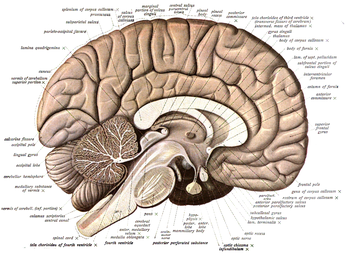
Autopilot is a pop-science/manifesto, where Andrew Smart, a machine learning engineer with a background in neuroscience, argues that busyness is a curse, and that idleness is actually a necessary and useful part of being human. The book has a kind of freshman earnest intensity that overwhelms the argument. I'll buy that there is a resting network in the brain, that activates when we aren't thinking about or doing anything in particular, but I'm not sure that the converse, that activating this network leads to genius, is true. Certainly there's a way in which the managerial jargon of efficiency and always being on task is actually opposed to risk-taking and innovation, but while Smart is persuasive in criticizing Six Sigma in particular, his arguments drawing on Rilke are much less convincing, and the neuroscience comes in a gush of metaphors.
Autopilot is a pop-science/manifesto, where Andrew Smart, a machine learning engineer with a background in neuroscience, argues that busyness is a curse, and that idleness is actually a necessary and useful part of being human. The book has a kind of freshman earnest intensity that overwhelms the argument. I'll buy that there is a resting network in the brain, that activates when we aren't thinking about or doing anything in particular, but I'm not sure that the converse, that activating this network leads to genius, is true. Certainly there's a way in which the managerial jargon of efficiency and always being on task is actually opposed to risk-taking and innovation, but while Smart is persuasive in criticizing Six Sigma in particular, his arguments drawing on Rilke are much less convincing, and the neuroscience comes in a gush of metaphors.

A Deepness in the Sky is the first Vinge novel that I read, and while it lacks the cosmological intensity of A Fire in the Deep, I think it holds up as the superior work.
In the distant future humanity has hit a plateau of development. Human planetary civilizations rise and fall over their century-long cycles, while the interstellar traders of the Qeng Ho skip from system to system in sublight ships, hoping to find a technological civilization worth trading with when they arrive. Just outside of human space is the OnOff star, a stellar anomaly that recently begun crude radio transmissions. The possibility of aliens inspires two great expeditions: a Qeng Ho trading fleet and one from the Emergents, a small interstellar empire that uses a unique form of neurological slavery. What they find is a civilization of giant spiders gone into hibernation, at the threshold of a leap into the information age. It's the most profitable time to arrive, and with the first contact the technological aliens, the value of the prize is infinite.
Above a frozen alien world the fleets collide, nearly annihilate each other in a flurry of nuclear sneak attacks, and the Qeng Ho and Emergents settle into an uneasy unified society. Both sides need each other for survival, and neither trusts the other. The only hope is to last until the locals Spiders develop a tech base that can be bootstrapped to space-flight. Qeng Ho 'peddling' is practically treason to the Emergents, who's use of Focused slaves (people infected with a specialized disease and turned into monomaniacal experts) is anathema to the basic concept of human rights. The Emergents have all the guns, but the Qeng Ho have a secret weapon. In hiding is Pham Nuwen, the legendary founder of the Qeng Ho and a practiced programmer-at-arms. All he has to do is evade the unblinking eye of the most effective police state imaginable, where the will of sadists is backed up by enslaved analysts capable of putting together the pieces of any plans. Meanwhile, the Spiders are facing their own annihilation, with the specter of a nuclear exchange overshadowing mastery of technology that would overturn their long history under the strange OnOff star.
This is a book of slow exploration of three alien societies--even the humans are foreign to us--and then rapid bursts of violent action. Vinge has a real eye for espionage, and the way that slow plans explode into violence and split-second decisions. He uses the multiple points-of-view to maximum effect, revealing how ordinary Qeng Ho see Pham Nuwen's disguise, and the plots of the Emergent dictators. Two technologies, the neurological Focus and the localizers (tiny internet-of-things chips) that Nuwen uses as his backdoor, stand out as some great sci-fi. The Spiders are deliberate cast as twee Victorian Heroic Engineers, a some-what grating narrative choice that is explained in book.
There are some similarities with A Fire in the Deep: Pham Nuwen, an alien society reaching new levels of technology, a Machiavellian antagonist, but this book handles the same themes with greater elegance and style, absent the hoary space-opera-isms of the earlier book.
In the distant future humanity has hit a plateau of development. Human planetary civilizations rise and fall over their century-long cycles, while the interstellar traders of the Qeng Ho skip from system to system in sublight ships, hoping to find a technological civilization worth trading with when they arrive. Just outside of human space is the OnOff star, a stellar anomaly that recently begun crude radio transmissions. The possibility of aliens inspires two great expeditions: a Qeng Ho trading fleet and one from the Emergents, a small interstellar empire that uses a unique form of neurological slavery. What they find is a civilization of giant spiders gone into hibernation, at the threshold of a leap into the information age. It's the most profitable time to arrive, and with the first contact the technological aliens, the value of the prize is infinite.
Above a frozen alien world the fleets collide, nearly annihilate each other in a flurry of nuclear sneak attacks, and the Qeng Ho and Emergents settle into an uneasy unified society. Both sides need each other for survival, and neither trusts the other. The only hope is to last until the locals Spiders develop a tech base that can be bootstrapped to space-flight. Qeng Ho 'peddling' is practically treason to the Emergents, who's use of Focused slaves (people infected with a specialized disease and turned into monomaniacal experts) is anathema to the basic concept of human rights. The Emergents have all the guns, but the Qeng Ho have a secret weapon. In hiding is Pham Nuwen, the legendary founder of the Qeng Ho and a practiced programmer-at-arms. All he has to do is evade the unblinking eye of the most effective police state imaginable, where the will of sadists is backed up by enslaved analysts capable of putting together the pieces of any plans. Meanwhile, the Spiders are facing their own annihilation, with the specter of a nuclear exchange overshadowing mastery of technology that would overturn their long history under the strange OnOff star.
This is a book of slow exploration of three alien societies--even the humans are foreign to us--and then rapid bursts of violent action. Vinge has a real eye for espionage, and the way that slow plans explode into violence and split-second decisions. He uses the multiple points-of-view to maximum effect, revealing how ordinary Qeng Ho see Pham Nuwen's disguise, and the plots of the Emergent dictators. Two technologies, the neurological Focus and the localizers (tiny internet-of-things chips) that Nuwen uses as his backdoor, stand out as some great sci-fi. The Spiders are deliberate cast as twee Victorian Heroic Engineers, a some-what grating narrative choice that is explained in book.
There are some similarities with A Fire in the Deep: Pham Nuwen, an alien society reaching new levels of technology, a Machiavellian antagonist, but this book handles the same themes with greater elegance and style, absent the hoary space-opera-isms of the earlier book.

Ice Station Zebra is a classic Cold War technothriller and mystery novel. A British artic ice weather station has sent an SOS that fire had destroyed most of the base and killed several members of the crew, and with winter closing in, the only chance of rescue for the survivors is a cutting edge nuclear submarine, the USS Dolphin. The story is told through the eyes of Dr. Carpenter, a British expert in arctic survival with surprising resources, as he bonds with the suspicious American crew, survives several sabotage attempts that nearly destroy the Dolphin, and reveals a dangerous traitor.
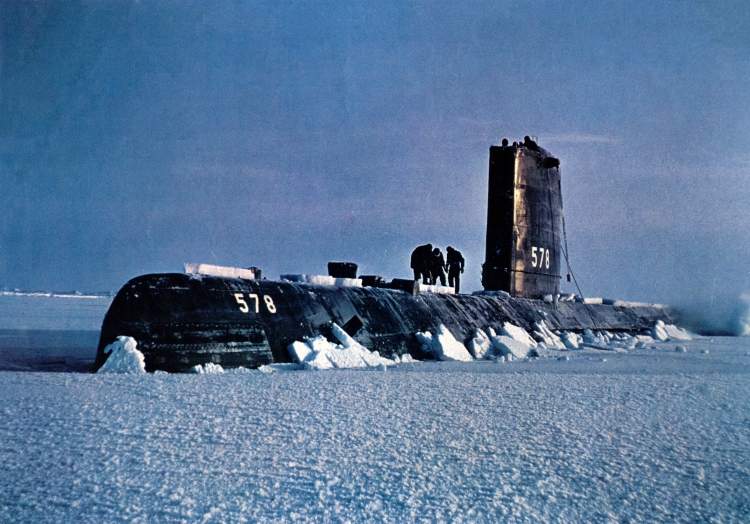
USS Skate surfacing at the North Pole in 1959, an inspiration for the book
What works is the gripping tension of the book, the escalating stakes. Zebra is not an innocent weather station, and the men there did not die in some tragic accident, but were deliberately murdered as part of an espionage mission with stakes that could change the course of the Cold War. The enemy is willing to kill again and again, and it takes all of Carpenter's cleverness and personal bravery to figure out who among the crew and survivors can be trusted, and who is his ultimate enemy.
However, Carpenter's hidden knowledge about the true purpose of Zebra, to capture a Soviet reconnaissance satellite film package, and his true identity as a British counter-intelligence agent, is doled out to the reader in dribs and drabs, with an irritating "But I have more secrets" internal monologue, which does drive mystery, but is also an obvious gambit.
Ultimately, MacLean is a master storyteller. My high school library had a well-loved copy of The Guns of Navarone, and while I think WW2 is his native ground, Zebra holds up 60 years later, with the cutting edge technology having worn it's way into a period thriller.
USS Skate surfacing at the North Pole in 1959, an inspiration for the book
What works is the gripping tension of the book, the escalating stakes. Zebra is not an innocent weather station, and the men there did not die in some tragic accident, but were deliberately murdered as part of an espionage mission with stakes that could change the course of the Cold War. The enemy is willing to kill again and again, and it takes all of Carpenter's cleverness and personal bravery to figure out who among the crew and survivors can be trusted, and who is his ultimate enemy.
However, Carpenter's hidden knowledge about the true purpose of Zebra, to capture a Soviet reconnaissance satellite film package, and his true identity as a British counter-intelligence agent, is doled out to the reader in dribs and drabs, with an irritating "But I have more secrets" internal monologue, which does drive mystery, but is also an obvious gambit.
Ultimately, MacLean is a master storyteller. My high school library had a well-loved copy of The Guns of Navarone, and while I think WW2 is his native ground, Zebra holds up 60 years later, with the cutting edge technology having worn it's way into a period thriller.
The Prefect starts slowly with the murder of just under 1000 people in one of the Glitter Band habitats in an apparent trade deal gone wrong. Dreyfus is a very special kind of cop, working for an agency called Panoply that focuses on existential threats to the Glitter Band: violations of democratic process, weapons of mass destruction, and conflicts between factions. The destruction of a habitat appears to be local Demarchists vs interstellar Ultras, but the situation smells.
A lot of this will be familiar to people who have read other books in the Revelation Space series. What's new is finally seeing Demarchist society at it's Belle Epoque height, before it was ravaged by the Melding Plague and the Inhibitors. The technology works with Clarkean magic and people are actually decent to each other.
Of course, this being Reynolds, things fall apart quickly. The destruction of the habitat is linked to the scheming of Aurora, an Alpha-level AI that somehow survived the Sylveste institute upload process who escaped into the net. Aurora can sense the Melding Plague coming, but is unable to figure out what it is or how to stop it. She's subverted the head of Panoply's internal security and is planning a take-over of the Glitter Band to make it safe for herself. As for all those pesky humans, well, they'll just have to go.
The only salvation is the Clockmaker, another machine intelligence that 11 years ago broke it's chains in a violent escape that killed several Panoply agents, including Dreyfus' wife, and placed a deadly device on the neck of the current head of Panoply which might kill her. The Clockmaker is a near mythical force of chaos, supposedly destroyed with nuclear weapons, but it's a devil that might not want humanity dead.
The setting is my favorite version of Revelation Space, and the action picks up fast in the last third, but this is yet another Reynolds' protagonist with a damaged memory and dangerous obsessions, and subplot around a group of ordinary citizens trapped in a museum with a Panoply deputy sets up some plot points, but is tedious and barely connected to the rest of the book.
A lot of this will be familiar to people who have read other books in the Revelation Space series. What's new is finally seeing Demarchist society at it's Belle Epoque height, before it was ravaged by the Melding Plague and the Inhibitors. The technology works with Clarkean magic and people are actually decent to each other.
Of course, this being Reynolds, things fall apart quickly. The destruction of the habitat is linked to the scheming of Aurora, an Alpha-level AI that somehow survived the Sylveste institute upload process who escaped into the net. Aurora can sense the Melding Plague coming, but is unable to figure out what it is or how to stop it. She's subverted the head of Panoply's internal security and is planning a take-over of the Glitter Band to make it safe for herself. As for all those pesky humans, well, they'll just have to go.
The only salvation is the Clockmaker, another machine intelligence that 11 years ago broke it's chains in a violent escape that killed several Panoply agents, including Dreyfus' wife, and placed a deadly device on the neck of the current head of Panoply which might kill her. The Clockmaker is a near mythical force of chaos, supposedly destroyed with nuclear weapons, but it's a devil that might not want humanity dead.
The setting is my favorite version of Revelation Space, and the action picks up fast in the last third, but this is yet another Reynolds' protagonist with a damaged memory and dangerous obsessions, and subplot around a group of ordinary citizens trapped in a museum with a Panoply deputy sets up some plot points, but is tedious and barely connected to the rest of the book.

The Friends of Eddie Coyle may be one of the most influential neo-noirs of the 20th century. The titular Eddie Coyle is a small time gunrunner and mob affiliate facing a few years of Federal prison time. Aside from his career, he's basically a middle class guy, and he doesn't want to spend a couple years on ice away from his wife and kids. The only way out is to give the cops enough evidence on someone more interesting to get his bootlegging charges dropped. Meanwhile, other small time hoods are running their own schemes: selling machine guns to political radicals, robbing banks, and running a bar/mafia answer service, all under the knowledge that any of them might turn rat.
The story unfolds through looping, discursive, incredibly realistic dialog. These are guys with a lot of street smarts and not a lot of wisdom, trying to put together their deals, feel out the other side, and mostly gripe about their lot in life. Nobody including the cops, who are just another set of crime adjacent working stiffs, has anything approaching the whole picture.
Just a gorgeously bleak and cynical book.
The story unfolds through looping, discursive, incredibly realistic dialog. These are guys with a lot of street smarts and not a lot of wisdom, trying to put together their deals, feel out the other side, and mostly gripe about their lot in life. Nobody including the cops, who are just another set of crime adjacent working stiffs, has anything approaching the whole picture.
Just a gorgeously bleak and cynical book.