Take a photo of a barcode or cover
2.05k reviews by:
mburnamfink


I'm about to embark on some long, hard, and boring books, so I figured I'd hit some quick and easy ones to keep the numbers up.
What the Dead Know is a novelette around a pair of mediums in late 19th century America. One is an exotic European, one is Vietnamese, and together they con people with parlor tricks and minor magical powers. A séance at a failing girl's school goes in an unexpected direction, and our narrator discovers a terrible crime and watches the dead take revenge.
It's short, it's stylish, and a day later I have only the vaguest impressions of what's up. A fine creampuff.
What the Dead Know is a novelette around a pair of mediums in late 19th century America. One is an exotic European, one is Vietnamese, and together they con people with parlor tricks and minor magical powers. A séance at a failing girl's school goes in an unexpected direction, and our narrator discovers a terrible crime and watches the dead take revenge.
It's short, it's stylish, and a day later I have only the vaguest impressions of what's up. A fine creampuff.

I'll definitely put myself down more as a minimalist rather than a zero waste sustainability person. My own ecopolitics tend towards ecomodernism, which argues for a systematic cost-benefit approach to a high energy planet. "Waste" is a constructed, political category.
But me and Seferian can both agree that we have too much crap, too much shoddy, temporary junk designed to be thrown away, permanent purchases for temporary retail therapy, and all that's wrong. Along with the rants about buying in bulk in your own reusable containers, avoiding plastics, and composting and gardening, there's some brief pragmatic advice about vegetable storage which my Boomer parents never taught me (or I probably just ignored, in fairness), capsule wardrobes swapped out between seasons to use space in your closet efficiently, and while I am skeptical that various mixtures of vinegar, baking soda, and castile soap are as effective as commercial cleaning products, I'm willing to run at least one test.
But me and Seferian can both agree that we have too much crap, too much shoddy, temporary junk designed to be thrown away, permanent purchases for temporary retail therapy, and all that's wrong. Along with the rants about buying in bulk in your own reusable containers, avoiding plastics, and composting and gardening, there's some brief pragmatic advice about vegetable storage which my Boomer parents never taught me (or I probably just ignored, in fairness), capsule wardrobes swapped out between seasons to use space in your closet efficiently, and while I am skeptical that various mixtures of vinegar, baking soda, and castile soap are as effective as commercial cleaning products, I'm willing to run at least one test.

Hello internet, I have some unpleasant personal news, which you can probably infer from the existence of this book review.
The Mountain Goats - No Children
The anthem for this kind of suck
The upside is that this is a really good book, with much of the same advice I got from real lawyers at about 2% of the cost. Raif's perspective as a veteran Chicago family law attorney and divorcee is that it's possible to get the important stuff out of a divorce (see subtitle, kids, money, mind), as long as you stay focused and don't get hung up on the impossible stuff.
Basically, the courts cannot give you emotional validation or everything you want. No judge will declare you the goodest best person and your ex a vile fiend, and award you all the money and full custody. Trying to use the divorce process to punish your ex is extremely counter-productive. Trials are long, expensive, emotionally fraught, and almost never deliver desired outcomes. If you're smart, you'll work this out through alternative dispute resolution (arbitration, mediation, collaborative law), spend a lot less money, and have a better emotional foundation to build the rest of your life on.
The basic stance is one of cost-benefit analysis and avoiding stupid decisions. Accepting an "unfavorable" settlement on property now is better than fighting to a "better" deal where legal fees have more than consumed anything that would be gained. Odds are you're going to get something like 50-50 shared time, but you can't force teenagers to spend time with you, even with a custody schedule. And above all, don't get stupid and emotional. This might be hard, especially if infidelity is involved, but bad-mouthing the ex, weaponizing the kids, or letting friends and relatives steer the process can all lead you into mistakes. And never ever lie to the court or try and conceal things. This can easily lead you to lose the metanarrative, even if the facts are on your side.
Of course, this assumes everybody is reasonable, which might not be true. Sometimes your partner hires Genghis Khan to represent them. Or maybe it turned out that you married a clinical narcissist. Either way, this is going to suck more, but knowing when to cut and run is often more important than knowing how to fight.
The Mountain Goats - No Children
The anthem for this kind of suck
The upside is that this is a really good book, with much of the same advice I got from real lawyers at about 2% of the cost. Raif's perspective as a veteran Chicago family law attorney and divorcee is that it's possible to get the important stuff out of a divorce (see subtitle, kids, money, mind), as long as you stay focused and don't get hung up on the impossible stuff.
Basically, the courts cannot give you emotional validation or everything you want. No judge will declare you the goodest best person and your ex a vile fiend, and award you all the money and full custody. Trying to use the divorce process to punish your ex is extremely counter-productive. Trials are long, expensive, emotionally fraught, and almost never deliver desired outcomes. If you're smart, you'll work this out through alternative dispute resolution (arbitration, mediation, collaborative law), spend a lot less money, and have a better emotional foundation to build the rest of your life on.
The basic stance is one of cost-benefit analysis and avoiding stupid decisions. Accepting an "unfavorable" settlement on property now is better than fighting to a "better" deal where legal fees have more than consumed anything that would be gained. Odds are you're going to get something like 50-50 shared time, but you can't force teenagers to spend time with you, even with a custody schedule. And above all, don't get stupid and emotional. This might be hard, especially if infidelity is involved, but bad-mouthing the ex, weaponizing the kids, or letting friends and relatives steer the process can all lead you into mistakes. And never ever lie to the court or try and conceal things. This can easily lead you to lose the metanarrative, even if the facts are on your side.
Of course, this assumes everybody is reasonable, which might not be true. Sometimes your partner hires Genghis Khan to represent them. Or maybe it turned out that you married a clinical narcissist. Either way, this is going to suck more, but knowing when to cut and run is often more important than knowing how to fight.

"The unexamined life is not worth living"
--Socrates

"Self-realization. I was thinking of the immortal words of Socrates, who said, "... I drank what?""
--Chris Knight, Real Genius
Whatever version of Socrates' wisdom you prefer, there's definitely something of value in keeping in a journal. Some published journals have never left print, revealing the lives and psychology of geniuses, ordinary people, people in moments of historic turmoil, and people with nothing more thrilling than the play of light in an almost empty room. Even if you aren't Virginia Woolf or Anne Frank, your descendants might wish to know who you were, you may wish to remember your youth when you're old.
I irregular keep a journal*, mostly as a pretext to write with fountain pens, and that journal is frankly, what Johnson identifies as the introspective whine, a psychological venting of spleen and complaints that I'd be embarrassed and terrified to show anybody else. The core of Johnson's practice is to focus first on sensation, then on memory, then on pattern and narrative. The specific sensory impression of a moment, like Proust's madeleine, acts as a trigger to a whole world of the cobwebbed past. And as the moments come alive again, you can see the choices you made in your life that, well, made your life. Each chapter is dotted with specific examples and closes with useful exercises. I hope they'll improve the quality of my journals.
*it also strikes me that in many way, my 1500+ book reviews over 10 years on this site are another journal, so thank you for reading along, friends.
--Socrates
"Self-realization. I was thinking of the immortal words of Socrates, who said, "... I drank what?""
--Chris Knight, Real Genius
Whatever version of Socrates' wisdom you prefer, there's definitely something of value in keeping in a journal. Some published journals have never left print, revealing the lives and psychology of geniuses, ordinary people, people in moments of historic turmoil, and people with nothing more thrilling than the play of light in an almost empty room. Even if you aren't Virginia Woolf or Anne Frank, your descendants might wish to know who you were, you may wish to remember your youth when you're old.
I irregular keep a journal*, mostly as a pretext to write with fountain pens, and that journal is frankly, what Johnson identifies as the introspective whine, a psychological venting of spleen and complaints that I'd be embarrassed and terrified to show anybody else. The core of Johnson's practice is to focus first on sensation, then on memory, then on pattern and narrative. The specific sensory impression of a moment, like Proust's madeleine, acts as a trigger to a whole world of the cobwebbed past. And as the moments come alive again, you can see the choices you made in your life that, well, made your life. Each chapter is dotted with specific examples and closes with useful exercises. I hope they'll improve the quality of my journals.
*it also strikes me that in many way, my 1500+ book reviews over 10 years on this site are another journal, so thank you for reading along, friends.

From one perspective, negotiations are the art of the possible, of finding an acceptable middle ground between two opposing views so that both sides walk away happy. Voss does not take that perspective. He's a retired FBI hostage negotiator, specializing in international kidnappings, and half a hostage is worse than none. Negotiations aren't a logic puzzle to be solved with game theories, but an emotional war where empathy, insight, and the judo of tactical questions are your keys to success.

Run The Jewels/DJ Shadow - Nobody Speak
A masterclass in negotiation.
The chapters in this book are framed around various criminal cases, each of which reveal some hard lesson Voss learned in his career. And while hostage negotiations are really fraught, the advice should apply to more mundane negotiations over salary and major purchases. The basic framework is one of emotional judo. You want the other party to wind up taking your side, doing your work for you, which involves understanding their worldview and what they really want. The first principle is to avoid emotional defensiveness. A basic question of "How can I do that?" can work wonders in getting people to see your side of the issue. Letting someone say no at first can give them the emotional comfort necessary to say yes to the big ask. A technique called labelling, where you explicitly talk about obstacles to success, including your own flaws, can help defuse tensions, while labelling what you believe the other side thinks is important can clarify real issues. When the other side is acting irrationally, look for circumstances beyond their control which might be driving their statements. And finally, use the Ackerman system for pricing. Have a real target of 100%, and start from 65%, to 85%, 95%, and finally close at 100%. Specific, non-round numbers and high anchoring help you squeeze every last dollar out of a deal.
I'm not good at negotiating. I've definitely gotten screwed at the car dealership, but then again who hasn't. Hopefully, this book will help me negotiate better.
Run The Jewels/DJ Shadow - Nobody Speak
A masterclass in negotiation.
The chapters in this book are framed around various criminal cases, each of which reveal some hard lesson Voss learned in his career. And while hostage negotiations are really fraught, the advice should apply to more mundane negotiations over salary and major purchases. The basic framework is one of emotional judo. You want the other party to wind up taking your side, doing your work for you, which involves understanding their worldview and what they really want. The first principle is to avoid emotional defensiveness. A basic question of "How can I do that?" can work wonders in getting people to see your side of the issue. Letting someone say no at first can give them the emotional comfort necessary to say yes to the big ask. A technique called labelling, where you explicitly talk about obstacles to success, including your own flaws, can help defuse tensions, while labelling what you believe the other side thinks is important can clarify real issues. When the other side is acting irrationally, look for circumstances beyond their control which might be driving their statements. And finally, use the Ackerman system for pricing. Have a real target of 100%, and start from 65%, to 85%, 95%, and finally close at 100%. Specific, non-round numbers and high anchoring help you squeeze every last dollar out of a deal.
I'm not good at negotiating. I've definitely gotten screwed at the car dealership, but then again who hasn't. Hopefully, this book will help me negotiate better.

How To Disappear is very analog tradecraft for the rest of us. Ahearn is a former skiptracer, and he now works the other side, helping people disappear. While the image might be glamorously faking your own death to live on a tropical beach, the real world of not being found is a lot of scared and abused women.
Ahearn's basic method as a skiptracer was pretext calling. He'd call up various company, utilities being particularly vulnerable, pretend to be his target, and get their current account details. Occasionally this required some creativity: a classic car enthusiast couldn't go without a magazine subscription, but on the whole customer service representatives are easily fooled.
Companies have a lot of data on you, most of which they don't actually need. Getting this data deleted is hard, so it's much easier to make small 'corrections' to your personal information. Misspell your name, transpose digits in your social security number, update your address to a PO box, set your phone number to a pizza place.
But going off the grid entirely is hard, so you need to begin setting up new legitimate services, using prepaid cellphones and PO boxes as cut outs. Ahearn is frustratingly vague on the details of working a job and paying rent while disappeared (I guess he doesn't want to give away his whole business in the book), but the safest thing to do is to incorporate a company with a generic name and have it serve as your cut out to the financial world. And while you're setting up a legitimate hidey hole, investigate as many dummies as possible, leaving dead-end bread crumbs for skiptracers.
The final bit of disappearing as anyone who has watched Monty Python knows, is not to stand up you idiot. Don't use your any social media service. Don't log in to anything with an account that can be tied to you. Don't contact people from your old life. If there's close family who you absolutely can't cut contact with, use a series of automatically forwarded cellphones to communicate. As with intelligence tradecraft, it isn't hard, it just takes time, money, and a lot of discipline. More discipline. No, more than that. You really can't be too disciplined.
How to Disappear isn't that old of a book, but it feels older, and much more resolutely analog than something published in 2010. But Ahearn is an amusing raconteur, which smooths over some of the rough spots.
Ahearn's basic method as a skiptracer was pretext calling. He'd call up various company, utilities being particularly vulnerable, pretend to be his target, and get their current account details. Occasionally this required some creativity: a classic car enthusiast couldn't go without a magazine subscription, but on the whole customer service representatives are easily fooled.
Companies have a lot of data on you, most of which they don't actually need. Getting this data deleted is hard, so it's much easier to make small 'corrections' to your personal information. Misspell your name, transpose digits in your social security number, update your address to a PO box, set your phone number to a pizza place.
But going off the grid entirely is hard, so you need to begin setting up new legitimate services, using prepaid cellphones and PO boxes as cut outs. Ahearn is frustratingly vague on the details of working a job and paying rent while disappeared (I guess he doesn't want to give away his whole business in the book), but the safest thing to do is to incorporate a company with a generic name and have it serve as your cut out to the financial world. And while you're setting up a legitimate hidey hole, investigate as many dummies as possible, leaving dead-end bread crumbs for skiptracers.
The final bit of disappearing as anyone who has watched Monty Python knows, is not to stand up you idiot. Don't use your any social media service. Don't log in to anything with an account that can be tied to you. Don't contact people from your old life. If there's close family who you absolutely can't cut contact with, use a series of automatically forwarded cellphones to communicate. As with intelligence tradecraft, it isn't hard, it just takes time, money, and a lot of discipline. More discipline. No, more than that. You really can't be too disciplined.
How to Disappear isn't that old of a book, but it feels older, and much more resolutely analog than something published in 2010. But Ahearn is an amusing raconteur, which smooths over some of the rough spots.

A More Beautiful Question is a flashy journey through the power of questioning to spark dialog, to bring people together, to upset the world, and too innovate. Berger synthesizes a lot of experience as journalist to look at the role that questioning plays in creativity, and develops a simple model based around "Why?-->What If?-->How?"
This book is best when it's selling ideas: Montessori schools as an antidote to how public schools beat questioning out of kids, the people at The Right Question Institute and IDEO. However, it commits the all-too-common error of assuming that because Silicon Valley people are rich, they are also wise. Berger tries to lay out a hagiographic account of heroically questioning tech founders, which doesn't match up with the actually process of innovation, or the very obvious limits to Silicon Valley ideology. Protip for Uber and AirBNB, wholesale violation of the law is not a business model. And likewise for Google and Facebook, advertising is not a human net good.
Also, questioning is hard. Trust me, as a PhD social scientist the most important part of a project is setting up your research question in a way that is both impactful and doable. Questioning is an action, but it also seems to be a behavior characteristic of a questioning mindset. Why do we stop asking questions? What if we never stopped? How do we ask questions again? This book says the answer is a kind of California zen. I'm less sure.
This book is best when it's selling ideas: Montessori schools as an antidote to how public schools beat questioning out of kids, the people at The Right Question Institute and IDEO. However, it commits the all-too-common error of assuming that because Silicon Valley people are rich, they are also wise. Berger tries to lay out a hagiographic account of heroically questioning tech founders, which doesn't match up with the actually process of innovation, or the very obvious limits to Silicon Valley ideology. Protip for Uber and AirBNB, wholesale violation of the law is not a business model. And likewise for Google and Facebook, advertising is not a human net good.
Also, questioning is hard. Trust me, as a PhD social scientist the most important part of a project is setting up your research question in a way that is both impactful and doable. Questioning is an action, but it also seems to be a behavior characteristic of a questioning mindset. Why do we stop asking questions? What if we never stopped? How do we ask questions again? This book says the answer is a kind of California zen. I'm less sure.

How to Win Friends and Influence People is one of the of the classics of the self-help genre, and still holds up today, with lots of examples. Carnegie's principles are simple: stop being such a sourpuss, appreciate other people, avoid fights, and they'll come around to your point of view soon enough. Leadership consists more of praise than of scolding. Become the means by which other people fulfill their desires.
As always the, devils in the details: How does one genuinely appreciate and become interested in other human beings, flawed and mundane as many of them are? How do you balance your own bad habits of braggadocio and point scoring with apply these methods in the moment.
Well, we'll see.
As always the, devils in the details: How does one genuinely appreciate and become interested in other human beings, flawed and mundane as many of them are? How do you balance your own bad habits of braggadocio and point scoring with apply these methods in the moment.
Well, we'll see.

Everybody says they want to be innovative. Everybody says they want to be part of a learning organization. And almost no one actually is. Learning War is a closely focused study of changes in the US Navy between the Spanish American War and the end of World War 2, using a complex adaptive system theoretical framework to explain eventual US dominance in the Pacific, as exemplified by the development and integration of the Combat Information Center.
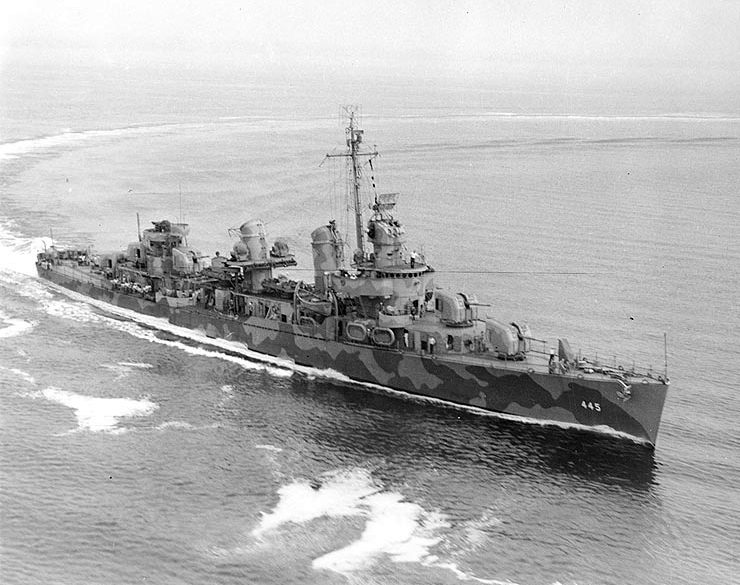
USS Fletcher. Destroyers like this one were key to US Navy learning
The story actually starts a little bit earlier than 1898, and begins with personnel policy. The US Navy had expanded immensely during the Civil War, and then contracted as the nation focused on the western frontier. Promotion was based solely on seniority, which meant that senior ranks were clogged with Civil War 'old tars', who had a traditional Nelsonian conception of fighting ships. This was a major problem, both because ambitious young officers were stagnating, and naval technology was doing anything but, as steam engines, ironclad ships, and explosive shells would let modern armored cruisers literally sail circles around old ships of the line while smashing them with impunity.
The US won all the major naval battles of the Spanish-American war, but these victories revealed serious flaws in fleet organization and training. A group of insurgent officers, along with key political backers like Teddy Roosevelt instituted far-reaching changes, including professional training at the naval war college, the merging of line and engineering officer paths, and merit-based promotions. A permanent staff assisted the civilian Secretary of the Navy, creating some institution durability across administrations. The Navy gain its first permanent major unit in the Atlantic Fleet, allowing realistic training and experimentation to see what tactics worked.
A second set of changes was primarily technological. The power of guns had far outpaced traditional methods of aiming by eye and feel. Weapons capable of reaching out miles required precision aim that took into account the exact range, bearing, speed of the target, as well as local roll, weather conditions, and even the Coriolis effect. Range-keepers, mechanical devices that predicted the position of the enemy and fired guns by electrical circuit when they bore. The basic range keeper had what would later be called an open architecture, allowing new devices like the more sophisticated Ford fire control computer and radar to be integrated into the system as they were developed.
And finally, there was a culture of experimentation around how to best use these technologies. Gunnery practices were codified in fleet-wide competitions, with similar competitions for efficiency in other areas. Large scale fleet problems validated ideas developed in war games at the Naval War College, and could serve to boost or destroy careers.
When war finally came in 1941, the United States was ready, but also somewhat unprepared. While Midway was an unexpected victory after the defeats of the opening offensive, the naval battles around Guadalcanal revealed serious weaknesses in US Navy practices. Distinguishing friendly from enemy ships was a perennial problem in night battles. Japanese torpedoes were immensely superior to American equivalents, and US destroyer tactics emphasized guns over torpedoes anyway. Task groups thrown together from available units had trouble coordinating. And technological advantages in radar were negated because captains had trouble forming a coherent picture of the battle from incremental reports. What success did occur came at immense cost due to underlying principles of individual initiative and aggression from subordinates, as in the First Naval Battle of Guadalcanal, where the decimation of an outgunned US task force prevent the landing of significant reinforcement and supplies to Japanese troops on the island.
As the Solomon Islands campaign ground on, Admiral Nimitz directed that captain form a combat operations center (later CIC) on their ships, but left the exact nature and methods of the CIC up to individual captains. As ships rotated through battles, hard-learned lessons and best practices were exchanged in schools and conferences immediately behind the front lines. Within a year, formal doctrine manuals were published, explaining how best to organizing and fight a ship. The decisive battles of 1944 saw an end to American command confusion, with an efficient and effective use of airplanes, battleships, and light units to comprehensively destroy the Imperial Japanese Navy.
The US Navy won because it was a learning organization, and it is unfortunately no longer one in Hone's estimation. While the Navy is not institutionally complacent, there are worrying signs of problems in recent surface collisions and rising Chinese naval power.
My only caveat on this book is that I'm not sure what complex adaptive systems adds as theoretical framework, beyond jargon. The basic principles of innovation are clear. Start with good people, create standards of success, and reward successful experimentation. Telling people how to do something instead of what to do, or keeping a bunch of dead wood around, or not having clarity about what the goal actually is, will all handicap organizational learning.
Simple, right?
USS Fletcher. Destroyers like this one were key to US Navy learning
The story actually starts a little bit earlier than 1898, and begins with personnel policy. The US Navy had expanded immensely during the Civil War, and then contracted as the nation focused on the western frontier. Promotion was based solely on seniority, which meant that senior ranks were clogged with Civil War 'old tars', who had a traditional Nelsonian conception of fighting ships. This was a major problem, both because ambitious young officers were stagnating, and naval technology was doing anything but, as steam engines, ironclad ships, and explosive shells would let modern armored cruisers literally sail circles around old ships of the line while smashing them with impunity.
The US won all the major naval battles of the Spanish-American war, but these victories revealed serious flaws in fleet organization and training. A group of insurgent officers, along with key political backers like Teddy Roosevelt instituted far-reaching changes, including professional training at the naval war college, the merging of line and engineering officer paths, and merit-based promotions. A permanent staff assisted the civilian Secretary of the Navy, creating some institution durability across administrations. The Navy gain its first permanent major unit in the Atlantic Fleet, allowing realistic training and experimentation to see what tactics worked.
A second set of changes was primarily technological. The power of guns had far outpaced traditional methods of aiming by eye and feel. Weapons capable of reaching out miles required precision aim that took into account the exact range, bearing, speed of the target, as well as local roll, weather conditions, and even the Coriolis effect. Range-keepers, mechanical devices that predicted the position of the enemy and fired guns by electrical circuit when they bore. The basic range keeper had what would later be called an open architecture, allowing new devices like the more sophisticated Ford fire control computer and radar to be integrated into the system as they were developed.
And finally, there was a culture of experimentation around how to best use these technologies. Gunnery practices were codified in fleet-wide competitions, with similar competitions for efficiency in other areas. Large scale fleet problems validated ideas developed in war games at the Naval War College, and could serve to boost or destroy careers.
When war finally came in 1941, the United States was ready, but also somewhat unprepared. While Midway was an unexpected victory after the defeats of the opening offensive, the naval battles around Guadalcanal revealed serious weaknesses in US Navy practices. Distinguishing friendly from enemy ships was a perennial problem in night battles. Japanese torpedoes were immensely superior to American equivalents, and US destroyer tactics emphasized guns over torpedoes anyway. Task groups thrown together from available units had trouble coordinating. And technological advantages in radar were negated because captains had trouble forming a coherent picture of the battle from incremental reports. What success did occur came at immense cost due to underlying principles of individual initiative and aggression from subordinates, as in the First Naval Battle of Guadalcanal, where the decimation of an outgunned US task force prevent the landing of significant reinforcement and supplies to Japanese troops on the island.
As the Solomon Islands campaign ground on, Admiral Nimitz directed that captain form a combat operations center (later CIC) on their ships, but left the exact nature and methods of the CIC up to individual captains. As ships rotated through battles, hard-learned lessons and best practices were exchanged in schools and conferences immediately behind the front lines. Within a year, formal doctrine manuals were published, explaining how best to organizing and fight a ship. The decisive battles of 1944 saw an end to American command confusion, with an efficient and effective use of airplanes, battleships, and light units to comprehensively destroy the Imperial Japanese Navy.
The US Navy won because it was a learning organization, and it is unfortunately no longer one in Hone's estimation. While the Navy is not institutionally complacent, there are worrying signs of problems in recent surface collisions and rising Chinese naval power.
My only caveat on this book is that I'm not sure what complex adaptive systems adds as theoretical framework, beyond jargon. The basic principles of innovation are clear. Start with good people, create standards of success, and reward successful experimentation. Telling people how to do something instead of what to do, or keeping a bunch of dead wood around, or not having clarity about what the goal actually is, will all handicap organizational learning.
Simple, right?

Forgotten Ally is a serious scholarly contribution to a major theater of World War 2 which has been understudied in the literature. China fought one of the longest versions of World War 2, with major combat operations from the 1937 invasion by Japan right up to V-J Day. This international war was book-ended by the regional conflicts of the Warlord Period and the Communist victory of the Chinese Civil War, making up long decades of conflict which killed millions of people and wrecked Chinese infrastructure, but also laid the groundwork for the modern Chinese state. Mitter's analysis is focused on Nationalist leader Chiang Kai-shek and the state-making trauma of the war, with a secondary look at Mao, and the almost forgotten collaborationist Nationalist Wang Jingwei.
China had a profoundly awful 19th century. Starting the century as a great imperial power, a sequence of colonial skirmishes with European powers saw the credibility of the Qing dynasty wrecked with unequal treaties that granted Europeans substantial commercial concessions and legal immunities. The Taiping Rebellion burned across China's agricultural heartland, killing millions and leading to a major devolution of central power down to regional military-political governors. And while the entire world had to come to grips with the new industrial modernity of the period, China had particular cultural troubles adapting.
The 20th century was little better, as Sun Yat-sen's dream of a modern Chinese Republic fell apart into factional warlordism, and while China got Germany and Austria's concessions, other foreign powers remained. Rising Japanese militarism saw China as subordinate to Japanese pan-Asianism, another form of imperial domination. Manchuria fell under Japanese control in 1931, and then the hammer fell properly in 1937 with a massive invasion.
The Nationalist defense was spirited, but serious deficiencies in material, airpower, morale, and command meant that Chinese forces suffered a series of defeats in the north, at Shanghai, Nanking, and Wuhan forced Nationalist retreats from the richest and most productive provinces. Nanking was comprehensively destroyed, the infamous Rape of Nanking, while Nationalist forces destroyed dikes on the Yellow River, creating flooding that gave a few months of tactical breathing space, but also consigned millions to a horrific famine. Japanese forces reached their military limits in the Chinese interior, controlling railroads and major cities, and able to strike more or less at will, as they would repeatedly through the war, but unable to deliver a decisive blow.
Chiang Kai-shek endured the grinding defeats and dislocations with almost no support from Western democracies prior to Pearl Harbor, and then only minor support thereafter. British envoys continued to treat the Chinese as colonial subjects, while American aid was fraught with inter-service rivalries and personal conflicts around General "Vinegar Joe" Stillwell. The Nationalist government was infamously brutal and corrupt, ruling via arbitrary terror and enriching a small clique around Chiang Kai-shek while millions of Chinese starved. Not that anyone else could have likely done better, insurmountable military and political problems greatly hampered Chiang's war effort, while treating the Chinese theater as a tertiary concern was endemic for all the Allies. Ddespite the devastation of war, resistance created a modern national mythology for China, efforts to care for refugees (however insufficient) provided a basis for modern welfare state practices, and Mao's experiments in the base area of Yan'an acted a model for the future red terrors of the Great Leap Forward and Cultural Revolution.
This book is a serious academic contribution to the literature, and a valuable reassessment of the Nationalist war effort without either Chinese Communist Party propaganda lines, or the American Cold War debates about "who lost China". Yet a couple of gaps prevent it from reaching five stars. First, I'd describe the writing as competent. Mitter is a good historian, but sometimes a reader appreciate a little more flash. Second, the Japanese were the actual protagonists of the war: their strategic vision drove the conflict, and full account of the war would include why and how Japan fought as it did, not just the Chinese resistance.
China had a profoundly awful 19th century. Starting the century as a great imperial power, a sequence of colonial skirmishes with European powers saw the credibility of the Qing dynasty wrecked with unequal treaties that granted Europeans substantial commercial concessions and legal immunities. The Taiping Rebellion burned across China's agricultural heartland, killing millions and leading to a major devolution of central power down to regional military-political governors. And while the entire world had to come to grips with the new industrial modernity of the period, China had particular cultural troubles adapting.
The 20th century was little better, as Sun Yat-sen's dream of a modern Chinese Republic fell apart into factional warlordism, and while China got Germany and Austria's concessions, other foreign powers remained. Rising Japanese militarism saw China as subordinate to Japanese pan-Asianism, another form of imperial domination. Manchuria fell under Japanese control in 1931, and then the hammer fell properly in 1937 with a massive invasion.
The Nationalist defense was spirited, but serious deficiencies in material, airpower, morale, and command meant that Chinese forces suffered a series of defeats in the north, at Shanghai, Nanking, and Wuhan forced Nationalist retreats from the richest and most productive provinces. Nanking was comprehensively destroyed, the infamous Rape of Nanking, while Nationalist forces destroyed dikes on the Yellow River, creating flooding that gave a few months of tactical breathing space, but also consigned millions to a horrific famine. Japanese forces reached their military limits in the Chinese interior, controlling railroads and major cities, and able to strike more or less at will, as they would repeatedly through the war, but unable to deliver a decisive blow.
Chiang Kai-shek endured the grinding defeats and dislocations with almost no support from Western democracies prior to Pearl Harbor, and then only minor support thereafter. British envoys continued to treat the Chinese as colonial subjects, while American aid was fraught with inter-service rivalries and personal conflicts around General "Vinegar Joe" Stillwell. The Nationalist government was infamously brutal and corrupt, ruling via arbitrary terror and enriching a small clique around Chiang Kai-shek while millions of Chinese starved. Not that anyone else could have likely done better, insurmountable military and political problems greatly hampered Chiang's war effort, while treating the Chinese theater as a tertiary concern was endemic for all the Allies. Ddespite the devastation of war, resistance created a modern national mythology for China, efforts to care for refugees (however insufficient) provided a basis for modern welfare state practices, and Mao's experiments in the base area of Yan'an acted a model for the future red terrors of the Great Leap Forward and Cultural Revolution.
This book is a serious academic contribution to the literature, and a valuable reassessment of the Nationalist war effort without either Chinese Communist Party propaganda lines, or the American Cold War debates about "who lost China". Yet a couple of gaps prevent it from reaching five stars. First, I'd describe the writing as competent. Mitter is a good historian, but sometimes a reader appreciate a little more flash. Second, the Japanese were the actual protagonists of the war: their strategic vision drove the conflict, and full account of the war would include why and how Japan fought as it did, not just the Chinese resistance.