Take a photo of a barcode or cover
2.05k reviews by:
mburnamfink


I'd make How Buildings Learn mandatory reading for everybody. It's that good.
We spend a lot of time in buildings, but the fact is many buildings are pretty awful. Expensive yet shoddily constructed, full of hidden decay, boring and monotonous, wasting space, and poorly adapted to the climate. Brand's approach to improving buildings is characteristically counter-intuitively Brand; look at the old buildings that have survived and try and find out why they've survived and why they're loved. He does so with clever insights and a succession of photographs taken from the same place over long periods of time to show how different buildings evolve.

McLoving It is McMandatory
Borrowing from architect Frank Duffy, Brand defines a building at several levels. Site is the location and the property lines, as close to permanent as anything humans can make. Structure is the basic frame, the trusses and pillars, which should be good for centuries. Skin separates the inside from the outside, and should last decades before weather and fashion demand major replacement. Services are the utilities, plumbing, electrical, and all the gadgets that make life livable, which tend to last several years. And finally, there's the interior partitions of the space plan and all the stuff of furniture and décor, which is easily modifiable by the inhabitants.
There are two major paths towards being a successful building. The obvious one is named the High Road, landmark structures like English country houses and the Boston Athenæum, where centuries of money and good taste under careful supervision have aided a grand journey towards beloved classic. The other option is the Low Road, structures so cheap and obviously shoddy that no one cares about what happens to them, so they're quickly suited to the needs of their occupants. Brand has a deep love for the hippie compound growing organically off of an initial trailer through accretion and connection of various sheds, or its commercial counterpart in the early 20th century light industrial space, where ample natural light and a solid yet sparse steel frame provide a useful starting ground for second and third acts as professional offices, high end retail, or trendy loft apartments.
One of the better section is a direct comparison of MIT's beloved Building 20, aka the Rad Lab, a WW2 era "temporary" structure which survived until the 1990s, against the trendy I.M Pei designed Media Lab building. Building 20 was long fingers of heavy wood construction, endlessly modifiable by its occupants, where the crudity of the structure created a convivial sense that this was where real work was done. The Media Lab is a modernist monster centered around an inhuman atrium, full of specialist spaces devoted to experiments ended before the building opened. It's impossible to meet anyone, competition for what useful space there is is fierce, and in a final screw you, the fluorescent lights are angled at 45 degrees to the walls, making it difficult to reshape the space.
Brand is savage towards the forces he believes are killing good buildings. He decries architects who designs buildings that play with form and space to make striking photographs, rather than humane and durable structures for their inhabitants. The failure of architects to make workable buildings has lead to the rise of paraprofessional construction managers and facilities managers, who patch up the bad ideas as best they can. Zoning and codes, which strangles construction in paperwork and a civic masterplan that is a bureaucratic utopia of rules, are a sure way to create buildings which are neither High Road nor Low Road, but simply mediocre.
The book is full of useful adages and asides. There's a mea culpa on domes from the Whole Earth Catalog era. Domes are impossible to seal against rain and waste space in innumerable ways. Buildings are destroyed by water, markets, and money. Keep the first two away, and feed the latter in small amounts. The Mediterranean courtyard house is a classic design, but another useful model is the northern European three corridor house, with a large central nave and smaller private rooms under the eaves. Stick to rectangular forms, because they're easy to modify and extend. Overbuild Structure and make Services accessible, because at some point you'll have to get at the pipes and wires, and later occupants may want to add another story. When in doubt, you can always use more storage. To build for the long term, trust in stone, brick, and stout hardwood. Use local materials, and be suspicious of new plastics. A good material will tell you that it needs attention before it fails. Take photographs of the studs, plumbing, and wiring before putting up drywall, because it'll help you later. And for the love of all that is holy, get a good roof, because water will destroy your house in a single season. Simple angled designs shed rain, where flat roofs cause constant problems.
This book isn't flawless. Brand elides the useful role of codes in having buildings that don't catch routinely fire, or not putting an explosive fertilizer factory next to to an elementary school. He is more favorable to the historic preservation movement than I am after decades of weaponized NIMBYism. But there is a lot of pragmatic advice, and the 1990s "End of History" optimism has aged to become its own charming relic. My only wish is that at 25 years on we could get an updated bibliography, but I'm sure that many of Brand's choices are actual classics, and worthy of their own reads.
We spend a lot of time in buildings, but the fact is many buildings are pretty awful. Expensive yet shoddily constructed, full of hidden decay, boring and monotonous, wasting space, and poorly adapted to the climate. Brand's approach to improving buildings is characteristically counter-intuitively Brand; look at the old buildings that have survived and try and find out why they've survived and why they're loved. He does so with clever insights and a succession of photographs taken from the same place over long periods of time to show how different buildings evolve.
McLoving It is McMandatory
Borrowing from architect Frank Duffy, Brand defines a building at several levels. Site is the location and the property lines, as close to permanent as anything humans can make. Structure is the basic frame, the trusses and pillars, which should be good for centuries. Skin separates the inside from the outside, and should last decades before weather and fashion demand major replacement. Services are the utilities, plumbing, electrical, and all the gadgets that make life livable, which tend to last several years. And finally, there's the interior partitions of the space plan and all the stuff of furniture and décor, which is easily modifiable by the inhabitants.
There are two major paths towards being a successful building. The obvious one is named the High Road, landmark structures like English country houses and the Boston Athenæum, where centuries of money and good taste under careful supervision have aided a grand journey towards beloved classic. The other option is the Low Road, structures so cheap and obviously shoddy that no one cares about what happens to them, so they're quickly suited to the needs of their occupants. Brand has a deep love for the hippie compound growing organically off of an initial trailer through accretion and connection of various sheds, or its commercial counterpart in the early 20th century light industrial space, where ample natural light and a solid yet sparse steel frame provide a useful starting ground for second and third acts as professional offices, high end retail, or trendy loft apartments.
One of the better section is a direct comparison of MIT's beloved Building 20, aka the Rad Lab, a WW2 era "temporary" structure which survived until the 1990s, against the trendy I.M Pei designed Media Lab building. Building 20 was long fingers of heavy wood construction, endlessly modifiable by its occupants, where the crudity of the structure created a convivial sense that this was where real work was done. The Media Lab is a modernist monster centered around an inhuman atrium, full of specialist spaces devoted to experiments ended before the building opened. It's impossible to meet anyone, competition for what useful space there is is fierce, and in a final screw you, the fluorescent lights are angled at 45 degrees to the walls, making it difficult to reshape the space.
Brand is savage towards the forces he believes are killing good buildings. He decries architects who designs buildings that play with form and space to make striking photographs, rather than humane and durable structures for their inhabitants. The failure of architects to make workable buildings has lead to the rise of paraprofessional construction managers and facilities managers, who patch up the bad ideas as best they can. Zoning and codes, which strangles construction in paperwork and a civic masterplan that is a bureaucratic utopia of rules, are a sure way to create buildings which are neither High Road nor Low Road, but simply mediocre.
The book is full of useful adages and asides. There's a mea culpa on domes from the Whole Earth Catalog era. Domes are impossible to seal against rain and waste space in innumerable ways. Buildings are destroyed by water, markets, and money. Keep the first two away, and feed the latter in small amounts. The Mediterranean courtyard house is a classic design, but another useful model is the northern European three corridor house, with a large central nave and smaller private rooms under the eaves. Stick to rectangular forms, because they're easy to modify and extend. Overbuild Structure and make Services accessible, because at some point you'll have to get at the pipes and wires, and later occupants may want to add another story. When in doubt, you can always use more storage. To build for the long term, trust in stone, brick, and stout hardwood. Use local materials, and be suspicious of new plastics. A good material will tell you that it needs attention before it fails. Take photographs of the studs, plumbing, and wiring before putting up drywall, because it'll help you later. And for the love of all that is holy, get a good roof, because water will destroy your house in a single season. Simple angled designs shed rain, where flat roofs cause constant problems.
This book isn't flawless. Brand elides the useful role of codes in having buildings that don't catch routinely fire, or not putting an explosive fertilizer factory next to to an elementary school. He is more favorable to the historic preservation movement than I am after decades of weaponized NIMBYism. But there is a lot of pragmatic advice, and the 1990s "End of History" optimism has aged to become its own charming relic. My only wish is that at 25 years on we could get an updated bibliography, but I'm sure that many of Brand's choices are actual classics, and worthy of their own reads.

Gone Tomorrow is a strident and conventional environmentalist screed against trash. In a kind of cosmological sense, the third law of thermodynamics is a harsh mistress, and every process produces some kind of waste as it runs down towards entropy. But 20th and 21st century American civilization is a particular kind of grotesquely wasteful, a life of single-user plastics which endure for millennia, electronics that obsolete themselves, bruised fruit, shoddy fast fashion, machines that are more expensive to fix than toss, and so on, all formed into a massive waste stream that gets picked up from bins behind our houses, and through a clever little social magic trick, seems to disappear.
Of course, this is just a trick. The garbage isn't really gone. Instead it's compressed and trucked off to be buried in a plastic lined pit in the ground, and we have to trust the corporations involved, like the massive Waste Management, and the thoroughly captured regulatory agencies like the EPA, that it won't be leaking toxic leachate into the ground in a few decades. Garbage is typically finally dumped in areas with large numbers of BIPOC residents, or these days sent off to the Global South. It's a real problem.
I think my issue with this book is that Rogers is gesturing at the idea that trash is just another logistics space plugged into our homes, but she's coming in with such a resolutely antagonistic attitude that she can't see how the system works, instead only seeing the corruption and the harms. This book has an extremely romantic attitude towards the pre-Progressive era system of 'gleaners' who'd rummage through the garbage stream to pull as much value out of it before the remains would get tossed in the nearest body of water, and modern equivalents in zero-waste communes.
There are some interesting historical facts in here about the rise of sanitation engineering as a profession, almost all of which appear to be pulled from Melosi's classic Garbage in the Cities, and while this book opens an interesting question to think about how the advantages of garbage have been privatized by manufacturers and shippers, while individuals and society bear the cost, it's hoary environmentalism hasn't held up.
Of course, this is just a trick. The garbage isn't really gone. Instead it's compressed and trucked off to be buried in a plastic lined pit in the ground, and we have to trust the corporations involved, like the massive Waste Management, and the thoroughly captured regulatory agencies like the EPA, that it won't be leaking toxic leachate into the ground in a few decades. Garbage is typically finally dumped in areas with large numbers of BIPOC residents, or these days sent off to the Global South. It's a real problem.
I think my issue with this book is that Rogers is gesturing at the idea that trash is just another logistics space plugged into our homes, but she's coming in with such a resolutely antagonistic attitude that she can't see how the system works, instead only seeing the corruption and the harms. This book has an extremely romantic attitude towards the pre-Progressive era system of 'gleaners' who'd rummage through the garbage stream to pull as much value out of it before the remains would get tossed in the nearest body of water, and modern equivalents in zero-waste communes.
There are some interesting historical facts in here about the rise of sanitation engineering as a profession, almost all of which appear to be pulled from Melosi's classic Garbage in the Cities, and while this book opens an interesting question to think about how the advantages of garbage have been privatized by manufacturers and shippers, while individuals and society bear the cost, it's hoary environmentalism hasn't held up.

The Box deserves all of its accolades. The shipping container is one of the least romantic objects imaginable, a 40' by 8' by 8' steel and wood box full of, well, everything and anything. The basic idea behind containerization is that it takes about the same amount of time to move a box, no matter the size, and putting everything in one box enables goods to move from ship to train to truck at minimum cost, accelerating commerce everywhere. But while the idea seems simple, it took decades to make it a reality.
Levinson gets at both the creation and destruction in this account. The creation primarily follows Malcom McLean, a North Carolina trucking magnate who's relentless desire to cut costs and boldness to steer away from the way things were done created the first workable modern container system, using a pair of World War 2 vintage converted tankers. McLean was a lonely visionary at first, with other shipping lines taking decades to see the benefits of containers, even at 400% improvements in cost per ton of cargo moved. Containerization necessarily required massive capital investments in new ships and specialized loading gear, harmonization of international and cross-sector regulations across a multiple cartels, and new shipping practices from customers. A major turning point was the use of containers to ease a crisis in military logistics during the Vietnam War. With McLean's expenses covered by the Department of Defense, everything shipped back from Japan was pure profit. We've all benefited from reliability and cheapness of container shipped materials and goods.
But there was also plenty of destruction. Longshoremen unions were hit hardest. Longshoremen loaded and unloaded ships in a manner that their medieval predecessors would have understood, muscling goods between dock and hold only slightly aided by advances like the pallet, forklift, and powered crane. Being a longshoreman was a dangerous trade, injury rates were substantially higher than for other manual labor, but the tens of thousands of longshoremen were a unique community. They were also heavily involved with organized crime, pilferage, and while I'm generally on board with a "fuck all the bosses" stance, deliberate inefficiency in work just barely short of sabotage. Containers required far fewer men than break-bulk loading, and it kicked the foundations out from under longshoremen.
A second set of victims were traditional port cities, primarily New York and London. With 19th century infrastructure and labor practices, these cities were unable to adapt to containers. When shipping had been a substantial cost, factories were close to markets and docks. New intermodal models meant that factories could chase efficiencies worldwide, leading to the lost decades for both cities in the 1970s as they shifted from industry to finance, and rippling Rust Belts as factories and jobs moved from America and Europe to Asia. Ports able to make bold bets on new technologies flourished, like Newark, Rotterdam, Singapore, and Dubai, while others failed based on the harsh economic logic of new integrated supply chains.
Malcom McLean himself hit some of the destruction. He made further bold bets into very fast ships that sunk his company when the 1973 oil embargo drove fuel costs up. A second bet on large round-the-world service hit the opposite problem when oil prices crashed. He was still a rich man, but he never again achieved that flashing acme of success.
This is a detailed, extensive history. Where there are gaps, such as on good pricing data for shipping over time, Levinson makes the case that such data is probably unrecoverable, due to shifting exchange rates, complex per-cargo rates, and under the table kickbacks to major shippers.
Levinson gets at both the creation and destruction in this account. The creation primarily follows Malcom McLean, a North Carolina trucking magnate who's relentless desire to cut costs and boldness to steer away from the way things were done created the first workable modern container system, using a pair of World War 2 vintage converted tankers. McLean was a lonely visionary at first, with other shipping lines taking decades to see the benefits of containers, even at 400% improvements in cost per ton of cargo moved. Containerization necessarily required massive capital investments in new ships and specialized loading gear, harmonization of international and cross-sector regulations across a multiple cartels, and new shipping practices from customers. A major turning point was the use of containers to ease a crisis in military logistics during the Vietnam War. With McLean's expenses covered by the Department of Defense, everything shipped back from Japan was pure profit. We've all benefited from reliability and cheapness of container shipped materials and goods.
But there was also plenty of destruction. Longshoremen unions were hit hardest. Longshoremen loaded and unloaded ships in a manner that their medieval predecessors would have understood, muscling goods between dock and hold only slightly aided by advances like the pallet, forklift, and powered crane. Being a longshoreman was a dangerous trade, injury rates were substantially higher than for other manual labor, but the tens of thousands of longshoremen were a unique community. They were also heavily involved with organized crime, pilferage, and while I'm generally on board with a "fuck all the bosses" stance, deliberate inefficiency in work just barely short of sabotage. Containers required far fewer men than break-bulk loading, and it kicked the foundations out from under longshoremen.
A second set of victims were traditional port cities, primarily New York and London. With 19th century infrastructure and labor practices, these cities were unable to adapt to containers. When shipping had been a substantial cost, factories were close to markets and docks. New intermodal models meant that factories could chase efficiencies worldwide, leading to the lost decades for both cities in the 1970s as they shifted from industry to finance, and rippling Rust Belts as factories and jobs moved from America and Europe to Asia. Ports able to make bold bets on new technologies flourished, like Newark, Rotterdam, Singapore, and Dubai, while others failed based on the harsh economic logic of new integrated supply chains.
Malcom McLean himself hit some of the destruction. He made further bold bets into very fast ships that sunk his company when the 1973 oil embargo drove fuel costs up. A second bet on large round-the-world service hit the opposite problem when oil prices crashed. He was still a rich man, but he never again achieved that flashing acme of success.
This is a detailed, extensive history. Where there are gaps, such as on good pricing data for shipping over time, Levinson makes the case that such data is probably unrecoverable, due to shifting exchange rates, complex per-cargo rates, and under the table kickbacks to major shippers.

Terraform is Vice Media's speculative fiction arm, and these stories are internet age provocations, short, sharp, often intriguing. Divided into three sections, Watch on the panopticon, World with classic scifi alternative worlds, and Burn focusing on disaster, there are a lot of winners in this collection, and surprisingly little dross. My only overall thought is that with the stories coming in at around 7 pages (about 2.5 kilowords, if my memory is correct), at lot of these stories feel like the first acts of something bigger, trading a conclusion for a punchline. But on the other hand, I read them all, and any short fiction collection has at least one story that just doesn't vibe.
Some that stuck with me:
Busy - Omar El Akkad. The dystopia of make-work in a world where human labor is unnecessary, but dignity is still required.
Flyover Country - Tim Maughan. Maughan imagines an American maquiladora under a fascist regime, and the small risks that people will take for one moment of human contact.
Warning Signs - Emily L. Smith. A clever deconstruction of a vile main character in the age of #MeToo, app-enabled dating, and female-gendered AI assistants.
The Prostitute - Max Wynn. A new kind of tricking, with telepresence operated humans, and a very unusual client.
The Duchy of Toe Adam - Lincoln Michel. Dog-eared space opera with a punchline that lands!
An Incomplete Timeline of What We Tried - Debbie Urbanski. Climate fiction in the vein of J.G. Ballard on at his best.
Some that stuck with me:
Busy - Omar El Akkad. The dystopia of make-work in a world where human labor is unnecessary, but dignity is still required.
Flyover Country - Tim Maughan. Maughan imagines an American maquiladora under a fascist regime, and the small risks that people will take for one moment of human contact.
Warning Signs - Emily L. Smith. A clever deconstruction of a vile main character in the age of #MeToo, app-enabled dating, and female-gendered AI assistants.
The Prostitute - Max Wynn. A new kind of tricking, with telepresence operated humans, and a very unusual client.
The Duchy of Toe Adam - Lincoln Michel. Dog-eared space opera with a punchline that lands!
An Incomplete Timeline of What We Tried - Debbie Urbanski. Climate fiction in the vein of J.G. Ballard on at his best.

I'll admit to being real mixed on masculinity, as a white dude. The instant credibility has been helpful, even if I'm not thrilled about it coming at the expense of everyone else. But objectively, masculinity is on fire and heading off a cliff. Men die sooner, are more likely to be involved in crime and political extremism, have fewer friends, and less happiness in life. And personally, I've noticed my own problems maintaining social connections and a lack of positive male role models.
Plank's argument is that a particular model of toxic masculinity is trained into boys and girls, of emotional unavailability and resorting to violence, and that while the feminist revolution has succeeded in dramatically opening up traditionally male professions, social roles, and even masc styles to women, the converse opening of traditionally female professions, roles, and femme styles to men haven't happened. A man who speak softly, cries, or even likes bright colors will be branded as queer.
Some parts of this book will age like milk. I cannot describe how fantastically uninterested I am in hearing D-list rightwing grifter Tomi Lahren's boyfriends' views on how we have to double down on traditional macho cowboy bullshit, though to be fair to Plank, that's probably more pleasant than a deep dive into Jordan Peterson's oeuvre for the same point.
The basic stress fracture that we need to push on is that people will give very different answers when describing a good man and a real man, and we'd all prefer to have good men in our lives over real men. Gender roles will always be performances, ideals which we do not reach, but there's no reason they also have to be a prison.
Plank's argument is that a particular model of toxic masculinity is trained into boys and girls, of emotional unavailability and resorting to violence, and that while the feminist revolution has succeeded in dramatically opening up traditionally male professions, social roles, and even masc styles to women, the converse opening of traditionally female professions, roles, and femme styles to men haven't happened. A man who speak softly, cries, or even likes bright colors will be branded as queer.
Some parts of this book will age like milk. I cannot describe how fantastically uninterested I am in hearing D-list rightwing grifter Tomi Lahren's boyfriends' views on how we have to double down on traditional macho cowboy bullshit, though to be fair to Plank, that's probably more pleasant than a deep dive into Jordan Peterson's oeuvre for the same point.
The basic stress fracture that we need to push on is that people will give very different answers when describing a good man and a real man, and we'd all prefer to have good men in our lives over real men. Gender roles will always be performances, ideals which we do not reach, but there's no reason they also have to be a prison.

Scott makes a fascinating and persuasive contra-historical argument, which is unfortunately let down by repetitive writing. The subject is the peoples of upland South-East Asia, the dense jungle massif between Eastern India, Southern China, and the Indochinese Peninsula. The diverse peoples of this area, which Scott deems Zomia, have been portrayed a primitive barbarians, living relics who have not yet been 'cooked' into civilized people, but who will inevitably being incorporated into the state. Against this view, Scott argues that Zomians are people who have explicitly rejected state control and power in favor of choosing their own lives, and that apparent primitiveness is a sophistical system of not being governed.
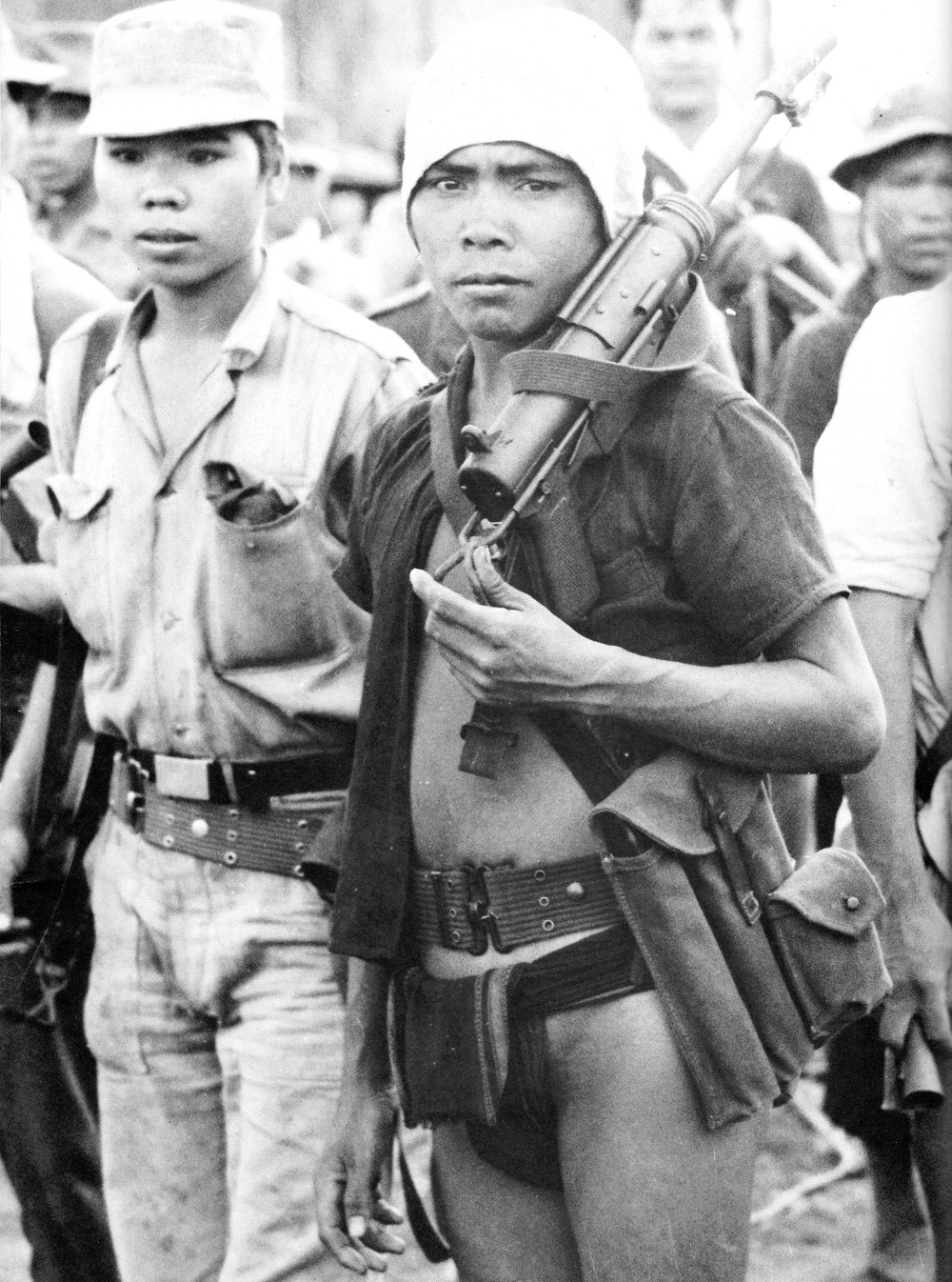
A Montagnard tribesman during training in 1962. Traditional loincloth and M3 submachinegun. Wikimedia
The lowlands around Zomia offer some of the best terrain for state formation, as wet rice padi agriculture is labor intensive but incredibly productive. However, due to the limitations of transportation and communication technology, state power can only extend a few hundred kilometers from the capitol, and this reach is curtailed when plains switch to mountains, jungles, or swamps.
The basic problem is one of control. The State needs labor for public works, for conscription, and indirectly as taxes. But as these taxes become too onerous, or drought and plague wreck havoc, or marauding armies loot on their path, the peasantry always the option to quit and take to the hills. At which point, the state increases taxes to make up their deficit, more people flee, and the state collapses.
Scott makes some good points about how since written history is almost by definition a matter for literate elites: priests, kinds, and the apparatus of state bureaucracy, we must fill in the gaps ourselves. Barbarians and tribes are illusions the state reifies to make sense of its frontier. Oral history over written history offers advantages of a fluid social identity and lineage. Ethnicity is a matter of politics, not bloodlines. Yet I'm not entirely persuaded of the easiness of the choice to abandon the only kind of life you've known and take to the tiger haunted hills, away from oppression but also social context.
The chapters are self-contained, which adds redundancy, but also makes it possible to assign individual ones easily in seminar (I think I just caught on to Scott's aim with the structure. I doubt he'd deliberately write a redundant book). While the history of a people without history is always challenging, The Art of Not Being Governed is a fascinating view of the vanishing areas where the power of the state fails.
A Montagnard tribesman during training in 1962. Traditional loincloth and M3 submachinegun. Wikimedia
The lowlands around Zomia offer some of the best terrain for state formation, as wet rice padi agriculture is labor intensive but incredibly productive. However, due to the limitations of transportation and communication technology, state power can only extend a few hundred kilometers from the capitol, and this reach is curtailed when plains switch to mountains, jungles, or swamps.
The basic problem is one of control. The State needs labor for public works, for conscription, and indirectly as taxes. But as these taxes become too onerous, or drought and plague wreck havoc, or marauding armies loot on their path, the peasantry always the option to quit and take to the hills. At which point, the state increases taxes to make up their deficit, more people flee, and the state collapses.
Scott makes some good points about how since written history is almost by definition a matter for literate elites: priests, kinds, and the apparatus of state bureaucracy, we must fill in the gaps ourselves. Barbarians and tribes are illusions the state reifies to make sense of its frontier. Oral history over written history offers advantages of a fluid social identity and lineage. Ethnicity is a matter of politics, not bloodlines. Yet I'm not entirely persuaded of the easiness of the choice to abandon the only kind of life you've known and take to the tiger haunted hills, away from oppression but also social context.
The chapters are self-contained, which adds redundancy, but also makes it possible to assign individual ones easily in seminar (I think I just caught on to Scott's aim with the structure. I doubt he'd deliberately write a redundant book). While the history of a people without history is always challenging, The Art of Not Being Governed is a fascinating view of the vanishing areas where the power of the state fails.

Scout pilots were a special kind of crazy. One Vietnam War joke went something like "How do you find the cavalry? Easy, just follow the burning Loaches." Scout pilot and author Hugh Mills demonstrates that in spades. He was shot down 16 times and wounded three times, earning three Silver Stars, the Legion of Merit, four Distinguished Flying Crosses and three Bronze Stars, not to mention the Vietnamese Cross of Gallantry with Silver Star and Palm, the Vietnamese Honor Medal First Class plus 93 lesser decorations. But he also truly loved the mission, and that love come through in his stories of hair-raising escapades.
In Vietnam, scout pilots flew the OH-6 Loach, a tiny egg shaped helicopter that normally flew with a pilot, a crew chief hanging out the left side, and a 7.62 mm minigun. The mission was descended from the ancient job of a cavalry scout, getting out in front of the main force, locating the enemy, getting word back to HQ, and fixing the enemy long enough for heavy firepower to arrive. The job required intelligence and sharp eyes, to read trailsign and spot hidden bunkers through triple canopy jungle while orbiting at 70 knots, and stone-cold bravery to troll the enemy, and let their own fire reveal them. Then it was a matter of doing what damage you could with the guns, marking a target with smoke, and getting out of the way of the Cobra gunships rolling in with rockets, and finding an LZ for the aerorifle platoon.
When the mission went well, scout pilots could have an outsized impact. When it went poorly, it meant that helicopters went down in hot LZs, the aerorifles engaged way over their heads, and Mills having do crazy stuff, like land and evac wounded pilots in overloaded birds, drop blood to men who couldn't be evaced, and generally going the kind of things that get you three Silver Stars.
Mills seemed to enjoy his war, despite the extreme personal danger, and I think this was because as a pilot he felt like he was in control of his destiny. Infantry faced dangers like mines and bullets which felt very impersonal, an illusive enemy, and a command structure which demanded more than they could give. Scout pilots had the illusion that they could evade danger. They had a mobile edge over the ground-bound VC and NVA. Their war was still very personal, close enough to look into a man's eyes as the minigun strafed him, but once the day's flying was done, they were safe enough behind the wire. Of course, only the most aggressive pilots volunteered for Loaches, and an elite force is going to do better than the reluctant draftees on the line.
And as always, I enjoy the lighter bits. Like when the scouts were entertaining a couple of new Rangers, who spent the night bragging about their snake-eater credentials, and then had them put to the test when a pilot brought a toad. The Rangers gagged, but one of the scouts ate the thing alive, and kept it down long enough for the Rangers to be laughed out of the O-club. Strange times in II-Corps.
In Vietnam, scout pilots flew the OH-6 Loach, a tiny egg shaped helicopter that normally flew with a pilot, a crew chief hanging out the left side, and a 7.62 mm minigun. The mission was descended from the ancient job of a cavalry scout, getting out in front of the main force, locating the enemy, getting word back to HQ, and fixing the enemy long enough for heavy firepower to arrive. The job required intelligence and sharp eyes, to read trailsign and spot hidden bunkers through triple canopy jungle while orbiting at 70 knots, and stone-cold bravery to troll the enemy, and let their own fire reveal them. Then it was a matter of doing what damage you could with the guns, marking a target with smoke, and getting out of the way of the Cobra gunships rolling in with rockets, and finding an LZ for the aerorifle platoon.
When the mission went well, scout pilots could have an outsized impact. When it went poorly, it meant that helicopters went down in hot LZs, the aerorifles engaged way over their heads, and Mills having do crazy stuff, like land and evac wounded pilots in overloaded birds, drop blood to men who couldn't be evaced, and generally going the kind of things that get you three Silver Stars.
Mills seemed to enjoy his war, despite the extreme personal danger, and I think this was because as a pilot he felt like he was in control of his destiny. Infantry faced dangers like mines and bullets which felt very impersonal, an illusive enemy, and a command structure which demanded more than they could give. Scout pilots had the illusion that they could evade danger. They had a mobile edge over the ground-bound VC and NVA. Their war was still very personal, close enough to look into a man's eyes as the minigun strafed him, but once the day's flying was done, they were safe enough behind the wire. Of course, only the most aggressive pilots volunteered for Loaches, and an elite force is going to do better than the reluctant draftees on the line.
And as always, I enjoy the lighter bits. Like when the scouts were entertaining a couple of new Rangers, who spent the night bragging about their snake-eater credentials, and then had them put to the test when a pilot brought a toad. The Rangers gagged, but one of the scouts ate the thing alive, and kept it down long enough for the Rangers to be laughed out of the O-club. Strange times in II-Corps.

Grocery is an interesting look at the social and logistical elements of the American food system which gets bogged down in tedious moralizing. Ruhlman is a professional food writer, and he focused on his high-end hometown chain of Heinen's. The early book wanders through his father's love of grocery shopping and cooking at the height of Jet Age large steaks, frozen veggies, and canned meals, and dips back to the birth of the American supermarket with the once-mighty Atlantic and Pacific company. The A&P introduced sealed, branded, packaged food, shifting the business of eating from subsistence farming and a variety of specialized *-mongers who worked on a commodity basis to the deeply weird and modern one-stop shop full of tens of thousands of unique items. Groceries are a big business, approximate $1 trillion annual in the US, and a tough business, with a profit margin of 0.5%.
Unfortunately, the book then veers into a lengthy assault on processed carbs, and you can have my processed carbs when you pry them from my cold, dead, diabetic hands. There's a really good STS book about the alliance of cheap corn, clever processing techniques, and regulatory somnolence which wrecked the American diet, but this ain't it chief. Heinen's has a staff doctor who approves healthy food, a charismatic health shaman named Dr. Todd, but you can also get your Triple Frosted Cookie-O at Heinen's because it's a business like any other, and people will shop where they can get their garbage. A journey to organic free-range lamb is a similar digression. I can't find out how much Lava Lake Lamb costs, due to Covid related disruptions, but I'm sure the price is Waygu beef like, if I could buy it. Healthy and sustainable food cannot be so expensive as to be a status symbol.
The book returns to some interesting areas, with a trip to buyer's conference for new products, where thousands of small vendors and grocery store product managers are competition to get the new fad food on shelves. Heinen's plays a fascinating role in this, as a company big enough to make a small kale granola manufacturer's product line, but without the immediate nationwide scale demands of Whole Foods or (god forbid) Walmart. Ruhlman also covers the rise in prepared foods, which he describes as "store-made leftovers", and which are an increasingly large but spottily profitable area.
So, interesting, but also a self-consciously foodie book, with foodie politics.
Unfortunately, the book then veers into a lengthy assault on processed carbs, and you can have my processed carbs when you pry them from my cold, dead, diabetic hands. There's a really good STS book about the alliance of cheap corn, clever processing techniques, and regulatory somnolence which wrecked the American diet, but this ain't it chief. Heinen's has a staff doctor who approves healthy food, a charismatic health shaman named Dr. Todd, but you can also get your Triple Frosted Cookie-O at Heinen's because it's a business like any other, and people will shop where they can get their garbage. A journey to organic free-range lamb is a similar digression. I can't find out how much Lava Lake Lamb costs, due to Covid related disruptions, but I'm sure the price is Waygu beef like, if I could buy it. Healthy and sustainable food cannot be so expensive as to be a status symbol.
The book returns to some interesting areas, with a trip to buyer's conference for new products, where thousands of small vendors and grocery store product managers are competition to get the new fad food on shelves. Heinen's plays a fascinating role in this, as a company big enough to make a small kale granola manufacturer's product line, but without the immediate nationwide scale demands of Whole Foods or (god forbid) Walmart. Ruhlman also covers the rise in prepared foods, which he describes as "store-made leftovers", and which are an increasingly large but spottily profitable area.
So, interesting, but also a self-consciously foodie book, with foodie politics.

I remember watching The Fog of War in high school the year it came out, lights dimmed in history class. I was fascinated by the flickering ancient newsreels, the psychographic phonography of airpower, and above all else, McNamara himself, his planetary confidence in data which ultimately was merely confidence in himself, his earnest message to us that we should consider peace on the eve of another pointless American war, and also the limits of his responsibility and sorrow. Here was a man who had taken up the wheel of history and been broken by it. What could I learn from him?

"How much evil must we do to do good?"
Craig's book is a surprisingly excellent memoir about coming to terms with his father's legacy. In one eye, there is Dad, a stern yet loving father in the Greatest Generation mold, an avid outdoorsman who shared his love of mountains, hiking, skiing, and swimming with his son. Dad was a family man who tried to leave work at the office to protect his loved ones from its burdens.
But that's the other eye, the historical figure and war criminal. McNamara's work wasn't something mundane, like teaching economics or managing an auto company. From 1961 to 1968, he was Secretary McNamara, one of the most powerful men in the world. He was part of small group of people who held our common destiny in his hands during the Cuban Missile Crisis. And he escalated and hobbled the Vietnam War, committing America to a war that he was privately skeptical of.
Vietnam was the wedge between Craig and his father. If you're expecting some special insight into McNamara's thinking, Craig has had to reconstruct his father from the same historical record we have. As the title suggests, Craig believes that his father's sin was a lie, and a subsequent life of silence and misdirection to cover up that lie. He believes his father's lifelong inability to hold himself accountable was rooted in what seemed to be good reasons, loyalty to the memories of Kennedy and Johnson, to the grand program of advancing American values and American empire. But the generalities in McNamara's later life, the "we made mistakes" rather than a firm "I lied, and because of that others lost everything and suffered so much", stood between them, and stands between McNamara and his legacy.
Craig was born in 1950, a core Boomer, eligible to be drafted in the despondent wake of the Tet Offensive. He writes about his radicalization through a miserable boarding school existence, looking to his father for personal assurance that the war with his name on it was just, and getting nothing as his classmates agitated for peace. Craig went to Stanford, became active in the antiwar movement, received his draft notice and got a medical deferment. A mediocre student, hampered by undiagnosed dyslexia and the fervent climate of the time, Craig dropped out of college and decided to motorcycle to Tierra del Fuego with some friends.
At this point, the book abruptly changes track to mid-20s bildungsromans. Somehow, with minimal Spanish and motorcycle skills, Craig and his friends managed not to crash, run out of gas money, or get knifed between California and Chile. Craig spent formative years in Chile and on Easter Island, where he lived in a cave and organized a dairy cooperative. He hung out with idealistic leftists and was enraptured at a speech by Fidel Castro, who he (still!) regards as the greatest American political figure. In these years, separated from his family and his country by thousands of miles, Craig figured out that he wanted to be a farmer.
And eventually, he made his way back to the states to do that. The only thing harder than being a family farmer is being a first-generation family farmer. Craig is upfront that a hefty loan from his father made his dream possible, but he also spent years paying off that loan, growing walnuts near Winters, California. This is a good life, if not a remunerative one. Meanwhile, Robert McNamara was settling into his third (fourth? fifth?) career as globe-trotting elder statesman, serving on boards and dispensing sage advice.
Yet the war and the silence came between them, and Robert was never truly able to be a father or grandfather, at least not the one Craig wanted. There is a final coda about finding yourself in the shadow of your historical parents, and Craig's kinship with the other children of Vietnam War statesmen, and the strange heavy incommensurability of that state.
When Robert McNamara died, all his physical goods, the lifetime of relics and heirlooms went to his second wife, who auctioned them off at Sotheby's. Craig and his sisters wound up ransoming back their father's 13 days in October silver calendar, a gift from Jackie Kennedy, for $100,000. They wanted but did not get the two Cabinet chairs from the Kennedy administration. But in a bit synchronicity, those chairs were acquired by the artist Danh Vo and deconstructed into an art exhibit. Danh and Craig became friends, and he seems this deconstruction of power, of reputation, of history, and as vital to the process of healing.
So yeah, these is a odd book. On the one hand, it's Old Farmer Craig talking about how he spent his youth bouncing around South America and got radicalized into agricultural work by Fidel Castro. It's also a look family trauma, lies, and silence, not so different from any other family's. I think everybody has a realization that their parents are not in fact omniscient. But most of us don't have fathers who lead their country into a war that we could very well have died in, if not for the random benevolence of a medical board.
There are definitely better histories of the Vietnam War and of McNamara himself, but as a McNamara-stan (frankly, that's the most honest way to describe my relationship with the Secretary of Defense), this is great reading.
"How much evil must we do to do good?"
Craig's book is a surprisingly excellent memoir about coming to terms with his father's legacy. In one eye, there is Dad, a stern yet loving father in the Greatest Generation mold, an avid outdoorsman who shared his love of mountains, hiking, skiing, and swimming with his son. Dad was a family man who tried to leave work at the office to protect his loved ones from its burdens.
But that's the other eye, the historical figure and war criminal. McNamara's work wasn't something mundane, like teaching economics or managing an auto company. From 1961 to 1968, he was Secretary McNamara, one of the most powerful men in the world. He was part of small group of people who held our common destiny in his hands during the Cuban Missile Crisis. And he escalated and hobbled the Vietnam War, committing America to a war that he was privately skeptical of.
Vietnam was the wedge between Craig and his father. If you're expecting some special insight into McNamara's thinking, Craig has had to reconstruct his father from the same historical record we have. As the title suggests, Craig believes that his father's sin was a lie, and a subsequent life of silence and misdirection to cover up that lie. He believes his father's lifelong inability to hold himself accountable was rooted in what seemed to be good reasons, loyalty to the memories of Kennedy and Johnson, to the grand program of advancing American values and American empire. But the generalities in McNamara's later life, the "we made mistakes" rather than a firm "I lied, and because of that others lost everything and suffered so much", stood between them, and stands between McNamara and his legacy.
Craig was born in 1950, a core Boomer, eligible to be drafted in the despondent wake of the Tet Offensive. He writes about his radicalization through a miserable boarding school existence, looking to his father for personal assurance that the war with his name on it was just, and getting nothing as his classmates agitated for peace. Craig went to Stanford, became active in the antiwar movement, received his draft notice and got a medical deferment. A mediocre student, hampered by undiagnosed dyslexia and the fervent climate of the time, Craig dropped out of college and decided to motorcycle to Tierra del Fuego with some friends.
At this point, the book abruptly changes track to mid-20s bildungsromans. Somehow, with minimal Spanish and motorcycle skills, Craig and his friends managed not to crash, run out of gas money, or get knifed between California and Chile. Craig spent formative years in Chile and on Easter Island, where he lived in a cave and organized a dairy cooperative. He hung out with idealistic leftists and was enraptured at a speech by Fidel Castro, who he (still!) regards as the greatest American political figure. In these years, separated from his family and his country by thousands of miles, Craig figured out that he wanted to be a farmer.
And eventually, he made his way back to the states to do that. The only thing harder than being a family farmer is being a first-generation family farmer. Craig is upfront that a hefty loan from his father made his dream possible, but he also spent years paying off that loan, growing walnuts near Winters, California. This is a good life, if not a remunerative one. Meanwhile, Robert McNamara was settling into his third (fourth? fifth?) career as globe-trotting elder statesman, serving on boards and dispensing sage advice.
Yet the war and the silence came between them, and Robert was never truly able to be a father or grandfather, at least not the one Craig wanted. There is a final coda about finding yourself in the shadow of your historical parents, and Craig's kinship with the other children of Vietnam War statesmen, and the strange heavy incommensurability of that state.
When Robert McNamara died, all his physical goods, the lifetime of relics and heirlooms went to his second wife, who auctioned them off at Sotheby's. Craig and his sisters wound up ransoming back their father's 13 days in October silver calendar, a gift from Jackie Kennedy, for $100,000. They wanted but did not get the two Cabinet chairs from the Kennedy administration. But in a bit synchronicity, those chairs were acquired by the artist Danh Vo and deconstructed into an art exhibit. Danh and Craig became friends, and he seems this deconstruction of power, of reputation, of history, and as vital to the process of healing.
So yeah, these is a odd book. On the one hand, it's Old Farmer Craig talking about how he spent his youth bouncing around South America and got radicalized into agricultural work by Fidel Castro. It's also a look family trauma, lies, and silence, not so different from any other family's. I think everybody has a realization that their parents are not in fact omniscient. But most of us don't have fathers who lead their country into a war that we could very well have died in, if not for the random benevolence of a medical board.
There are definitely better histories of the Vietnam War and of McNamara himself, but as a McNamara-stan (frankly, that's the most honest way to describe my relationship with the Secretary of Defense), this is great reading.

Holy. Shit.
That was incredible!
The Spear Cuts Through Water masterfully upends the fantasy quest in a triply layered story. From the outside in, a second person narrator grows up the child of a cloth merchant in a port city of propaganda posters, radio, an enduring war, and his grandmother's stories of the old country. In the next layer, it is a dream of the Inverted Theater, the place of mythmaking where the cast are the children of the Water and the Moon. And in the inner most story, it is that myth, of Keema of the Daware Tribe and Jun, striking out for good in a five day journey through a land gripped by evil.
In the Old Country, the people are oppressed by the magically gifted Emperor and his children, the Three Terrors. The land bakes under drought and festers with misrule. Soon, the Emperor plans a five day journey from his palace to the eastern Divine City, there to depart in a grand fleet and seek immortality. Of course, it all goes terribly wrong, and the emperor will never make that journey.
Instead, Keema and Jun must venture forth, dodging Terrors, their bloody pasts, and more mundane hazards, to complete a delivery. Jun is carrying a stolen goddess, who once blessed the emperor's line and now seeks to undo that action, Keema has a spear to delivery to a soldier in a doomed rebellion, and they are dragging a deathly ill telepathic tortoise.
The writing, characterization, and worldbuilding is lush, gorgeous, fecund. This book is a totality of imagination and style, a love story down to its dented bones (to steal a quote). I can't praise it highly enough.
Read it.
That was incredible!
The Spear Cuts Through Water masterfully upends the fantasy quest in a triply layered story. From the outside in, a second person narrator grows up the child of a cloth merchant in a port city of propaganda posters, radio, an enduring war, and his grandmother's stories of the old country. In the next layer, it is a dream of the Inverted Theater, the place of mythmaking where the cast are the children of the Water and the Moon. And in the inner most story, it is that myth, of Keema of the Daware Tribe and Jun, striking out for good in a five day journey through a land gripped by evil.
In the Old Country, the people are oppressed by the magically gifted Emperor and his children, the Three Terrors. The land bakes under drought and festers with misrule. Soon, the Emperor plans a five day journey from his palace to the eastern Divine City, there to depart in a grand fleet and seek immortality. Of course, it all goes terribly wrong, and the emperor will never make that journey.
Instead, Keema and Jun must venture forth, dodging Terrors, their bloody pasts, and more mundane hazards, to complete a delivery. Jun is carrying a stolen goddess, who once blessed the emperor's line and now seeks to undo that action, Keema has a spear to delivery to a soldier in a doomed rebellion, and they are dragging a deathly ill telepathic tortoise.
The writing, characterization, and worldbuilding is lush, gorgeous, fecund. This book is a totality of imagination and style, a love story down to its dented bones (to steal a quote). I can't praise it highly enough.
Read it.