Take a photo of a barcode or cover
2.05k reviews by:
mburnamfink


Your Move is a series of essays about boardgaming by Joan Moriarty, game sommelier at Toronto game cafe Snakes and Lattes, and Jonathan Kay, an avid hobbyist gamer, journalist, and currently editor at Quillette*. The essays are pretty populist and surface level. Table top games are fun because we can step inside a magic circle of play and commit fully without having to live with the consequences. They give us something to go with our friends, and offer levels of involvement from the minimally interactive Apples to Apples, to the elegant decision spaces of eurogames, to the grand strategies of complex supergames. Tabletop gaming experienced a massive renaissance in the 2010s, with the whole field growing several times over. Today, there are games for almost any taste!
The essays are best when they get away from the bland generalities. Kay likes Monopoly as an example of an unstable equilibrium, while Moriarty holds to the conventional wisdom that it's one of the worst games you'll ever play. Moriarty's deconstruction of Scattergories as a relationship killer which is actually about political skill in playing the table is brilliant analysis. Similarly, while Kay is not a fan of Scrabble, he has affection for the unique skills required at high level play. Nigel Richards won the French national Scrabble tournament by memorizing dictionaries, and still cannot speak French.
Where this book gets weird is when Kay starts inveigling against political correctness, even as Moriarty calls for a more diverse gaming community. I didn't discover the association with Quillette until after I had finished the book, but Quillette is a publication which spends a lot of time promoting discredited racist theories, employs Proud Boys information operative Andy Ngo, and generally is trying to make fascism an acceptable political viewpoint. So when Kay argues playing Phil Eklund's Greenland (and Eklund has his own issues), is a better way to gain respect for Indigenous people than the media growing out of Canada's Truth and Reconciliation Commission on Residential Schools, I roll to disbelieve.
So hey, its a decent set of introductory essays, except half the proceeds go to a guy who's making a career out of destroying Western democracy. I'm not one of those people who requires that every book I read match my politics: I gave five stars to Freedom's Forge, and the author is an American Enterprise Institute arch-conservative. It's just that even by culture war standards, Quillette fucking sucks. And to Libertarians and Conservatives out there, happy to have a discussion about regulatory overreach or anti-competitive tax policy or whatever it is, once you deal with all the racists and actual Nazis you call buddies. Show some actual integrity, and stop making everything about 'triggering the libs'.

The essays are best when they get away from the bland generalities. Kay likes Monopoly as an example of an unstable equilibrium, while Moriarty holds to the conventional wisdom that it's one of the worst games you'll ever play. Moriarty's deconstruction of Scattergories as a relationship killer which is actually about political skill in playing the table is brilliant analysis. Similarly, while Kay is not a fan of Scrabble, he has affection for the unique skills required at high level play. Nigel Richards won the French national Scrabble tournament by memorizing dictionaries, and still cannot speak French.
Where this book gets weird is when Kay starts inveigling against political correctness, even as Moriarty calls for a more diverse gaming community. I didn't discover the association with Quillette until after I had finished the book, but Quillette is a publication which spends a lot of time promoting discredited racist theories, employs Proud Boys information operative Andy Ngo, and generally is trying to make fascism an acceptable political viewpoint. So when Kay argues playing Phil Eklund's Greenland (and Eklund has his own issues), is a better way to gain respect for Indigenous people than the media growing out of Canada's Truth and Reconciliation Commission on Residential Schools, I roll to disbelieve.
So hey, its a decent set of introductory essays, except half the proceeds go to a guy who's making a career out of destroying Western democracy. I'm not one of those people who requires that every book I read match my politics: I gave five stars to Freedom's Forge, and the author is an American Enterprise Institute arch-conservative. It's just that even by culture war standards, Quillette fucking sucks. And to Libertarians and Conservatives out there, happy to have a discussion about regulatory overreach or anti-competitive tax policy or whatever it is, once you deal with all the racists and actual Nazis you call buddies. Show some actual integrity, and stop making everything about 'triggering the libs'.

There's a joke going around that I can't find, but it's something like:
How to draw a cat in 3 easy steps:
1) draw a circle for the face
2) draw a larger oval for the body
3) a fully shaded gorgeous drawing of a cat.
Much of which applies to Hough's book. He has a certain kind of writing in mind, muscular American dialog in the tradition of Mark Twain, Hemingway, and Cormac McCarthy. Hough himself writes literary novels about the Civil War and the Old West, and he treats those the most important topics.
Some of Hough's advice is elementary, and quite solid. Avoid words other than "said", and said is itself a pacing mechanism, a way to insert a little pause into a rapid back and forth. Similarly, adverbs can be discarded. Great dialog is poetic, hyperreal, the tense whipcracks that reveal character and emotion without a lot of adornment. But dialog is also impossible to separate from character and plot, and Hough assumes that you're able to produce fully shaded stories on command.
How to draw a cat in 3 easy steps:
1) draw a circle for the face
2) draw a larger oval for the body
3) a fully shaded gorgeous drawing of a cat.
Much of which applies to Hough's book. He has a certain kind of writing in mind, muscular American dialog in the tradition of Mark Twain, Hemingway, and Cormac McCarthy. Hough himself writes literary novels about the Civil War and the Old West, and he treats those the most important topics.
Some of Hough's advice is elementary, and quite solid. Avoid words other than "said", and said is itself a pacing mechanism, a way to insert a little pause into a rapid back and forth. Similarly, adverbs can be discarded. Great dialog is poetic, hyperreal, the tense whipcracks that reveal character and emotion without a lot of adornment. But dialog is also impossible to separate from character and plot, and Hough assumes that you're able to produce fully shaded stories on command.

How to Rule an Empire and Get Away with It is a sequel to 16 Ways to Defend a Walled City, with the same sardonic wit.
Seven years on from the first book, the siege continues. Notker is a mediocre actor and playwright with a talent for political impersonations, when he gets dragged in the center of politics. The people's hero Lysimachus (gladiator and bodyguard from the first book) was crushed by an unfortunate catapult stone, and the ruling military junta needs a Lysimachus impersonator to keep morale from collapsing entirely.
It'd be like if George Bush was one of the victims of 9/11, and they got Will Ferrell to pretend to be him to rally round the flag. Actually, now that I think about it, I'm intrigued by the possibilities.

Will Ferrell as George Bush
Notker realizes that while the siege has settled into an equilibrium, the City has to get lucky every time, and Ogus with the besieging army has to get lucky just once. And what follows is a series of desperate improvisations, keeping just one step ahead of events. Notker is a lucky fellow, with an uncanny political judgement, and his stage metaphors serve to keep him alive. Compared to the first book, there's more contrivance and some reuse of beats, but a better narrative voice.
Great series all around!
Seven years on from the first book, the siege continues. Notker is a mediocre actor and playwright with a talent for political impersonations, when he gets dragged in the center of politics. The people's hero Lysimachus (gladiator and bodyguard from the first book) was crushed by an unfortunate catapult stone, and the ruling military junta needs a Lysimachus impersonator to keep morale from collapsing entirely.
It'd be like if George Bush was one of the victims of 9/11, and they got Will Ferrell to pretend to be him to rally round the flag. Actually, now that I think about it, I'm intrigued by the possibilities.
Will Ferrell as George Bush
Notker realizes that while the siege has settled into an equilibrium, the City has to get lucky every time, and Ogus with the besieging army has to get lucky just once. And what follows is a series of desperate improvisations, keeping just one step ahead of events. Notker is a lucky fellow, with an uncanny political judgement, and his stage metaphors serve to keep him alive. Compared to the first book, there's more contrivance and some reuse of beats, but a better narrative voice.
Great series all around!

The Power of Us: Harnessing Our Shared Identities to Improve Performance, Increase Cooperation, and Promote Social Harmony
Jay J Van Bavel, Dominic J Packer
The Power of Us is a fun and friendly guided tour through the world of social psychology by two professors. The strengths are a clear and breezy writing style, though many of the specific references in the book are very 2020, and I'm curious about how well it'll hold up. And second, the subtitle and some of the text is more ambitious than the material warrants. Social harmony seems like an admiral goal in the fraught post-truth world of the Trump Regime and Biden Interregnum, but these problems may be beyond the grasp of social psychology to solve.
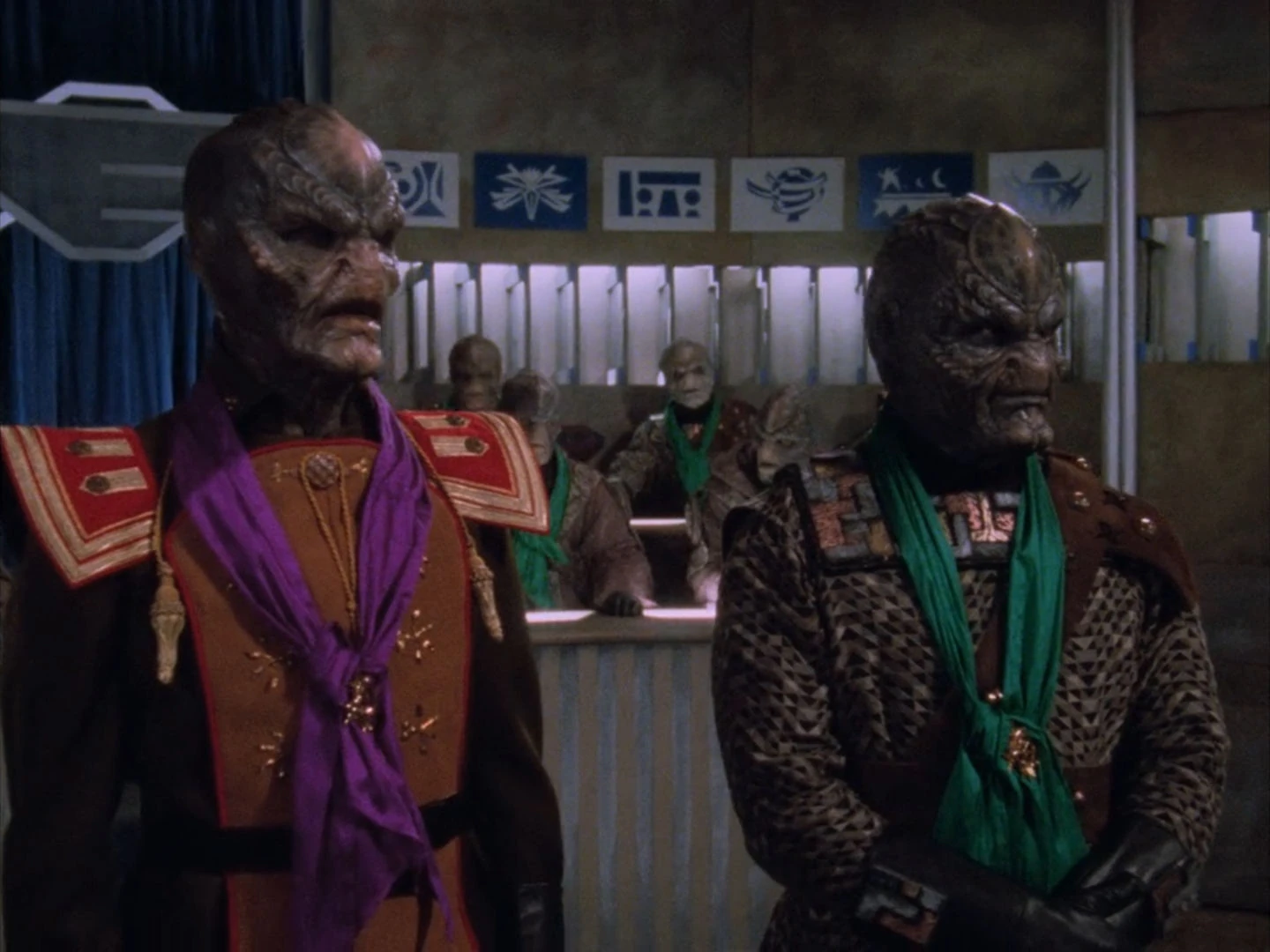
Green vs Purple from Babylon 5 - The Geometry of Shadows
Cooperation is the human superpower. We're social creatures to a degree unmatched anywhere else. Activating social identity, even ones as arbitrary as green or purple above, improve performance on group tasks and generosity even among selfish people. Test subjects exhibit less disgust when handling a smelly shirt with their college's logo on it, and are more likely to help a fan of the same soccer team.
But identity has an obvious dark side. It carves the universe into us and them, and the cognitive heuristics of identity short circuit actual thinking. In my favorite studies from the book, political identities make people bad at math, as partisans are unable to calculate simple averages to determine if a gun control proposal actually works, while being capable of doing the same for an uncontroversial example of an acne cream. In another study, Asian-American respondents who were asked if they spoke English as part of the experimental intake where three times more likely to order American food like hot dogs and hamburgers for lunch than those in the control group, as a defense of their American identity was provoked. And if you're looking to make a quick and unethical buck, a Christian identity scam is pretty surefire.
Packer and Beval do have some interesting notes on when identities can help. Manchester United fans will help a man in a rival Liverpool jersey if they're reminded of being soccer fans, and not just Man U. An experiment in interfaith soccer teams in Mosul after the city was liberated from ISIL built some bridges between communities who had thousands of reasons to hate each other. And even the baseline level of racism in America can be decreased by making multiracial teams on an arbitrary green vs purple basis.
But the counter-examples are somewhat alarming. Online discourse tends towards moralist and radicalizing language, separating communities into angry echo chambers. The authors have little to say about what I'd say are the most pernicious problems of the 21st century, which is getting someone out of an identity. The books opens with the classic Seekers UFO Cult from When Prophecy Fails, who flexibly adjusted to a 1954 end of the world deadline which never happened. But with modern identities forming around vaccine skepticism (hooray COVID fourth wave!), the universal conspiracy theory of QAnon, and a general attitude that the only fixed policy goal is triggering the libs, a book with this subtitle should have a little more ambition and bite, an update of Altemeyer's right-wing authoritarianism theories. The Power of Us is fine when it sticks to science, but doesn't have the courage for a real "broader impacts" section.
I received an ARC of this book from the publisher, and no other compensation for this review.
Green vs Purple from Babylon 5 - The Geometry of Shadows
Cooperation is the human superpower. We're social creatures to a degree unmatched anywhere else. Activating social identity, even ones as arbitrary as green or purple above, improve performance on group tasks and generosity even among selfish people. Test subjects exhibit less disgust when handling a smelly shirt with their college's logo on it, and are more likely to help a fan of the same soccer team.
But identity has an obvious dark side. It carves the universe into us and them, and the cognitive heuristics of identity short circuit actual thinking. In my favorite studies from the book, political identities make people bad at math, as partisans are unable to calculate simple averages to determine if a gun control proposal actually works, while being capable of doing the same for an uncontroversial example of an acne cream. In another study, Asian-American respondents who were asked if they spoke English as part of the experimental intake where three times more likely to order American food like hot dogs and hamburgers for lunch than those in the control group, as a defense of their American identity was provoked. And if you're looking to make a quick and unethical buck, a Christian identity scam is pretty surefire.
Packer and Beval do have some interesting notes on when identities can help. Manchester United fans will help a man in a rival Liverpool jersey if they're reminded of being soccer fans, and not just Man U. An experiment in interfaith soccer teams in Mosul after the city was liberated from ISIL built some bridges between communities who had thousands of reasons to hate each other. And even the baseline level of racism in America can be decreased by making multiracial teams on an arbitrary green vs purple basis.
But the counter-examples are somewhat alarming. Online discourse tends towards moralist and radicalizing language, separating communities into angry echo chambers. The authors have little to say about what I'd say are the most pernicious problems of the 21st century, which is getting someone out of an identity. The books opens with the classic Seekers UFO Cult from When Prophecy Fails, who flexibly adjusted to a 1954 end of the world deadline which never happened. But with modern identities forming around vaccine skepticism (hooray COVID fourth wave!), the universal conspiracy theory of QAnon, and a general attitude that the only fixed policy goal is triggering the libs, a book with this subtitle should have a little more ambition and bite, an update of Altemeyer's right-wing authoritarianism theories. The Power of Us is fine when it sticks to science, but doesn't have the courage for a real "broader impacts" section.
I received an ARC of this book from the publisher, and no other compensation for this review.

Dune is my absolute favorite book, so I had to get the RPG. Now despite what Brian Herbert and Kevin J. Anderson think, setting new stories in the universe of Dune isn't easy. So much of the fantastic setting is tied up in the events surrounding Paul Atreides' version of the hero's journey, and the horrific legacy of his jihad and then Leto II's prescience on humanity. Odds are your group is not going to improv a stunning combination of politics, ecology, religion, and self-transformation at the table over some dice. But with that caveat, this is a perfectly reasonable system.
Modiphius 2d20 system is a skill+stat target number, than roll some number of dice (starting at 2, you can buy more), and anything equal to or under that target number is a success. Both stats and skills range from 4-8, there are five of each, and you often need multiple successes. Talents and skill focuses allow characters to shine in their area of expertise. Skills are fairly broad: Battle, Communicate, Discipline, Move, and Understand. But the stats are psychological drives, why your character is acting, and it matters whether it's Duty, Faith, Justice, Power, or Truth. Drive statements provide a way to narrow down exactly what your character believes, with mechanical effects when you act in accordance with them, or test your principles against the world. In an appreciated touch, major characters from the books are written up, and while they have several advances (Paul has 7 focuses and 5 talents, you'll start with 3 of each), they follow the rules of the game.
Several varieties of metacurrencies tilt the odds. Players generate Momentum by rolling well, which they use to buy extra dice and increase results. If you're out of Momentum, players can take Threat as well, which the GM uses much like Momentum. And rare points of Determination allow you to declare a critical on a roll or take an extra action.
Drives are inspired, but I'm less sure about the rest of the system. 2d20 is definitely more trad than narrative, and while this system is on the lighter side, there's a fairly complex conflict system for representing major battles that I'm not sure how to use properly. Similarly, the changes in the fiction are supposed to represented by adding Assets to play, a common RPG move which I've found rarely works in practice. The basic gameplay takes an almost cyberpunk approach to the setting, where you are the key retainers of a Noble House/family business, engaged in intrigue and Dune style War of Assassins with key rivals, which is definitely a workable hook. If I were to run a Dune game, I might wait to see how Court of Blades handles this playstyle, but I'm a BitD stan.
On a stylistic note, this book looks great, with top-notch artwork and design. Chapters begin with epigrams drawn from the books, which as a fan I enjoyed. Sadly, the canon follows BH and KJA, and not the far superior Dune Encyclopedia, though I can understand why they made this choice (lawyers, it was lawyers.)
Modiphius 2d20 system is a skill+stat target number, than roll some number of dice (starting at 2, you can buy more), and anything equal to or under that target number is a success. Both stats and skills range from 4-8, there are five of each, and you often need multiple successes. Talents and skill focuses allow characters to shine in their area of expertise. Skills are fairly broad: Battle, Communicate, Discipline, Move, and Understand. But the stats are psychological drives, why your character is acting, and it matters whether it's Duty, Faith, Justice, Power, or Truth. Drive statements provide a way to narrow down exactly what your character believes, with mechanical effects when you act in accordance with them, or test your principles against the world. In an appreciated touch, major characters from the books are written up, and while they have several advances (Paul has 7 focuses and 5 talents, you'll start with 3 of each), they follow the rules of the game.
Several varieties of metacurrencies tilt the odds. Players generate Momentum by rolling well, which they use to buy extra dice and increase results. If you're out of Momentum, players can take Threat as well, which the GM uses much like Momentum. And rare points of Determination allow you to declare a critical on a roll or take an extra action.
Drives are inspired, but I'm less sure about the rest of the system. 2d20 is definitely more trad than narrative, and while this system is on the lighter side, there's a fairly complex conflict system for representing major battles that I'm not sure how to use properly. Similarly, the changes in the fiction are supposed to represented by adding Assets to play, a common RPG move which I've found rarely works in practice. The basic gameplay takes an almost cyberpunk approach to the setting, where you are the key retainers of a Noble House/family business, engaged in intrigue and Dune style War of Assassins with key rivals, which is definitely a workable hook. If I were to run a Dune game, I might wait to see how Court of Blades handles this playstyle, but I'm a BitD stan.
On a stylistic note, this book looks great, with top-notch artwork and design. Chapters begin with epigrams drawn from the books, which as a fan I enjoyed. Sadly, the canon follows BH and KJA, and not the far superior Dune Encyclopedia, though I can understand why they made this choice (lawyers, it was lawyers.)

As a California who lives in SF and has family in LA, I know the Central Valley and the 5 as a kind of non-place, five hours of jostling with semis interrupted by lunch, gas, and restrooms. Levine takes us on a guided tour of the real Central Valley, and the real oligarchs of California. These are not your johnny-come lately tech bros. The Central Valley is almost entirely owned by a handful of old and wealthy family companies with control over land, water, and the courts.
For example, the Chandler family of the LA Times have a massive ranch along Tejon Pass, which will eventually be yet another subdivision when the real estate market is right, and damn the lack of water. Speaking of water, relative newcomers the Resnicks have a massive water-hungry agricultural empire of pistachios and pomegranates, the profits of which go to ensuring that Iran remains an international pariah, since California pistachios can't compete with the Persian real deal. Harris Ranch is the largest feedlot in the country, a Cowschwitz of manure. The city of LA dumps its own shit along the 5 in a sewage solids recompressing plant that is its own toxic disaster. And a family of ex-Georgia planters drained Tulare Lake to turn into cotton and tomato fields.
The valley as a whole is California's own internal colony, where a handful of masters become incredibly rich, and the mostly Hispanic inhabitant do the hard work, get sick, and get paid very little. And of course all these rich families are getting millions in federal farm subsidies annually, along with preferential water rights of inestimable value.
Oligarch Valley is a short and informative read, with a breezy internet journalism style. Though written in 2013, the basic ownership structure of the Central Valley hasn't changed. Though I get the sense that other people did the heavy lifting, like LA historian Mike Davis, Michael Gross in Unreal Estate, Reisner's monumental Cadillac Desert, and hardworking reporters at the Sacramento Bee. Still, for all that we'd rather not think about what's along the 5, aside from which exits have In-n-Out (beef sourced from Harris Ranch), if we want realistic politics we owe it ourself.
For example, the Chandler family of the LA Times have a massive ranch along Tejon Pass, which will eventually be yet another subdivision when the real estate market is right, and damn the lack of water. Speaking of water, relative newcomers the Resnicks have a massive water-hungry agricultural empire of pistachios and pomegranates, the profits of which go to ensuring that Iran remains an international pariah, since California pistachios can't compete with the Persian real deal. Harris Ranch is the largest feedlot in the country, a Cowschwitz of manure. The city of LA dumps its own shit along the 5 in a sewage solids recompressing plant that is its own toxic disaster. And a family of ex-Georgia planters drained Tulare Lake to turn into cotton and tomato fields.
The valley as a whole is California's own internal colony, where a handful of masters become incredibly rich, and the mostly Hispanic inhabitant do the hard work, get sick, and get paid very little. And of course all these rich families are getting millions in federal farm subsidies annually, along with preferential water rights of inestimable value.
Oligarch Valley is a short and informative read, with a breezy internet journalism style. Though written in 2013, the basic ownership structure of the Central Valley hasn't changed. Though I get the sense that other people did the heavy lifting, like LA historian Mike Davis, Michael Gross in Unreal Estate, Reisner's monumental Cadillac Desert, and hardworking reporters at the Sacramento Bee. Still, for all that we'd rather not think about what's along the 5, aside from which exits have In-n-Out (beef sourced from Harris Ranch), if we want realistic politics we owe it ourself.

Brian Inglis appears to be a fascinating character, an Anglo-Irish historian and journalist with a deep interest in psychic phenomenon and alternative medicine. His estate, he died in 1997, has made many of his books available on Kindle Unlimited, and at the price of "free" I decided to take a chance.
The Opium War is one of the darker moments in Britain's imperial history, and seeing the military aspects as tedious due to Britain's massive military superiority, Inglis chooses to focus on the politics. In the early 19th century, India was ruled by the English East India Company, which due to decades of exploitative mismanagement was had impoverished the land. Meanwhile, rising English demand for tea, and lack of demand for British manufactured goods in China, presented a problem. The only British good, aside from silver itself, that could be traded was opium. The EIC established an opium monopoly, turning the best agricultural land in India into poppy plantations, and then through a shifting series of private smugglers, proceeded to send the goods into China through the port of Canton. As addictioned turned to an epidemic, Chinese authorities responded by cracking down on the trade, destroying millions of pounds of opium in a mass seizure. This provided the impetus for the war itself, which England handily won.
Inglis is no Dalrymple, and this tale of colonialism gone wrong is dry and somewhat confusing. The best parts are the acid irony by which English authorities use the novel theories of political economy developed by Smith and Ricardo to justify a government monopoly on the production of opium, and also the free trade absolutism which prohibited any Chinese restrictions on the dangerous drug. Goose and gander etc. The last chapter of analysis is worth the book, but it's a long road there.
The Opium War is one of the darker moments in Britain's imperial history, and seeing the military aspects as tedious due to Britain's massive military superiority, Inglis chooses to focus on the politics. In the early 19th century, India was ruled by the English East India Company, which due to decades of exploitative mismanagement was had impoverished the land. Meanwhile, rising English demand for tea, and lack of demand for British manufactured goods in China, presented a problem. The only British good, aside from silver itself, that could be traded was opium. The EIC established an opium monopoly, turning the best agricultural land in India into poppy plantations, and then through a shifting series of private smugglers, proceeded to send the goods into China through the port of Canton. As addictioned turned to an epidemic, Chinese authorities responded by cracking down on the trade, destroying millions of pounds of opium in a mass seizure. This provided the impetus for the war itself, which England handily won.
Inglis is no Dalrymple, and this tale of colonialism gone wrong is dry and somewhat confusing. The best parts are the acid irony by which English authorities use the novel theories of political economy developed by Smith and Ricardo to justify a government monopoly on the production of opium, and also the free trade absolutism which prohibited any Chinese restrictions on the dangerous drug. Goose and gander etc. The last chapter of analysis is worth the book, but it's a long road there.

Appendix N, for those not in the know, is a list of literary works at the back of the first Dungeon Master's Guide which inspired Gary Gygax when he created Dungeons & Dragons. This Appendix N is a rollicking sword and sorcery collection, drawn from Gygax's Appendix N (a list of authors) with a few stories that Bebergal thinks deserves to be included, even if Gygax missed them.
And you know, I'm more a golden age scifi guy, but on the whole, these stories slap! Cynical rogues and barbarian antiheros face off against evil sorcerers and uncanny monsters with nothing but their wits and a true sword in their hand. The worlds are strange and terrifying, the action frantic, and on occasion the writing is even good. It says a lot when the contributions by Howard (Conan) and Moorcock (Elric) are some of the weaker entries in the book.
If you're looking for weird tales, this is a great place to start!
And you know, I'm more a golden age scifi guy, but on the whole, these stories slap! Cynical rogues and barbarian antiheros face off against evil sorcerers and uncanny monsters with nothing but their wits and a true sword in their hand. The worlds are strange and terrifying, the action frantic, and on occasion the writing is even good. It says a lot when the contributions by Howard (Conan) and Moorcock (Elric) are some of the weaker entries in the book.
If you're looking for weird tales, this is a great place to start!

Exit Strategy closes Murderbot's initial arc with a rescue and some catharsis. Dr. Mensah, leader of the expedition from the first book, has been abducted by GrayCris, and it's up to Murderbot to create and execute Plan Not Actually Terrible to free her from corporate clutches.
It's pretty solid, fun snark as you might expect, but the basic problem of the series is that too much of it takes place in the airspace of departure lounges and the generic non-space of cyberspace/the Feed, which robs the action of stakes and grounding.
Apparently the series continues with a novel, but I think this is my off-ramp. I don't dislike Murderbot, but whatever other people see in it that's so great I miss entirely.
It's pretty solid, fun snark as you might expect, but the basic problem of the series is that too much of it takes place in the airspace of departure lounges and the generic non-space of cyberspace/the Feed, which robs the action of stakes and grounding.
Apparently the series continues with a novel, but I think this is my off-ramp. I don't dislike Murderbot, but whatever other people see in it that's so great I miss entirely.

One of the big debates in history is the extent to which people in the past were more or less like us, and to what extent they were a totally alien history. Rome has an outsized influence on contemporary Western culture and government. And to the extent that Anglo-American culture is absolutely obsessed with murder (the 11:00 news, true crime podcasts, murder thriller bestsellers, prime-time police procedurals...), we're a lot like the Romans in their obsession with death. But the details are almost entirely different.
The big one is that the Romans didn't really have a crime of murder, at least not in the way that we have it. Murder is a crime both against the dead person and their loved ones, but also against the State. Romans would see that as deeply weird. Murder was a private business. Instead, what they had was an absolute shit-ton of homicide.
After all, Rome was an empire built on slavery and war, where something like 50% of emperors were assassinated or couped (and another 10% committed suicide in the face of immediately fatal circumstances). Republican politics from Sulla to Julius Caesar was a process of armed gangs being used to settle issues. So there were a bunch of high profile public murders which shaped the destiny of empire, and then the ordinary day to day practice of gladiatorial games interspersed with public executions against people the state deemed enemies.
But someone close to you got murdered, the options were very different. Most killings were a matter for the familia, the large lineage/patronage networks that control Rome. If it was interfamilia, say a husband murdering a wife, the matter of justice would be up to the patriarch to decide. Murder between familias was a matter of lawsuits (and the Romans loved lawsuits), or good old fashioned feuds.
Southon skips through different types of murders, including those by and against slaves, by magic and poison, and by imperial informers. She has a refreshingly open attitude towards the classics, noting that our surviving sources were written by incredibly wealthy men postulating an official attitude of stoicism totally at odds with how they, and most ordinary Romans lived. In short, Cicero may have written a lot, but even if he's at the high end of reliable for Romans, it'd still be like taking Alan Dershowitz at face value for 21st century American culture. The flip side of this openness is very colloquial writing style. I'm not a person who says that the classics must be staid and inaccessible, but this book is written like an extended social media post. Tweet 1/2754, and so on. The style is engaging in the moment, but I think it'll age like milk. In a hot car. In Arizona.
But hey, given the state of the classics, I can't say doing it the old way was working. I think I'd rather read this than The Inheritance of Rome. And Southon is up front about her assumptions and inferences from the surprisingly spotty record.
The big one is that the Romans didn't really have a crime of murder, at least not in the way that we have it. Murder is a crime both against the dead person and their loved ones, but also against the State. Romans would see that as deeply weird. Murder was a private business. Instead, what they had was an absolute shit-ton of homicide.
After all, Rome was an empire built on slavery and war, where something like 50% of emperors were assassinated or couped (and another 10% committed suicide in the face of immediately fatal circumstances). Republican politics from Sulla to Julius Caesar was a process of armed gangs being used to settle issues. So there were a bunch of high profile public murders which shaped the destiny of empire, and then the ordinary day to day practice of gladiatorial games interspersed with public executions against people the state deemed enemies.
But someone close to you got murdered, the options were very different. Most killings were a matter for the familia, the large lineage/patronage networks that control Rome. If it was interfamilia, say a husband murdering a wife, the matter of justice would be up to the patriarch to decide. Murder between familias was a matter of lawsuits (and the Romans loved lawsuits), or good old fashioned feuds.
Southon skips through different types of murders, including those by and against slaves, by magic and poison, and by imperial informers. She has a refreshingly open attitude towards the classics, noting that our surviving sources were written by incredibly wealthy men postulating an official attitude of stoicism totally at odds with how they, and most ordinary Romans lived. In short, Cicero may have written a lot, but even if he's at the high end of reliable for Romans, it'd still be like taking Alan Dershowitz at face value for 21st century American culture. The flip side of this openness is very colloquial writing style. I'm not a person who says that the classics must be staid and inaccessible, but this book is written like an extended social media post. Tweet 1/2754, and so on. The style is engaging in the moment, but I think it'll age like milk. In a hot car. In Arizona.
But hey, given the state of the classics, I can't say doing it the old way was working. I think I'd rather read this than The Inheritance of Rome. And Southon is up front about her assumptions and inferences from the surprisingly spotty record.