Take a photo of a barcode or cover
2.05k reviews by:
mburnamfink


Show me on this brain where Six Sigma hurt you.
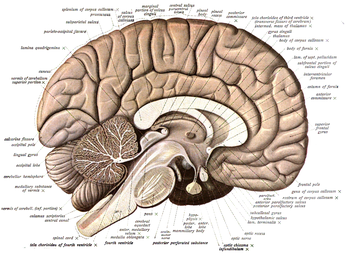
Autopilot is a pop-science/manifesto, where Andrew Smart, a machine learning engineer with a background in neuroscience, argues that busyness is a curse, and that idleness is actually a necessary and useful part of being human. The book has a kind of freshman earnest intensity that overwhelms the argument. I'll buy that there is a resting network in the brain, that activates when we aren't thinking about or doing anything in particular, but I'm not sure that the converse, that activating this network leads to genius, is true. Certainly there's a way in which the managerial jargon of efficiency and always being on task is actually opposed to risk-taking and innovation, but while Smart is persuasive in criticizing Six Sigma in particular, his arguments drawing on Rilke are much less convincing, and the neuroscience comes in a gush of metaphors.
Autopilot is a pop-science/manifesto, where Andrew Smart, a machine learning engineer with a background in neuroscience, argues that busyness is a curse, and that idleness is actually a necessary and useful part of being human. The book has a kind of freshman earnest intensity that overwhelms the argument. I'll buy that there is a resting network in the brain, that activates when we aren't thinking about or doing anything in particular, but I'm not sure that the converse, that activating this network leads to genius, is true. Certainly there's a way in which the managerial jargon of efficiency and always being on task is actually opposed to risk-taking and innovation, but while Smart is persuasive in criticizing Six Sigma in particular, his arguments drawing on Rilke are much less convincing, and the neuroscience comes in a gush of metaphors.

The Art of Renaissance Warfare is a light, popular gloss of the title. It's an odd choice for Turnbull, who's written something like 70 books on the military history of pre-modern Japan, to switch continents and focus on Europe, and I think both the detail and analysis suffer.
Intrinsically, though, the 150 years discussed marked a major shift in how war was conducted, from feudal retinues centered around armored knights, to professional mercenary companies where linear formations of arquebusers and blocks of pikemen resisted cavalry more often than not. Meanwhile, siege artillery made millennia of vertical stone fortresses obsolete, and gunpowder went from a curiosity to the core of military power.
Turnbull tells engaging stories, ranging from Granada to Constantinople and Antwerp to Moscow, with lots of details of the supreme commander (oh, and great illustrations). But there's little sense of tactics, let alone strategy in this book, or what might make one soldier artful and another a clod.
Intrinsically, though, the 150 years discussed marked a major shift in how war was conducted, from feudal retinues centered around armored knights, to professional mercenary companies where linear formations of arquebusers and blocks of pikemen resisted cavalry more often than not. Meanwhile, siege artillery made millennia of vertical stone fortresses obsolete, and gunpowder went from a curiosity to the core of military power.
Turnbull tells engaging stories, ranging from Granada to Constantinople and Antwerp to Moscow, with lots of details of the supreme commander (oh, and great illustrations). But there's little sense of tactics, let alone strategy in this book, or what might make one soldier artful and another a clod.
%20Rebellion%20Publishing.png)
Hexarchate Stories is maybe four decent stories, and a bunch of filler sketches, that's good reading for fans of the Machinery of Empire. The best stories concern an art thief stealing a true weapon of mass destruction, Jedao's greatest victory, a Shous candidate being tested, and Jedao and Cheris reconnecting a decade after the last book for one more job.
To fill out the other half of the book, Lee has included his development sketches on the series, little scenes from the childhoods of the major characters. I'm torn about this, because Lee is a master of tone and style, and these sketches demonstrate that in spades, but they're also entirely gratuitous from a larger perspective. I'm reminded of Peter F. Hamilton's A Second Chance at Eden, except that each of the stories in Hamilton's book was a fully formed and plotted story, not just a workshop sketch.
And there might also be a fundamental disagreement between Lee and myself about what is cool in his writing. I'm here for the descriptions of horrific impossible weapons and horrific impossible people as trained by the six branches of the Hexarchate. Lee thinks it's cool that these war criminals also enjoy pastries and dote on their families, love cats, and have other humanizing qualities. And then there's the revelation that the Hexarchate relies on the secret enslavement of servitors and mothships, who are sentient. Yeah, that's a crime, but the Hexarchate also runs on torturing heretics to death and making suicide a duty in the name of immortal ghost-sorcerers, so it's a bit like issuing speeding tickets on the way to the concentration camp.
To fill out the other half of the book, Lee has included his development sketches on the series, little scenes from the childhoods of the major characters. I'm torn about this, because Lee is a master of tone and style, and these sketches demonstrate that in spades, but they're also entirely gratuitous from a larger perspective. I'm reminded of Peter F. Hamilton's A Second Chance at Eden, except that each of the stories in Hamilton's book was a fully formed and plotted story, not just a workshop sketch.
And there might also be a fundamental disagreement between Lee and myself about what is cool in his writing. I'm here for the descriptions of horrific impossible weapons and horrific impossible people as trained by the six branches of the Hexarchate. Lee thinks it's cool that these war criminals also enjoy pastries and dote on their families, love cats, and have other humanizing qualities. And then there's the revelation that the Hexarchate relies on the secret enslavement of servitors and mothships, who are sentient. Yeah, that's a crime, but the Hexarchate also runs on torturing heretics to death and making suicide a duty in the name of immortal ghost-sorcerers, so it's a bit like issuing speeding tickets on the way to the concentration camp.

Red November has the verve of a good Tom Clancy novel, but it's all true. Based on the author's experience as a submariner and navy diver, along with interviews of submarine veterans on both sides of the Cold War, Red November reveals the heroism of life under the waves, and how close we came to nuclear war.
The author's father helped develop a key technology called Boresight, which triangulated burst transmissions from Soviet submarines. During the Cuban Missile crisis, four Soviet attacks carrying nuclear torpedoes represented the biggest threat to the American quarantine. Boresight vectored anti-sub warfare groups. For tense days, the fate of the world rested in the hands of four Soviet captains and political officers: men sweltering and covered in heat-rashes, passing out from CO2 levels, frightened of their failing equipment and bombardment by 'signalling depth charges'. These men had a button which would make the Americans go away, and also precipitate an all-out war. We're here because they declined to the end the world.
Even in the submarine Cold War wasn't a shooting war, it was plenty dangerous. American captain sailed extremely aggressively, passing within a handful of meters of their Soviet counterparts to collect intelligence and be in a position to destroy enemy boomers before they could launch their missiles. This resulted in several collisions, including one between USS Drum and K-324 that the author was present for.
And of the course the crown jewel of the secret war was Operation Ivy Bells, where US submarines penetrated into the Vladivostok harbor to tap a submarine cable, at least until a disgruntled NSA employee blew the entire program.
Red November is a thrilling, slice-of-life history, of a secret war!
The author's father helped develop a key technology called Boresight, which triangulated burst transmissions from Soviet submarines. During the Cuban Missile crisis, four Soviet attacks carrying nuclear torpedoes represented the biggest threat to the American quarantine. Boresight vectored anti-sub warfare groups. For tense days, the fate of the world rested in the hands of four Soviet captains and political officers: men sweltering and covered in heat-rashes, passing out from CO2 levels, frightened of their failing equipment and bombardment by 'signalling depth charges'. These men had a button which would make the Americans go away, and also precipitate an all-out war. We're here because they declined to the end the world.
Even in the submarine Cold War wasn't a shooting war, it was plenty dangerous. American captain sailed extremely aggressively, passing within a handful of meters of their Soviet counterparts to collect intelligence and be in a position to destroy enemy boomers before they could launch their missiles. This resulted in several collisions, including one between USS Drum and K-324 that the author was present for.
And of the course the crown jewel of the secret war was Operation Ivy Bells, where US submarines penetrated into the Vladivostok harbor to tap a submarine cable, at least until a disgruntled NSA employee blew the entire program.
Red November is a thrilling, slice-of-life history, of a secret war!

Wow! That was incredible. Dickinson upends fantasy tropes in this deadly and intricate novel of intrigue, economic warfare, and horrific revenge. Young Baru Cormorant is a child who sees her carefree home captured by invisible threads of paper currency, ill-advised alliances, and well-meaning advisers, an invasion that moves with the unstoppable momentum of a glacier until the imperial power of the Masquerade rules everything, crushing her people's traditions and culture under eugenic science and hygienic advisers. A student in the new Imperial school, Baru formulates a risky plan. She will become the best, use her talents to gain power within the Masquerade, and then destroy it from within.
A prodigy with accounting and finance, Baru is dispatched to the strategic province of Aurdwynn, to fill the shoes of two dead men in a viper's pit of feuding dukes, venomous Imperial functionaries, ancient cults, and ambitious peasants. Baru needs to find her allies, and sparks a rebellion in her own name against the Empire, winning a major battle and playing off hard fraught loyalties. She's an amazing protagonist, a tightly wound demon who's deeply internalized anger is all too real.
I refuse to say anything about the end, but again, Wow! This is a book that will spike you through the heart. Best fantasy I've read all year.
***
Updated from 2019: I reread Traitor because I started Monster and the beginning of Monster made no damn sense. On a reread, Traitor is even better. Sure, knowing the end removes the absolute gut punch, but the journey is still incredible, it's easier to keep track of the secondary characters, and I really enjoyed Dickinson's pacing, the way that he sticks through years without missing anything important.
A prodigy with accounting and finance, Baru is dispatched to the strategic province of Aurdwynn, to fill the shoes of two dead men in a viper's pit of feuding dukes, venomous Imperial functionaries, ancient cults, and ambitious peasants. Baru needs to find her allies, and sparks a rebellion in her own name against the Empire, winning a major battle and playing off hard fraught loyalties. She's an amazing protagonist, a tightly wound demon who's deeply internalized anger is all too real.
I refuse to say anything about the end, but again, Wow! This is a book that will spike you through the heart. Best fantasy I've read all year.
***
Updated from 2019: I reread Traitor because I started Monster and the beginning of Monster made no damn sense. On a reread, Traitor is even better. Sure, knowing the end removes the absolute gut punch, but the journey is still incredible, it's easier to keep track of the secondary characters, and I really enjoyed Dickinson's pacing, the way that he sticks through years without missing anything important.

I'm shelving Mandarins of the Future next to my Vietnam War books because this is the intellectual history behind why the best and the brightest went into a small Southeast Asian country and lost everything.
The end of the Second World War, with its victory over fascism and the next struggle against international Communism, offered a great opportunity for American academics. 1950s America, prosperous, tranquil, and democratic, clearly stood at the endpoint of history. All that needed to done was to prove this was true, and then export the American system to the newly liberated Third World before the pernicious virus of Communism got there first. This project was one of "modernization", first a universal social science to describe the trajectory of nations from a traditional past to an industrialized, democratic, scientific and stable modernity, and then a set of overarching policy projects in Latin America, Asia, and Africa, to make this vision a reality.
The three cases studies on academic units and their leaders: Talcott Parsons at Harvard, Edward Shils and Gabriel Almond at Princeton, and Walt Rostow at MIT, provide a thorough accounting of modernization theory, and its troubled and multifaceted links to American history and Marxism. In promoting an America System of modernity, these thinkers espoused a vision of 'conflict-less' progress and expansion of wealth in America that ignored the very real evils of genocide against Native Americans, slavery and the Civil War, or the struggle between labor and capitalist robber barons in the late 19th century. They conceived of the social scientist as a kind of collective psychoanalyst, a specialist that could help elites display democratic virtues without the chaotic hurly-burly of mass political participation. Abroad, modernizers conceived of a project of state-directed development that required a firm, national hand. In the absence of a robust civil society, the military could do this just fine, and there were no contradictions between modernization and authoritarian regimes.
As Gilman recounts in the final chapters, modernization theory collapsed comprehensively with the failure of liberal policy in the 60s and 70s, as the Kennedy/Jackson initiatives around the Vietnam War and the Great Society failed to produce victory at great expense, and the economy stagnated. Modernization theory, having been so close to the apex of the military-industrial-academic-complex, became an easy target from critics across the political spectrum. A resurgent Right, from old-guard segregationists to neoliberal deregulators, dismantled the modernist project of active government intervention. The counter-culture, from street-fighting youths to post-modern intellectuals, railed against the closed totalizing vision of modernity, finding solace in individual and subjective identities.
Mandarins of the Future matters, because for all that they got wrong, the conception of modernity developed by the subjects of this book remains a durable default. The welfare state, elite deliberatve democracy, and a basic optimism about technology and the future, are at the core of left-central politics today. Modernization theory was dusted off and used to justify the non-military aspects of the 2003 Invasion of Iraq and the Global War on Terror. For all the battering that these political ideologies and ideals have taken in recent years, modernization is at least a productive theory, unlike the intellectual cynicism and nihilism of the various flavors of post-modernist thought, or the Darwinian accelerationism that seems to be the end-state of global capitalism.
Perhaps modernity is, to rephrase Churchill, the least bad of all our ways of existing in the 20th century. If so, it is important to understand it as an idea with a particularly genesis and background, and not an automatic endpoint of history. This book serves as important intellectual stepping stone between Marx and Weber, and the conditions of life in the 21st century.
The end of the Second World War, with its victory over fascism and the next struggle against international Communism, offered a great opportunity for American academics. 1950s America, prosperous, tranquil, and democratic, clearly stood at the endpoint of history. All that needed to done was to prove this was true, and then export the American system to the newly liberated Third World before the pernicious virus of Communism got there first. This project was one of "modernization", first a universal social science to describe the trajectory of nations from a traditional past to an industrialized, democratic, scientific and stable modernity, and then a set of overarching policy projects in Latin America, Asia, and Africa, to make this vision a reality.
The three cases studies on academic units and their leaders: Talcott Parsons at Harvard, Edward Shils and Gabriel Almond at Princeton, and Walt Rostow at MIT, provide a thorough accounting of modernization theory, and its troubled and multifaceted links to American history and Marxism. In promoting an America System of modernity, these thinkers espoused a vision of 'conflict-less' progress and expansion of wealth in America that ignored the very real evils of genocide against Native Americans, slavery and the Civil War, or the struggle between labor and capitalist robber barons in the late 19th century. They conceived of the social scientist as a kind of collective psychoanalyst, a specialist that could help elites display democratic virtues without the chaotic hurly-burly of mass political participation. Abroad, modernizers conceived of a project of state-directed development that required a firm, national hand. In the absence of a robust civil society, the military could do this just fine, and there were no contradictions between modernization and authoritarian regimes.
As Gilman recounts in the final chapters, modernization theory collapsed comprehensively with the failure of liberal policy in the 60s and 70s, as the Kennedy/Jackson initiatives around the Vietnam War and the Great Society failed to produce victory at great expense, and the economy stagnated. Modernization theory, having been so close to the apex of the military-industrial-academic-complex, became an easy target from critics across the political spectrum. A resurgent Right, from old-guard segregationists to neoliberal deregulators, dismantled the modernist project of active government intervention. The counter-culture, from street-fighting youths to post-modern intellectuals, railed against the closed totalizing vision of modernity, finding solace in individual and subjective identities.
Mandarins of the Future matters, because for all that they got wrong, the conception of modernity developed by the subjects of this book remains a durable default. The welfare state, elite deliberatve democracy, and a basic optimism about technology and the future, are at the core of left-central politics today. Modernization theory was dusted off and used to justify the non-military aspects of the 2003 Invasion of Iraq and the Global War on Terror. For all the battering that these political ideologies and ideals have taken in recent years, modernization is at least a productive theory, unlike the intellectual cynicism and nihilism of the various flavors of post-modernist thought, or the Darwinian accelerationism that seems to be the end-state of global capitalism.
Perhaps modernity is, to rephrase Churchill, the least bad of all our ways of existing in the 20th century. If so, it is important to understand it as an idea with a particularly genesis and background, and not an automatic endpoint of history. This book serves as important intellectual stepping stone between Marx and Weber, and the conditions of life in the 21st century.

Norse mythology has an epic grandeur. Gods, giants, and looming over all of it, Ragnarok. Neil Gaiman was drawn to Norse mythology at a young age through The Mighty Thor comics. He reinvented Odin in American Gods. And in this book, he returns to the Eddas to offer his own interpretation of the sagas.
As always, Gaiman is a pure delight as a wordsmith. In his version of the story, Loki is the protagonist, a force of chaos who gets the gods into trouble and then out of it, until they imprison him, and he turns against them in the final battle. I grew up on Greek myths, and while all true myths resonate, Norse mythology has a very different feel. The Norse gods are a family, but it's less intense than Olympus, so often defined by Zeus' lust and Hera's jealousy. The world of Norse mythology is wild and forbidding, full of giants cannier and stronger than the gods. Mortals appear infrequently, and almost almost as the subject of moralizing messages about not transgressing cultural norms.
Any modern retelling is a matter of interpretation, and an actual scholar may have some quibbles. I don't. This book is delightful.
As always, Gaiman is a pure delight as a wordsmith. In his version of the story, Loki is the protagonist, a force of chaos who gets the gods into trouble and then out of it, until they imprison him, and he turns against them in the final battle. I grew up on Greek myths, and while all true myths resonate, Norse mythology has a very different feel. The Norse gods are a family, but it's less intense than Olympus, so often defined by Zeus' lust and Hera's jealousy. The world of Norse mythology is wild and forbidding, full of giants cannier and stronger than the gods. Mortals appear infrequently, and almost almost as the subject of moralizing messages about not transgressing cultural norms.
Any modern retelling is a matter of interpretation, and an actual scholar may have some quibbles. I don't. This book is delightful.

How can I describe The Corner? How can I do justice to this heartbreaking book? You know David Simon and Ed Burns as the creative force behind The Wire. This non-fiction book is the truth behind the television, a revealing portrait of a broken family living at one of the worst drug corners in West Baltimore. Dope and coke are sold 24/7, violence is omnipresent, and the pursuit of drug-induced happiness has made life and liberty seem as distant as the moon.
Gary McCollough is a former businessman turned dopehound, a street philosopher who's basic decency and inability to hurt anyone else means that he's a perennial victim. Fran, his ex-wife, has buried her own life in the needle. Their son, DeAndre, is fifteen, caught between boyhood posing and the awful realities of life on the corner. Other characters round out the neighborhood. Ella Thompson volunteers at the rec center, one of the last honest citizens left. Fat Curt is an old veteran of addiction, his organs failing and limbs swollen, who has no where else to go. Blue runs a shooting gallery in the shell of his dead mother's house.
In this year long story, Simon and Burns follow their subjects, painting revealing portraits of bare humanity under the twin weights of drugs and a society that has abandoned any sense of responsibility towards the ghettos. The first rule of the corner is chasing the blast, that rush of pleasure from the the drug and relief from the snake of withdrawal symptoms, and a moment of blessed escape away from the grind of life. And life, life is absolutely grinding. It's an endless series of scams and being scammed to get money for the dope. It's getting beat on by other crews, by your friends and family, by the police. It's overloaded systems of public services, education, justice, healthcare, that can barely manage to cart the bodies away, let alone help anyone.
Simon and Burns are at their best when they're talking about hopelessness, and the things that lift their subject past it. Corner life is lived entirely in present tense. Even a plan as simple as "I'll buy a loaf of bread to have toast tomorrow" is void in the face of junkie roommates. The effort required to get clean, a months long ordeal to get a rehab slot in the face of requests for documents, court dates, and the blast itself, is a fragile thread, let alone the effort of staying clean when drugs are easier to get than coffee. The most tragic parts of the book concern DeAndre, a smart kid who's almost entirely given up on school, but doesn't have the brutality and fearlessness it takes to make it as a gangster. At 15, DeAndre impregnates his 13 year old girlfriend Tyreeka. Neither of them are in any sense ready to be parents, but the baby provides a focus for a girl who's not sure that she matters to anyone, and a sense of immortality for boy who sees only a little bit of life ahead.
At times, Simon devolves into a general rant at the War on Drugs, and the false hope that 30 years of brutality can win against the corner, against the raw desire for oblivion in our midst. And now, 25 years on, the drug war is much the same. With the Opioid Epidemic, the Corner is now in white America too. As I hit 'save' on this review, President Trump plans to release a drug plan that includes death for drug dealers.
Screw it. Down the flag. Let the dealers and the junkies hold a parade down the National Mall. Throw some samplers to the crowd, because That Shit Is The Bomb. Drugs won. War over.
Gary McCollough is a former businessman turned dopehound, a street philosopher who's basic decency and inability to hurt anyone else means that he's a perennial victim. Fran, his ex-wife, has buried her own life in the needle. Their son, DeAndre, is fifteen, caught between boyhood posing and the awful realities of life on the corner. Other characters round out the neighborhood. Ella Thompson volunteers at the rec center, one of the last honest citizens left. Fat Curt is an old veteran of addiction, his organs failing and limbs swollen, who has no where else to go. Blue runs a shooting gallery in the shell of his dead mother's house.
In this year long story, Simon and Burns follow their subjects, painting revealing portraits of bare humanity under the twin weights of drugs and a society that has abandoned any sense of responsibility towards the ghettos. The first rule of the corner is chasing the blast, that rush of pleasure from the the drug and relief from the snake of withdrawal symptoms, and a moment of blessed escape away from the grind of life. And life, life is absolutely grinding. It's an endless series of scams and being scammed to get money for the dope. It's getting beat on by other crews, by your friends and family, by the police. It's overloaded systems of public services, education, justice, healthcare, that can barely manage to cart the bodies away, let alone help anyone.
Simon and Burns are at their best when they're talking about hopelessness, and the things that lift their subject past it. Corner life is lived entirely in present tense. Even a plan as simple as "I'll buy a loaf of bread to have toast tomorrow" is void in the face of junkie roommates. The effort required to get clean, a months long ordeal to get a rehab slot in the face of requests for documents, court dates, and the blast itself, is a fragile thread, let alone the effort of staying clean when drugs are easier to get than coffee. The most tragic parts of the book concern DeAndre, a smart kid who's almost entirely given up on school, but doesn't have the brutality and fearlessness it takes to make it as a gangster. At 15, DeAndre impregnates his 13 year old girlfriend Tyreeka. Neither of them are in any sense ready to be parents, but the baby provides a focus for a girl who's not sure that she matters to anyone, and a sense of immortality for boy who sees only a little bit of life ahead.
At times, Simon devolves into a general rant at the War on Drugs, and the false hope that 30 years of brutality can win against the corner, against the raw desire for oblivion in our midst. And now, 25 years on, the drug war is much the same. With the Opioid Epidemic, the Corner is now in white America too. As I hit 'save' on this review, President Trump plans to release a drug plan that includes death for drug dealers.
Screw it. Down the flag. Let the dealers and the junkies hold a parade down the National Mall. Throw some samplers to the crowd, because That Shit Is The Bomb. Drugs won. War over.

The Rising Sun is a deserved classic, one of the first popular accounts of Japan's side of the Second World War. Toland takes us from the highest levels of Toyko policy-making to the frontlines of the deadly island battles of the Pacific campaign, humanizing an enemy that was derided in racist terms during the war.
Japan in the run-up to the war was beset with problems. As an island nation, they imported almost everything and were vulnerable to blockades and sanctions. They were stuck in a grinding counter-insurgency war in China. And a cult of reconstructed bushido emphasized glorious battle as the solution to all problems. Ambitious junior officers, or fear of ambitious junior officers, pushed Japan to the brink of war against America and Britain. In 1941, with Nazi power at its height, the militarists decided that if they did not act now they would be unable to share in the spoils of a fascist victory, and as American industrial power grew this was the only chance to knock America out of the war.
Toland builds the tension leading up to Pearl Harbor masterfully. The attack achieved total tactical surprise, though strategically America expected an attack somewhere. But it was a sneak attack trough a bleak comedy of errors in decryption and translation the declaration of war, which was supposed to arrive just before the first wave of bombers. The attack killed thousands, lead to Roosevelt's famous 'Day of Infamy' speech, and turned American public opinion decisively against Japan. It would be a hard war.
Following victories in the Singapore and Philippines has Allied fortresses falling like dominoes, and 1942 saw Japan in charge of furthest extent of what would be the Greater East Asia Co-Prosperity Sphere. But Imperial Japan had two cults, the first that of bushido and the Emperor, and the second that of the Decisive Battle. In 1905, at the Battle of Tsushima, Admiral Togo annihilated the Russian fleet and caused their collapse. Both the Navy and the Army would seek one great battle, where exceptional bravery would carry them forwards.
But America was not Tsarist Russia. At Midway, American carriers dealt a mortal blow to the Kido Butai. At Guadalcanal, a war of attrition ripped the guts out of the elite forces the Navy and Army. From there on out, it was a terrible war of attrition. On island after island, starving under-supplied Japanese forces died almost the last man.
By 1945, defeat was evident. Nazi Germany was being ground to dust. Iwo Jima and Okinawa had fallen. General LeMay's XXI bomber command was destroying a city a night. The desperate tactics of kamikaze attacks could not turn back American invasion fleets. Yet fear of a military uprising prevented serious peace-feelers. Even after two atomic bombs, junior officers staged a coup to prevent the Emperor's statement of surrender from being broadcast.
I'm sure that in the subsequent decades, better archival work has changed the historical argument. But Toland had access to the subjects themselves, and the voices from the front are stark and terrifying. This is a long book, and even so I wish it had more on China and Army-Navy rivalries, but for anyone interested in the Pacific Front it is the first stop.
Japan in the run-up to the war was beset with problems. As an island nation, they imported almost everything and were vulnerable to blockades and sanctions. They were stuck in a grinding counter-insurgency war in China. And a cult of reconstructed bushido emphasized glorious battle as the solution to all problems. Ambitious junior officers, or fear of ambitious junior officers, pushed Japan to the brink of war against America and Britain. In 1941, with Nazi power at its height, the militarists decided that if they did not act now they would be unable to share in the spoils of a fascist victory, and as American industrial power grew this was the only chance to knock America out of the war.
Toland builds the tension leading up to Pearl Harbor masterfully. The attack achieved total tactical surprise, though strategically America expected an attack somewhere. But it was a sneak attack trough a bleak comedy of errors in decryption and translation the declaration of war, which was supposed to arrive just before the first wave of bombers. The attack killed thousands, lead to Roosevelt's famous 'Day of Infamy' speech, and turned American public opinion decisively against Japan. It would be a hard war.
Following victories in the Singapore and Philippines has Allied fortresses falling like dominoes, and 1942 saw Japan in charge of furthest extent of what would be the Greater East Asia Co-Prosperity Sphere. But Imperial Japan had two cults, the first that of bushido and the Emperor, and the second that of the Decisive Battle. In 1905, at the Battle of Tsushima, Admiral Togo annihilated the Russian fleet and caused their collapse. Both the Navy and the Army would seek one great battle, where exceptional bravery would carry them forwards.
But America was not Tsarist Russia. At Midway, American carriers dealt a mortal blow to the Kido Butai. At Guadalcanal, a war of attrition ripped the guts out of the elite forces the Navy and Army. From there on out, it was a terrible war of attrition. On island after island, starving under-supplied Japanese forces died almost the last man.
By 1945, defeat was evident. Nazi Germany was being ground to dust. Iwo Jima and Okinawa had fallen. General LeMay's XXI bomber command was destroying a city a night. The desperate tactics of kamikaze attacks could not turn back American invasion fleets. Yet fear of a military uprising prevented serious peace-feelers. Even after two atomic bombs, junior officers staged a coup to prevent the Emperor's statement of surrender from being broadcast.
I'm sure that in the subsequent decades, better archival work has changed the historical argument. But Toland had access to the subjects themselves, and the voices from the front are stark and terrifying. This is a long book, and even so I wish it had more on China and Army-Navy rivalries, but for anyone interested in the Pacific Front it is the first stop.

In the Stacks is high-concept fantasy novella let down by merely average execution. At the magical University of Hazar, the 5th year exam in returning a library book. What makes this challenging is that it's a magical library, a magical space full of monsters and traps, and librarians are more like D&D adventurers than bibliophiles and emergency social workers.
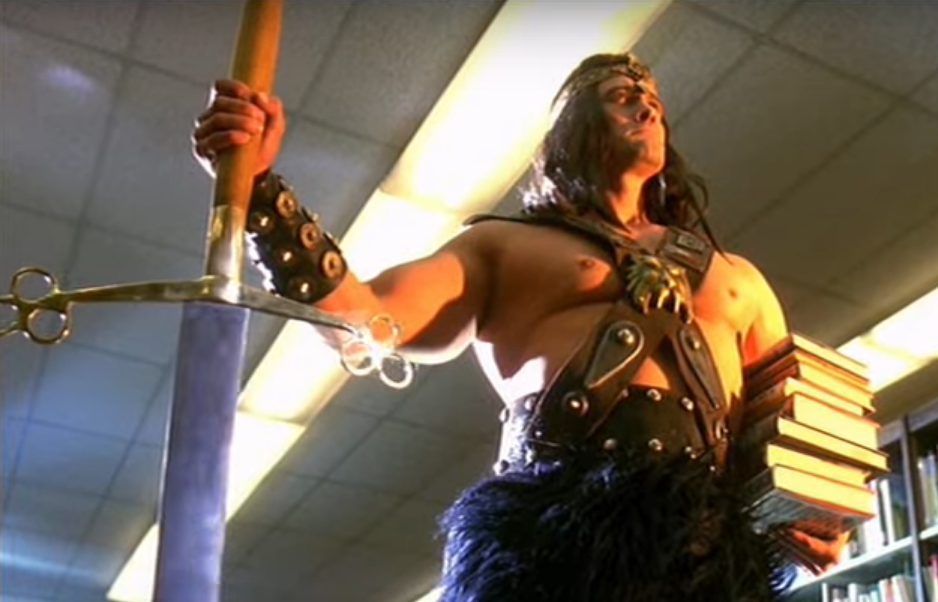
Conan the Librarian from Weird Al's UHF
There are some good ideas: the premise and the vocabovore goblins foremost among them, but a story like this lives on character, action, and above all, mood. Laz never struck me as someone with a particular ambition to be a wizard, the swords and sorcery is nothing unusual to someone who's played a lot of D&D, and the mood of an oppressive, eldritch library just didn't come through for me at all.
A delightful amusement, which I'd like to round up to 4 stars, but the best that I can say is that In the Stacks doesn't outstay its welcome, which is faint praise indeed.
Conan the Librarian from Weird Al's UHF
There are some good ideas: the premise and the vocabovore goblins foremost among them, but a story like this lives on character, action, and above all, mood. Laz never struck me as someone with a particular ambition to be a wizard, the swords and sorcery is nothing unusual to someone who's played a lot of D&D, and the mood of an oppressive, eldritch library just didn't come through for me at all.
A delightful amusement, which I'd like to round up to 4 stars, but the best that I can say is that In the Stacks doesn't outstay its welcome, which is faint praise indeed.