You need to sign in or sign up before continuing.
Take a photo of a barcode or cover
2.05k reviews by:
mburnamfink


No better book has been written about flying or the space race. Tom Wolfe has what it takes, the bubbling enthusiasm and critical eye, to write properly about astronauts. The Right Stuff is about endurance, guts, reflexes, a cool head, and giant titanium testicles. It's about going up day after day in high performance jets that are trying their level best to kill you-and statistically will kill 23% of pilots in peacetime-and pushing them to the edge of the envelope and beyond. It's about sitting at home, waiting for a call or a knock on the door, saying that your husband's plane is lost and the man you love is nothing more than charred meat. It's Flying & Drinking and Drinking & Driving and Dicing with Death and doing anything to climb the pure pyramid of macho essence.
Most of us don't live in this world, but Wolfe reconstructs how for a few years in the early 60s, with the mighty and infallible Soviet Chief Designer beating the pants out of the American space program, the Mercury Seven became Cosmic Knights, Single Combat Champions of Truth, Justice, and the American Way, and the entire nation became caught up in the saga of The Right Stuff. Wolfe records the contradictions and absurdities of the fighter pilot lifestyle, and how they became tied up with America and the space race, with the utmost respect and tenderness.
Most of us don't live in this world, but Wolfe reconstructs how for a few years in the early 60s, with the mighty and infallible Soviet Chief Designer beating the pants out of the American space program, the Mercury Seven became Cosmic Knights, Single Combat Champions of Truth, Justice, and the American Way, and the entire nation became caught up in the saga of The Right Stuff. Wolfe records the contradictions and absurdities of the fighter pilot lifestyle, and how they became tied up with America and the space race, with the utmost respect and tenderness.

Marque and Reprisal follows up the first book pretty directly. Ky may have thought that having dealt with mutineers and pirates, everything would be back to normal, but she barely has time to land her cargo before a shadowy interstellar conspiracy attacks her family. Most of the family's leadership, including Ky's father/the CEO are killed in the attack, and in the wake Ky is cut off, her cargoes uninsurable, lines of credit frozen, and herself and her ship under attack by assassins and saboteurs. Ky's mission is to survive, figure out who the enemy is, and strike back.
To help out with this, Moon introduces disgraced cousin Stella Vatta, who has redeemed herself as a courier and spy, and insterstellar man of mystery Rafe, a spy working for the Interstellar Communication monopoly. It seems that a conspiracy is eating at the heart of ISC around mobile ansibles which might break their monopoly on FTL communication. And the Vattas are either targets of opportunity, or part of a plan of revenge orchestrated by a truly vile blacksheep of the family.
Ky winds up in an the equivalent of an interstellar knife fight, using deception and EMP mines to take out her enemies (oh, and killing several of they in hand-to-hand space suit combat). And with a new ship, and a mysterious letter of Marque from a patron in the Slotter's Key military.
I'm torn, because so much of this series is solid, but so much important stuff is just... hanging there. The grand interstellar conspiracy and mechanics of FTL communication are so vague that it seems like literally anything could happen. For every problem Ky solves through her own resourcefulness, there are three where the solution is handed to her on a platter. And for a setting which is trying to evoke some kind of Age of Sail-esque mercantile adventurism, so much of it just plods.
To help out with this, Moon introduces disgraced cousin Stella Vatta, who has redeemed herself as a courier and spy, and insterstellar man of mystery Rafe, a spy working for the Interstellar Communication monopoly. It seems that a conspiracy is eating at the heart of ISC around mobile ansibles which might break their monopoly on FTL communication. And the Vattas are either targets of opportunity, or part of a plan of revenge orchestrated by a truly vile blacksheep of the family.
Ky winds up in an the equivalent of an interstellar knife fight, using deception and EMP mines to take out her enemies (oh, and killing several of they in hand-to-hand space suit combat). And with a new ship, and a mysterious letter of Marque from a patron in the Slotter's Key military.
I'm torn, because so much of this series is solid, but so much important stuff is just... hanging there. The grand interstellar conspiracy and mechanics of FTL communication are so vague that it seems like literally anything could happen. For every problem Ky solves through her own resourcefulness, there are three where the solution is handed to her on a platter. And for a setting which is trying to evoke some kind of Age of Sail-esque mercantile adventurism, so much of it just plods.

The Culture Code has a provocative premise, watered down by undue hero worship and a commitment to mediocre neoliberalism.
The basic idea is that real work, real innovative, value-added work, is done by dedicated people who are emotionally invested, who are together in this effort, who are vulnerable and unconcerned with social status games. This emotional bond is something that can be tracked in how team-members interact with one another, even in total ignorance of the content of their communication. It's something delicate, which is fostered by great leaders, and spoiled by a single bad apple. Potentially, it's even something that can be trained, though Coyle is fuzzy on those details.
The twin problems are that so many teams are far from Coyle's ideal. First, most business propositions are fundamentally irrelevant and almost pointless. It's one thing to be beholden to an ideal of perfect service, another thing entirely to go for a 3% improvement on NPS at Applebee's. Given a choice between being excellent and maximizing short-term returns, most companies will go for the short-term returns. Second, and this is the hard part: humans love social status games. We're good at playing them, we're invested in them, and I'm not sure 'good teamwork' is enough to tell the boss his ideas are bad.
And on a methodological note, Coyle uses a lot of examples of flashy, design-centric companies, but building anything even moderately complex involves a host of technical challenges and choices. It's one thing to say that empowered swarms can do it all, but I think most work is far less romantic than that ideal.
The basic idea is that real work, real innovative, value-added work, is done by dedicated people who are emotionally invested, who are together in this effort, who are vulnerable and unconcerned with social status games. This emotional bond is something that can be tracked in how team-members interact with one another, even in total ignorance of the content of their communication. It's something delicate, which is fostered by great leaders, and spoiled by a single bad apple. Potentially, it's even something that can be trained, though Coyle is fuzzy on those details.
The twin problems are that so many teams are far from Coyle's ideal. First, most business propositions are fundamentally irrelevant and almost pointless. It's one thing to be beholden to an ideal of perfect service, another thing entirely to go for a 3% improvement on NPS at Applebee's. Given a choice between being excellent and maximizing short-term returns, most companies will go for the short-term returns. Second, and this is the hard part: humans love social status games. We're good at playing them, we're invested in them, and I'm not sure 'good teamwork' is enough to tell the boss his ideas are bad.
And on a methodological note, Coyle uses a lot of examples of flashy, design-centric companies, but building anything even moderately complex involves a host of technical challenges and choices. It's one thing to say that empowered swarms can do it all, but I think most work is far less romantic than that ideal.

Ethics and Data Science has two important virtues of being free and short, which make it a decent starting place for a conversation about ethics and data science. However, it doesn't do much to advance the conversation beyond hoary tropes to "do better" with caring for user data.
The basic premise is that programming ethics is more than a code or an oath, it's a daily practice that can made explicit by checklists to question the assumptions going into your program, and "five Cs" to follow, in treating customer data as your own personal data.
Getting ethics right is important. Facebook's Cambridge Analytica related scandals are only the tip of the data iceberg. But I'm not sure that 20th century ideals of informed consent have much to say about the sheer combinatorial velocity of data in the 21st century.
The basic premise is that programming ethics is more than a code or an oath, it's a daily practice that can made explicit by checklists to question the assumptions going into your program, and "five Cs" to follow, in treating customer data as your own personal data.
Getting ethics right is important. Facebook's Cambridge Analytica related scandals are only the tip of the data iceberg. But I'm not sure that 20th century ideals of informed consent have much to say about the sheer combinatorial velocity of data in the 21st century.

The next time someone accuses the French of being cheese eating surrender monkeys, I will be forced to slap them. Dien Bien Phu is one of those battles that has shaped the course of history. In 55 days of brutal siege warfare, the Viet Minh under General Giap defeated a French garrison, ending French involvement in Vietnam, and setting the stage for America's bloody war. Published in 1966, this book was required reading in Wasington policy circles, and drove Lyndon Johnson’s obsession that the battle of Khe Sahn not be another 'din bin foo'.
Bernard Fall was an old Indochina hand, and this book mixes a day by day account of the battle with portraits of colorful French Foreign Legion officers and analysis of the mood and thought in Hanoi, Paris, and Washington. At times, the endless descriptions of desperate counter-attacks and airdrops under fire wears on, but a few scenes rise above prosaic reporting to describe the suffering endured by the French, trapped in hastily built trenches, starving, soaked to the bone, and under continual Viet Minh bombardment. The strategic analysis of Eisenhower's decision not to intervene is fairly accurate, especially considering how closely this book was published to the events. Notably, even in 1966 Vietnam experts were obsessed with counter-factuals and might-have-beens.
Ultimately, the French were defeated, but only after days without rations, reinforcement, or resupply. Dien Bien Phu fell only after every bullet was fired, and the last defensive positions overrun. Both sides were ferocious and skilled fighters, but what decided the battle was logistics. The French arrogantly assumed that the base could be supplied by airlift, and that it was impossible to move large numbers of men and supplies through the jungle. Communist flak, and the endurance of coolie porters carrying 200 kg loads on modified bicycles hundreds of miles through the jungle proved them wrong.
Dien Bien Phu was an atypical set-piece of battle, not characteristic of the war as a whole. Long and detailed, Hell in a Very Small Place is too much for a general audience, but vital reading for anybody interested in the origins of the war, or the French colonial forces.
Bernard Fall was an old Indochina hand, and this book mixes a day by day account of the battle with portraits of colorful French Foreign Legion officers and analysis of the mood and thought in Hanoi, Paris, and Washington. At times, the endless descriptions of desperate counter-attacks and airdrops under fire wears on, but a few scenes rise above prosaic reporting to describe the suffering endured by the French, trapped in hastily built trenches, starving, soaked to the bone, and under continual Viet Minh bombardment. The strategic analysis of Eisenhower's decision not to intervene is fairly accurate, especially considering how closely this book was published to the events. Notably, even in 1966 Vietnam experts were obsessed with counter-factuals and might-have-beens.
Ultimately, the French were defeated, but only after days without rations, reinforcement, or resupply. Dien Bien Phu fell only after every bullet was fired, and the last defensive positions overrun. Both sides were ferocious and skilled fighters, but what decided the battle was logistics. The French arrogantly assumed that the base could be supplied by airlift, and that it was impossible to move large numbers of men and supplies through the jungle. Communist flak, and the endurance of coolie porters carrying 200 kg loads on modified bicycles hundreds of miles through the jungle proved them wrong.
Dien Bien Phu was an atypical set-piece of battle, not characteristic of the war as a whole. Long and detailed, Hell in a Very Small Place is too much for a general audience, but vital reading for anybody interested in the origins of the war, or the French colonial forces.

I wanted to like this book, I really did, but despite his qualifications, Brian Johnson didn't do the legwork necessary to achieve his goals. Brian Johnson is a futurist at Intel, who develops various scenarios to guide the company's development over the next 10 to 20 years (approximately forever in IT time). The back of the book claims that "Science Fiction Prototyping is a practical guide to using fiction as a way to imagine our future in a whole new way."
Instead, what I got was five bullet points on how to do what Johnson gets paid to do, totaling about a page, surrounded by interviews with various media figures about the difference between writing, film, and comics books, and some of Johnson's short fiction. What I wanted (and what I think it's fair to expect) is a detailed guide to gathering views of emerging technologies, sitting down with a group (classroom, corporate, academic, whatever), and somehow using sci-fi to work out the extrapolations. There's nothing like that; not a list of places of Johnson goes to gather his data (you try reading scientific journal abstracts as a layperson), no list of sci-fi works that are particularly good examples of prototyping, and nothing that tells you how to write a story, or what makes it a prototype rather than just an amusement.
I that science-fiction can play a useful role in helping people engage with the future. Almost nobody reads government, military, and corporate predictions: sci-fi is technology assessment for the rest of us. Moreover, I believe that the narrative elements of a story can provide deeper, fuller, and richer visions than sterile graphs and analyses. Not that sci-fi predicts the future, but it can act as design fiction, guiding inventors and scientists towards new discoveries, and an object that create Prevail-style flexibility towards unknowable contingencies. I guess I'll have to make my own plan for how to do that.
Instead, what I got was five bullet points on how to do what Johnson gets paid to do, totaling about a page, surrounded by interviews with various media figures about the difference between writing, film, and comics books, and some of Johnson's short fiction. What I wanted (and what I think it's fair to expect) is a detailed guide to gathering views of emerging technologies, sitting down with a group (classroom, corporate, academic, whatever), and somehow using sci-fi to work out the extrapolations. There's nothing like that; not a list of places of Johnson goes to gather his data (you try reading scientific journal abstracts as a layperson), no list of sci-fi works that are particularly good examples of prototyping, and nothing that tells you how to write a story, or what makes it a prototype rather than just an amusement.
I that science-fiction can play a useful role in helping people engage with the future. Almost nobody reads government, military, and corporate predictions: sci-fi is technology assessment for the rest of us. Moreover, I believe that the narrative elements of a story can provide deeper, fuller, and richer visions than sterile graphs and analyses. Not that sci-fi predicts the future, but it can act as design fiction, guiding inventors and scientists towards new discoveries, and an object that create Prevail-style flexibility towards unknowable contingencies. I guess I'll have to make my own plan for how to do that.

Boot camp is iconic, maybe infamous. Boot camp is the 11 weeks where hardassed drill instructors turn snotnosed civilians into Marines.
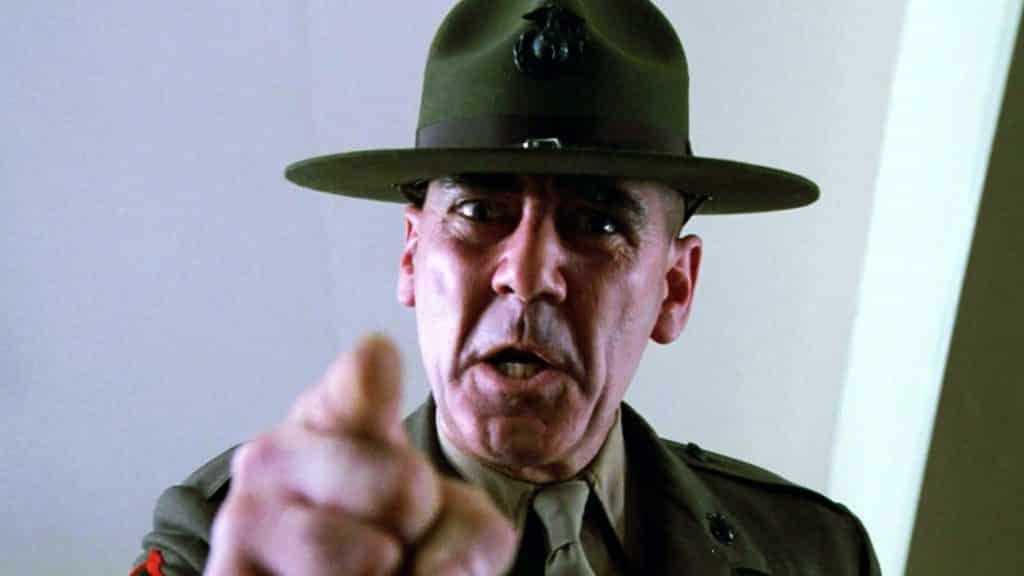
R. Lee Ermey, in his most famous role as Gunnery Sergeant Hartman in Full Metal Jacket
In Making the Corps, Ricks uses the journey of Platoon 3086 through Parris Island in 1996 as a lens to understand the Marine Corps as a whole, and their place in the American defense posture in the 21st century, and American society. The Marines are self-consciously about a warrior culture, the living legacy of Semper Fi, and boot camp is where that foundations of that culture are laid. Ricks is both caught up in the myth-making, he genuinely likes the Marines, but he has enough to distance to see warning flags where appropriate.
First, boot camp. The point of boot camp is to mold individualist and lazy teenagers into decisive, calm, and collectivist professionals. Every Marine is a rifleman, and every Marine should be prepared to kill, and if necessary, die, for his brother Marines. The yelling, the PT, the discipline, is all designed around this simple goal. In 1996, Parris Island had a 24% attrition rate, including injuries, psychological breakdowns, and 'Failure to Adapt'. While it's tough, it's not sadistic or particularly dangerous. We're a long ways away from the bad days of Ribbon Creek incident, where six recruits died while marching across tidal flats on the orders of a drunk DI, or the post-Vietnam funk. Ricks manages to make enough of the 55-odd recruits of Platoon 3086 individuals to give character to this transformation, without losing touch with the big picture.
The boot camp parts are interspersed with musings on what the Marines might do going into the 21st century. It's been over 20 years and two medium-sized wars, so a lot of this Clinton-era speculation feels very dated. But even with a pre 9-11 mindset, Ricks manages to grasp the essential contradictions of a highly disciplined warrior elite in a nation that is increasingly anything but.
R. Lee Ermey, in his most famous role as Gunnery Sergeant Hartman in Full Metal Jacket
In Making the Corps, Ricks uses the journey of Platoon 3086 through Parris Island in 1996 as a lens to understand the Marine Corps as a whole, and their place in the American defense posture in the 21st century, and American society. The Marines are self-consciously about a warrior culture, the living legacy of Semper Fi, and boot camp is where that foundations of that culture are laid. Ricks is both caught up in the myth-making, he genuinely likes the Marines, but he has enough to distance to see warning flags where appropriate.
First, boot camp. The point of boot camp is to mold individualist and lazy teenagers into decisive, calm, and collectivist professionals. Every Marine is a rifleman, and every Marine should be prepared to kill, and if necessary, die, for his brother Marines. The yelling, the PT, the discipline, is all designed around this simple goal. In 1996, Parris Island had a 24% attrition rate, including injuries, psychological breakdowns, and 'Failure to Adapt'. While it's tough, it's not sadistic or particularly dangerous. We're a long ways away from the bad days of Ribbon Creek incident, where six recruits died while marching across tidal flats on the orders of a drunk DI, or the post-Vietnam funk. Ricks manages to make enough of the 55-odd recruits of Platoon 3086 individuals to give character to this transformation, without losing touch with the big picture.
The boot camp parts are interspersed with musings on what the Marines might do going into the 21st century. It's been over 20 years and two medium-sized wars, so a lot of this Clinton-era speculation feels very dated. But even with a pre 9-11 mindset, Ricks manages to grasp the essential contradictions of a highly disciplined warrior elite in a nation that is increasingly anything but.

No one can really describe what it's like to go to war. Words fail in the face of the fury of combat. If anybody can do the topic justice, it's Marlantes, a decorated Marine, Rhodes scholar, and author of Matterhorn, one of the finest novels of the war.
Marlantes's framework for understanding war, and his combat experience in particular, is Jungian psychology. When a warrior faces battle, and faces the ultimate test of kill-or-be-killed, they enter the Temple of Mars. Combat is euphoric, even transcendent, but it is also profoundly destructive. Even ostensible victors depart the Temple of Mars with terrible wounds, visible and invisible. Marlantes has struggled with Post-Traumatic Stress Disorder ever since returning home from Vietnam, and he's done pretty well by most standards.
His proposed solution is more therapy, essentially. An institutional recognition by the US military and Veterans Affairs that reflection, ritual, and space to remember the dead are necessary. A very traditionalist club of elder warriors and brave women are necessary to welcome warriors home, in all senses of the word.
Marlantes is a gifted writer, and some parts of this book were incredibly moving. His description of the Mass for the Dead, held to give peace to his dead comrades and dead NVA foes, is incredibly moving. But as for Marlantes' own story, I would recommend the 'director's cut' version in Matterhorn above what actually happened. And for the Jungian psychoanalytic take on the Vietnam War and PTSD, Shay's Achilles in Vietnam is still the book to beat.
Marlantes's framework for understanding war, and his combat experience in particular, is Jungian psychology. When a warrior faces battle, and faces the ultimate test of kill-or-be-killed, they enter the Temple of Mars. Combat is euphoric, even transcendent, but it is also profoundly destructive. Even ostensible victors depart the Temple of Mars with terrible wounds, visible and invisible. Marlantes has struggled with Post-Traumatic Stress Disorder ever since returning home from Vietnam, and he's done pretty well by most standards.
His proposed solution is more therapy, essentially. An institutional recognition by the US military and Veterans Affairs that reflection, ritual, and space to remember the dead are necessary. A very traditionalist club of elder warriors and brave women are necessary to welcome warriors home, in all senses of the word.
Marlantes is a gifted writer, and some parts of this book were incredibly moving. His description of the Mass for the Dead, held to give peace to his dead comrades and dead NVA foes, is incredibly moving. But as for Marlantes' own story, I would recommend the 'director's cut' version in Matterhorn above what actually happened. And for the Jungian psychoanalytic take on the Vietnam War and PTSD, Shay's Achilles in Vietnam is still the book to beat.

The Wire is the greatest television series of all time. No other show has been so unflinchingly real in it's depiction of the decay of American institutions. No one matches The Wire for its nuances of characterization, the strength of its cast, and the slow burn revelation of the plot.
All the Pieces Matter is a fantastic oral history of the show, from its birth by David Simon and Ed Burns to create a true masterpiece to follow Homicide and The Corner, through all five seasons, and the enduring impact of the show on its cast and the city of Baltimore.
Some of the material I knew. The story of Andre Royo's "Street Oscar", when a junkie passed him a vial of heroin because 'you need it more than me', is legendary. Omar is Barack Obama's favorite character. Felicia "Snoop" Pearson was cast five days after leaving jail for Murder 2. Some of it, I had to be reminded of. At the time, The Wire was far from a critical darling. Simon had to fight for every season, and it won no awards.
And some of the stories were quite new. Many of the cast lived in a sprawling five bedroom house owned by Clarke Peters (Lester Freamon). Dominic West (McNulty) was unhappy having to spend so much time away from his family, and agreed to come back for Season 5 on the condition he direct an episode. Idris Elba had to talk the producers out of having Omar piss on Stringer Bell's body. Ed Burns handled story, and George Pelecanos handled the most pivotal moments, and both of they were gone for Season 5, which may explain why it lacks the greatness of the first four seasons. And my favorite WTF is that Chris Bauer (Frank Sobotka) auditioned for McNulty, which would have made for a very different show.
Since the last season in 2008, The Wire has become a touchstone of popular urban sociology. Some of the cast (Michael K. Williams, Idris Elba) have become international stars. Many of them stay involved in activism in Baltimore. Abrams has put together a great companion piece for fans of the show.
All the Pieces Matter is a fantastic oral history of the show, from its birth by David Simon and Ed Burns to create a true masterpiece to follow Homicide and The Corner, through all five seasons, and the enduring impact of the show on its cast and the city of Baltimore.
Some of the material I knew. The story of Andre Royo's "Street Oscar", when a junkie passed him a vial of heroin because 'you need it more than me', is legendary. Omar is Barack Obama's favorite character. Felicia "Snoop" Pearson was cast five days after leaving jail for Murder 2. Some of it, I had to be reminded of. At the time, The Wire was far from a critical darling. Simon had to fight for every season, and it won no awards.
And some of the stories were quite new. Many of the cast lived in a sprawling five bedroom house owned by Clarke Peters (Lester Freamon). Dominic West (McNulty) was unhappy having to spend so much time away from his family, and agreed to come back for Season 5 on the condition he direct an episode. Idris Elba had to talk the producers out of having Omar piss on Stringer Bell's body. Ed Burns handled story, and George Pelecanos handled the most pivotal moments, and both of they were gone for Season 5, which may explain why it lacks the greatness of the first four seasons. And my favorite WTF is that Chris Bauer (Frank Sobotka) auditioned for McNulty, which would have made for a very different show.
Since the last season in 2008, The Wire has become a touchstone of popular urban sociology. Some of the cast (Michael K. Williams, Idris Elba) have become international stars. Many of them stay involved in activism in Baltimore. Abrams has put together a great companion piece for fans of the show.

I had a longer review, which got eaten by a refresh page, so tl;dr, this is an okay but light popular history, with Westinghouse and AC as the protagonist. It's best talking about the sensational safety maneuverings around the battle of the currents, including the first execution via electric chair, and gruesome public demos where dogs and horses were electrocuted, but it has a rather surface level take on technology and corporate politics. Still interested to compare electricity in 1890 to dotcoms in 1990, and contemporary Silicon Valley excess, and this book is probably more readable than David Nye's Electrifying America.