Take a photo of a barcode or cover
2.05k reviews by:
mburnamfink


Elizabeth Holmes wanted to be the next Steve Jobs. She wanted to remembered as an entrepreneur who changed the world, with a glowing biography of her insight and toughness by someone like Walter Isaacson. But her company was an immense fraud that is still tumbling down around her, SEC fines filed and real charges pending. This is The Soul of a New Machine as done by Joel and Ethan Coen. Arrogant people, machines that fail constantly, and an intricate web of lies and threats that, finally, implodes spectacularly in the face of reality. Short of the Coen Brothers, Carreyrou is the best man for the job, the Wall Street Journal reporter who broke the story that killed Theranos and turned Holmes into a byword for a meteoric fall from grace. Bad Blood is thrilling. I stayed up past 2:00 AM reading it.
Holmes had ambition, I'll give her that. She dropped out of Stanford to chase a dream of a whole new spectrum of blood tests, which would use a few drops of blood milked from a finger to do instant full spectrum lab workup in the comfort of someone's home. No more needles, no more visits to the phlebotomist. Just a sleek, iPhone like-portal to a word of personalized on-demand medical monitoring.
The ambition was grand. There was just one minor problem. The test didn't work, and never did. Microfluidic capillaries jammed, software bugged out, readings swung wildly. As Ludwig Fleck said, "A fact is that which resists arbitrary thinking," and whatever Holmes and her investors thought, as long as the various models of analyzers returned inaccurate, Theranos was nothing but a dream.
That didn't stop Elizabeth Holmes. If she had any real talent, it was bending (mostly older, mostly male) investors to her vision. Theranos moved from one round of venture capital funding to another, becoming the highest valued unicorn in Silicon Valley, despite repeated failures of their basic products. The Theranos board included right-wing ghouls like Henry Kissinger, Rupert Murdoch, and George Schultz, along with General (now Sec. Def.) Mattis, and Darth Vader of the legal profession, David Boies. Holmes also buddied up to Democrats, including Vice President Biden and Candidate Hillary Clinton.
The real action of the book is the insanity inside Theranos. Senior executive Ramesh "Sunny" Balwani, also Holmes' much older boyfriend, must have studied Beria as a leader. Information was tightly controlled to prevent 'leaks'. Skeptics and bearers of bad news were fired. The victims of sudden and summary firings were slapped with massive NDAs and followed by private detectives. Meanwhile, Theranos bodged together a lab out of commercially available equipment, operated in total violation of best practices. The Theranos tests were a far cry from what was advertised, and were wildly inaccurate to boot. The harms were real. One Arizona woman, on receiving a Theranos test with Potassium levels that indicated an immanent stroke, spent Thanksgiving in the ER, paying thousands of dollars out of pocket for totally unnecessary brain scans. The emotional damage is just as real, if harder to quantify. The only thing that limited the negative consequences were the relative small number of roll-out sites in Phoenix.
As a handful of whistleblowers made contact with Carreyrou, and he began investigating. The whole house of cards that was Theranos began to collapse, months after Elizabeth Holmes made her mainstream PR debut and the company's valuation soared to over $9 billion. Reading the failures of management in detail is astounding. Regulatory strategy was to slide between the FDA and the smaller agency that manages lab tests, which is absurd. The basic research was driven by design wish lists: a final box no larger than this, a few drops of blood and no more, rather than an actual research agenda. It must have been terrifying to work for Theranos, realize it was all a fraud, and that you were powerless against Elizabeth Holmes' political and legal connections. Ian Gibbons, a key scientist, committed suicide rather than be deposed as a witness against the company.
In the end, the system worked, sort of. Theranos was shut down, Holmes and Balwani are disgraced and charged with numerous crimes. The company eagerly exploited a gray and under-regulated area to always surf ahead of their promises. They lied and bullied relentlessly. In retrospect, the final crash was never in doubt. But it is astounding that Holmes and Theranos got so far, with little more than intense charisma and a slick sales pitch.
I wonder how many other Silicon Valley unicorns are made of plaster.
Holmes had ambition, I'll give her that. She dropped out of Stanford to chase a dream of a whole new spectrum of blood tests, which would use a few drops of blood milked from a finger to do instant full spectrum lab workup in the comfort of someone's home. No more needles, no more visits to the phlebotomist. Just a sleek, iPhone like-portal to a word of personalized on-demand medical monitoring.
The ambition was grand. There was just one minor problem. The test didn't work, and never did. Microfluidic capillaries jammed, software bugged out, readings swung wildly. As Ludwig Fleck said, "A fact is that which resists arbitrary thinking," and whatever Holmes and her investors thought, as long as the various models of analyzers returned inaccurate, Theranos was nothing but a dream.
That didn't stop Elizabeth Holmes. If she had any real talent, it was bending (mostly older, mostly male) investors to her vision. Theranos moved from one round of venture capital funding to another, becoming the highest valued unicorn in Silicon Valley, despite repeated failures of their basic products. The Theranos board included right-wing ghouls like Henry Kissinger, Rupert Murdoch, and George Schultz, along with General (now Sec. Def.) Mattis, and Darth Vader of the legal profession, David Boies. Holmes also buddied up to Democrats, including Vice President Biden and Candidate Hillary Clinton.
The real action of the book is the insanity inside Theranos. Senior executive Ramesh "Sunny" Balwani, also Holmes' much older boyfriend, must have studied Beria as a leader. Information was tightly controlled to prevent 'leaks'. Skeptics and bearers of bad news were fired. The victims of sudden and summary firings were slapped with massive NDAs and followed by private detectives. Meanwhile, Theranos bodged together a lab out of commercially available equipment, operated in total violation of best practices. The Theranos tests were a far cry from what was advertised, and were wildly inaccurate to boot. The harms were real. One Arizona woman, on receiving a Theranos test with Potassium levels that indicated an immanent stroke, spent Thanksgiving in the ER, paying thousands of dollars out of pocket for totally unnecessary brain scans. The emotional damage is just as real, if harder to quantify. The only thing that limited the negative consequences were the relative small number of roll-out sites in Phoenix.
As a handful of whistleblowers made contact with Carreyrou, and he began investigating. The whole house of cards that was Theranos began to collapse, months after Elizabeth Holmes made her mainstream PR debut and the company's valuation soared to over $9 billion. Reading the failures of management in detail is astounding. Regulatory strategy was to slide between the FDA and the smaller agency that manages lab tests, which is absurd. The basic research was driven by design wish lists: a final box no larger than this, a few drops of blood and no more, rather than an actual research agenda. It must have been terrifying to work for Theranos, realize it was all a fraud, and that you were powerless against Elizabeth Holmes' political and legal connections. Ian Gibbons, a key scientist, committed suicide rather than be deposed as a witness against the company.
In the end, the system worked, sort of. Theranos was shut down, Holmes and Balwani are disgraced and charged with numerous crimes. The company eagerly exploited a gray and under-regulated area to always surf ahead of their promises. They lied and bullied relentlessly. In retrospect, the final crash was never in doubt. But it is astounding that Holmes and Theranos got so far, with little more than intense charisma and a slick sales pitch.
I wonder how many other Silicon Valley unicorns are made of plaster.

Hell Divers is gleeful post-apocalyptic scifi that is a solid beach read, dragged down from a higher rating by cliches, some sloppy world-building, and a fuzziness about the point of the story.
The high-concept bit is cool enough. 250 years ago, civilization was destroyed in a nuclear war. The 1000 odd survivors of humanity live on two airships, creaking beasts which were once bombers and are now lifeboats. Vital parts and fuel are only available on the surface. To retrieve them, the airships dispatch Hell Divers, parachutists who dive through deadly electrical storms to brave the frozen radioactive wastes below, where they hunt for supplies and are hunted by horrific monsters. The life expectancy of a hell diver is 16 jumps. Our hero, X (short for Xavier) has over 90 jumps. When one of the two ships goes down in a place named Hades, only X can save humanity from extinction.
There are some real cool pieces to this novel. Smith occasionally turns a fantastic bit of phrase to describe the grandeur of a parachute dive, or the haggard condition of the airship and her crew. But the pacing in this novel is workmanlike, a sense of obligatory 'action scene', 'character scene', rather than the true unity that makes for a great pulp novel. The setting is high concept scifi at its best, but I don't buy the survival of the airships or their society after 250 years. The essential scarcity of the post-apocalypse, that every item is unique and comes from a vanished past, is undercut as the characters treat their gear like there's always more. The parachutes and supply crates the hell divers rely upon seem endless.
The characters are decent enough, but a little stock. X is a wounded badass with a decent heart. Tin is an orphan with a talent for machines. The Captain has the crew's best interests at heart, but she's dying. There's an obligatory rebel who doesn't understand the gravity of the situation. A lot of potential for story-telling is undermined by the essential decency and unity of the characters. They're all good people arrayed against a cruel universe, even the rebel.
On final analysis, we read post-apocalyptic literature because it tells us something about survival, about who lives, what sacrifices are worse than death, and what grows in the ashes. Hell Divers is a roaring adventure, but doesn't have much to say to these questions.
The high-concept bit is cool enough. 250 years ago, civilization was destroyed in a nuclear war. The 1000 odd survivors of humanity live on two airships, creaking beasts which were once bombers and are now lifeboats. Vital parts and fuel are only available on the surface. To retrieve them, the airships dispatch Hell Divers, parachutists who dive through deadly electrical storms to brave the frozen radioactive wastes below, where they hunt for supplies and are hunted by horrific monsters. The life expectancy of a hell diver is 16 jumps. Our hero, X (short for Xavier) has over 90 jumps. When one of the two ships goes down in a place named Hades, only X can save humanity from extinction.
There are some real cool pieces to this novel. Smith occasionally turns a fantastic bit of phrase to describe the grandeur of a parachute dive, or the haggard condition of the airship and her crew. But the pacing in this novel is workmanlike, a sense of obligatory 'action scene', 'character scene', rather than the true unity that makes for a great pulp novel. The setting is high concept scifi at its best, but I don't buy the survival of the airships or their society after 250 years. The essential scarcity of the post-apocalypse, that every item is unique and comes from a vanished past, is undercut as the characters treat their gear like there's always more. The parachutes and supply crates the hell divers rely upon seem endless.
The characters are decent enough, but a little stock. X is a wounded badass with a decent heart. Tin is an orphan with a talent for machines. The Captain has the crew's best interests at heart, but she's dying. There's an obligatory rebel who doesn't understand the gravity of the situation. A lot of potential for story-telling is undermined by the essential decency and unity of the characters. They're all good people arrayed against a cruel universe, even the rebel.
On final analysis, we read post-apocalyptic literature because it tells us something about survival, about who lives, what sacrifices are worse than death, and what grows in the ashes. Hell Divers is a roaring adventure, but doesn't have much to say to these questions.

The hydrogen bomb is the natural sequel to the atomic bomb, but Dark Sun is a shadow of its predecessor, and Rhodes can't find a single narrative thread in this trudge of a history.
The individual pieces are there, the transformation of the American atomic complex from a handful of scattered parts in the late 1940s to an instrument capable of killing a nation in 1955 is a fascinating story of bureaucratic transformation. The Teller-Ulam device is a masterpiece of precision engineering, directed towards evil ends. And there are personalities aplenty, from Teller to Oppenheimer to Curtis LeMay. The Russian atomic bomb effort was guided by plans stolen from Los Alamos by Klaus Fuchs, and the Rosenbergs paid with their lives for their minor part as couriers. Yet, I had no real sense of the people, or the uncertain time of the age. I love this stuff, and this book was a struggle to get through.
The individual pieces are there, the transformation of the American atomic complex from a handful of scattered parts in the late 1940s to an instrument capable of killing a nation in 1955 is a fascinating story of bureaucratic transformation. The Teller-Ulam device is a masterpiece of precision engineering, directed towards evil ends. And there are personalities aplenty, from Teller to Oppenheimer to Curtis LeMay. The Russian atomic bomb effort was guided by plans stolen from Los Alamos by Klaus Fuchs, and the Rosenbergs paid with their lives for their minor part as couriers. Yet, I had no real sense of the people, or the uncertain time of the age. I love this stuff, and this book was a struggle to get through.

These days, the John Foster Dulles and Allen Dulles are almost forgotten in a parade of more colorful Cold War figures. There's an airport, notably mainly for still not being hooked up to DC public transit, and that's it. They deserve to be remembered, because the pattern of foreign intervention that they set in place still echoes in a legacy of blowback and forever war.
The Dulles were American aristocracy, grandsons and newphews of Secretaries of State, raised on flinty Yankee valeus, and clearly aimed for great things. Foster was a dry lawyer and theologian, who helped negotiate the settlement to the First World War as a diplomatic attache. Allen was a philanderer and gentleman scoundrel, who ran intelligence out of Switzerland at the same time. Both brothers were partners at Sullivan & Cromwell, the original Wall Street law firm, where they made fortunes and developed the principle that what was good for America's biggest companies was good for the world. To them, the interests of United Fruit were the same as the interests of Guatemala, despite all evidence to the contrary. During the 1930s and 40s, Foster cultivated friends in conservative circles, while Allen helped found the OSS.
Both of them acceded to great power with the election of Eisenhower in 1952. Foster became Secretary of State; Allen first director of the CIA. Ike believed in the effectiveness of covert action from his time as commanding general in the Second World War. The Dulles believed in aggressive confrontation against Communism. The potential of a handful of American advisers leading local armies to victory against pro-Communist leaders was too much for the three to avoid, particularly when the other options seemed either Communist victory or expensive commitment of ground troops. Together, they overthrew governments worldwide, from Latin America to the Middle East and Pacific, taking bigger and bigger risks until a new president, and Foster's death in 1959, left Allen out to hang with the Bay of Pigs fiasco.
The Dulles brothers were guided by a Manichean view of the world, a 'with us or against us' mentality that alienated potential allies. They sponsored coups where soft power would have been more effective, and ignored a chance to de-escalate the Cold War following the death of Stalin. Their interventions created legacies of corruption and legitimate anti-American feelings, while leaving the basic problems of the Third World unresolved. Poverty, suffering and war were the result. Even in 2018, the asymmetric war between the United States and Iran is a legacy of their blowback, and the revolution against the Shah they installed in a coup.
Kinzer opens the book looking for a bust of Dulles that once sat in an entrance hall in the airport that bears his name. He closes it looking for a Diego Rivera mural that depicts the brothers as ghouls. He suggests the two works of art should be displayed together. The Dulles made Cold War policy as firm and unyielding as iron. We still live in the cage they crafted.
The Dulles were American aristocracy, grandsons and newphews of Secretaries of State, raised on flinty Yankee valeus, and clearly aimed for great things. Foster was a dry lawyer and theologian, who helped negotiate the settlement to the First World War as a diplomatic attache. Allen was a philanderer and gentleman scoundrel, who ran intelligence out of Switzerland at the same time. Both brothers were partners at Sullivan & Cromwell, the original Wall Street law firm, where they made fortunes and developed the principle that what was good for America's biggest companies was good for the world. To them, the interests of United Fruit were the same as the interests of Guatemala, despite all evidence to the contrary. During the 1930s and 40s, Foster cultivated friends in conservative circles, while Allen helped found the OSS.
Both of them acceded to great power with the election of Eisenhower in 1952. Foster became Secretary of State; Allen first director of the CIA. Ike believed in the effectiveness of covert action from his time as commanding general in the Second World War. The Dulles believed in aggressive confrontation against Communism. The potential of a handful of American advisers leading local armies to victory against pro-Communist leaders was too much for the three to avoid, particularly when the other options seemed either Communist victory or expensive commitment of ground troops. Together, they overthrew governments worldwide, from Latin America to the Middle East and Pacific, taking bigger and bigger risks until a new president, and Foster's death in 1959, left Allen out to hang with the Bay of Pigs fiasco.
The Dulles brothers were guided by a Manichean view of the world, a 'with us or against us' mentality that alienated potential allies. They sponsored coups where soft power would have been more effective, and ignored a chance to de-escalate the Cold War following the death of Stalin. Their interventions created legacies of corruption and legitimate anti-American feelings, while leaving the basic problems of the Third World unresolved. Poverty, suffering and war were the result. Even in 2018, the asymmetric war between the United States and Iran is a legacy of their blowback, and the revolution against the Shah they installed in a coup.
Kinzer opens the book looking for a bust of Dulles that once sat in an entrance hall in the airport that bears his name. He closes it looking for a Diego Rivera mural that depicts the brothers as ghouls. He suggests the two works of art should be displayed together. The Dulles made Cold War policy as firm and unyielding as iron. We still live in the cage they crafted.

The Space Opera Renaissance is the kind of book that deserves to drift in stately orbit around a gas giant while "Also sprach Zarathustra" plays. It's a massive tome of a book, 941 pages, 32 stories, close to 90 years of science fiction history. There are some very good stories in this collection. With this much diversity, you're sure to find something that you love, and the authors read like a who's who's of the field.
Space opera has always been something of an archaism, as science fiction tried to carve out a niche as serious literature. While early pioneers like E.E. 'Doc' Smith and Olaf Stapledon could imagine mythologies of cosmological scope, much of the early pulps were filled with poorly written adventurous tripe, the 'horse operas' of cheap western fiction redone on the Red Hills of Mars, rather than the Dakotas. Serious science fiction in the vein of Campbell's Astounding Science Fiction could discuss the engineering challenges of rocketry as a venue for a kind of Heinlein-Clarke 'competent hero', a man handier with a slide rule than a ray blaster. New Wave and cyberpunk turned defiant against outer space, conquering new realms of inner space and cyberspace. Yet the flame remained alive in the hands of M. John Harrison, and then a host of British retro-scifi writers (Banks, Hamilton, Reynolds) who imagined new kinds of post-imperial space opera. As fans, we love space opera, even as we're embarrassed by it.
Yet there's also an unbalanced quality to this collection, editorial choices that I found puzzling. No stories by Doc Smith or M. John Harrison, despite their status as grandmasters of the genre. Cramer and Hartwell use the page count to include complete novellas, but the early stories are some very rough pulps that outstay their welcome. Lois McMaster Bujold is represented by "Weatherman", which is a fantastic character study but entirely planetbound, while David Drake gets a fragment of a story about a Roman legion kidnapped and used as intersteller mercenaries, another mud bound adventure.
Space opera is a big tent of a sub-genre, but if I were to define it, it'd be about a certain grandeur of scope, of clashing planets and galaxies at stake, as well as a larger-than-life quality of its characters. It's a big universe, but with a fast spaceship, they can make it their own. There's lot of room to construct, parody, deconstruct the genre, to generate that necessary sensation of awe. There's a spot for a really great thematic collection, one that links the history of the genre to it's future, and frustratingly this is not that. I doubt anyone knew more about science-fiction than Hartwell, and Cramer was his partner of almost 20 years. So it's not enough for them to pick good stories. I want perfect stories, and this collection is about 500 pages overweight for perfection.
Space opera has always been something of an archaism, as science fiction tried to carve out a niche as serious literature. While early pioneers like E.E. 'Doc' Smith and Olaf Stapledon could imagine mythologies of cosmological scope, much of the early pulps were filled with poorly written adventurous tripe, the 'horse operas' of cheap western fiction redone on the Red Hills of Mars, rather than the Dakotas. Serious science fiction in the vein of Campbell's Astounding Science Fiction could discuss the engineering challenges of rocketry as a venue for a kind of Heinlein-Clarke 'competent hero', a man handier with a slide rule than a ray blaster. New Wave and cyberpunk turned defiant against outer space, conquering new realms of inner space and cyberspace. Yet the flame remained alive in the hands of M. John Harrison, and then a host of British retro-scifi writers (Banks, Hamilton, Reynolds) who imagined new kinds of post-imperial space opera. As fans, we love space opera, even as we're embarrassed by it.
Yet there's also an unbalanced quality to this collection, editorial choices that I found puzzling. No stories by Doc Smith or M. John Harrison, despite their status as grandmasters of the genre. Cramer and Hartwell use the page count to include complete novellas, but the early stories are some very rough pulps that outstay their welcome. Lois McMaster Bujold is represented by "Weatherman", which is a fantastic character study but entirely planetbound, while David Drake gets a fragment of a story about a Roman legion kidnapped and used as intersteller mercenaries, another mud bound adventure.
Space opera is a big tent of a sub-genre, but if I were to define it, it'd be about a certain grandeur of scope, of clashing planets and galaxies at stake, as well as a larger-than-life quality of its characters. It's a big universe, but with a fast spaceship, they can make it their own. There's lot of room to construct, parody, deconstruct the genre, to generate that necessary sensation of awe. There's a spot for a really great thematic collection, one that links the history of the genre to it's future, and frustratingly this is not that. I doubt anyone knew more about science-fiction than Hartwell, and Cramer was his partner of almost 20 years. So it's not enough for them to pick good stories. I want perfect stories, and this collection is about 500 pages overweight for perfection.

In the hundred years of bloodshed that was the 20th century, the Congo War is a tragedy that has mostly been ignored by the West, and forgotten by history. Something like five million people died, placing the Congo War as the the 6th largest mass killing in the 20th century, the deadliest event since the Second World War, and the 27th largest in recorded history, according to The Great Big Book of Horrible Things. And there is a reason for this, beyond Western dismissals of Africa in general. As Stearns puts it in his introduction, "How do you cover a war that involves at least twenty different rebel groups and the armies of nine countries, yet does not seem to have a clear cause or objective?"
He does his best, using his skills as an investigative journalist to move through the key players in a rolling series of conflicts that started with the Rwandan Genocide in 1994, and linger today, despite a peace conference in 2002. While no one can speak for all the dead, Stearns lets the survivors of genocidal attacks, epidemic ridden refugee camps, death marches, mass rape, and induction into armies of child soldiers tell their own stories. It is impossible not to be moved.
On the broader political front, Stearns has a lot to say about the failures of institutions. The Congo was systematically hollowed out, first by the colonial slave trade, then the nightmare of King Leopold's Free State, and then by the decades long rule of Mobutu Sésé Seko, who turned divide and rule into an art, leaving a military that was incapable of conducting a coup against him, but also incapable of mounting any sort of defense against the innumerable rebel groups, foreign armies, and bandit gangs who rose up in the power vacuum. When the Rwandan government sought vengeance on Hutu génocidaires who had fled to the Congo with millions of refugee/hostages and were planning a return, the Congo was unable to resist. Rebel leader and new President Laurent Kabila had barely a year in office before the international coalition that installed him tried to oust him. This aggression, undoubtedly Tutsi lead, inspired retaliation against the Tutsi minority inside the Congo, and instigated a spiral of ethnic violence. It's impossible to blame people for turning to their primary loyalties, their family and ethnic group, and also impossible not to see the political exacerbation of ethnic tension as a major driver of violence. Whatever one's affiliation, it is too easy to see people with differently shaped noses as vermin to be exterminated.
There's also plenty of military daring and horrific absurdity to go around. Rwandan military plans involved marching 1,000 miles from the border to Kinshasa, about the same distance as Moscow to Berlin, except this time it is through practically trackless jungle. Congolese soldiers deserted in droves, their armor-heavy columns cut to shreds by motivated guerrilla bands of child soldiers. Laurent Kabila's authoritarian regime imposed taxes which would come to 230% of profits, if anyone ever payed. At one of the collapses of the government, the minister of finance announced "Gentlemen, I have taken the precaution of emptying the treasury. It is in bags in trucks outside. You each get $22,000. Do the best that you can."
As I write this, President Joseph Kabila is planning to step down after elections in December 2018, after unconstitutionally extending his rule for two years, and the country may be slipping into war again. It's hard to fault the international community for not doing more, in a country with such terrible infrastructure, and without a clear moral narrative to support. There's always money to be made in turmoil, with the Congo's mineral wealth available to the daring and unscrupulous. The people of the Congo deserve better. If not justice, they at least deserve a memorial for their dead.
He does his best, using his skills as an investigative journalist to move through the key players in a rolling series of conflicts that started with the Rwandan Genocide in 1994, and linger today, despite a peace conference in 2002. While no one can speak for all the dead, Stearns lets the survivors of genocidal attacks, epidemic ridden refugee camps, death marches, mass rape, and induction into armies of child soldiers tell their own stories. It is impossible not to be moved.
On the broader political front, Stearns has a lot to say about the failures of institutions. The Congo was systematically hollowed out, first by the colonial slave trade, then the nightmare of King Leopold's Free State, and then by the decades long rule of Mobutu Sésé Seko, who turned divide and rule into an art, leaving a military that was incapable of conducting a coup against him, but also incapable of mounting any sort of defense against the innumerable rebel groups, foreign armies, and bandit gangs who rose up in the power vacuum. When the Rwandan government sought vengeance on Hutu génocidaires who had fled to the Congo with millions of refugee/hostages and were planning a return, the Congo was unable to resist. Rebel leader and new President Laurent Kabila had barely a year in office before the international coalition that installed him tried to oust him. This aggression, undoubtedly Tutsi lead, inspired retaliation against the Tutsi minority inside the Congo, and instigated a spiral of ethnic violence. It's impossible to blame people for turning to their primary loyalties, their family and ethnic group, and also impossible not to see the political exacerbation of ethnic tension as a major driver of violence. Whatever one's affiliation, it is too easy to see people with differently shaped noses as vermin to be exterminated.
There's also plenty of military daring and horrific absurdity to go around. Rwandan military plans involved marching 1,000 miles from the border to Kinshasa, about the same distance as Moscow to Berlin, except this time it is through practically trackless jungle. Congolese soldiers deserted in droves, their armor-heavy columns cut to shreds by motivated guerrilla bands of child soldiers. Laurent Kabila's authoritarian regime imposed taxes which would come to 230% of profits, if anyone ever payed. At one of the collapses of the government, the minister of finance announced "Gentlemen, I have taken the precaution of emptying the treasury. It is in bags in trucks outside. You each get $22,000. Do the best that you can."
As I write this, President Joseph Kabila is planning to step down after elections in December 2018, after unconstitutionally extending his rule for two years, and the country may be slipping into war again. It's hard to fault the international community for not doing more, in a country with such terrible infrastructure, and without a clear moral narrative to support. There's always money to be made in turmoil, with the Congo's mineral wealth available to the daring and unscrupulous. The people of the Congo deserve better. If not justice, they at least deserve a memorial for their dead.

David McCullough ably captures the grand spirit of the age in this book about the Panama canal. For centuries, men had dreamed of a canal through the American isthmus, which would elimate the fraught passage around Cape Horn, opening up the riches of the Far East and the Pacific Coast to traditional Atlantic powers.
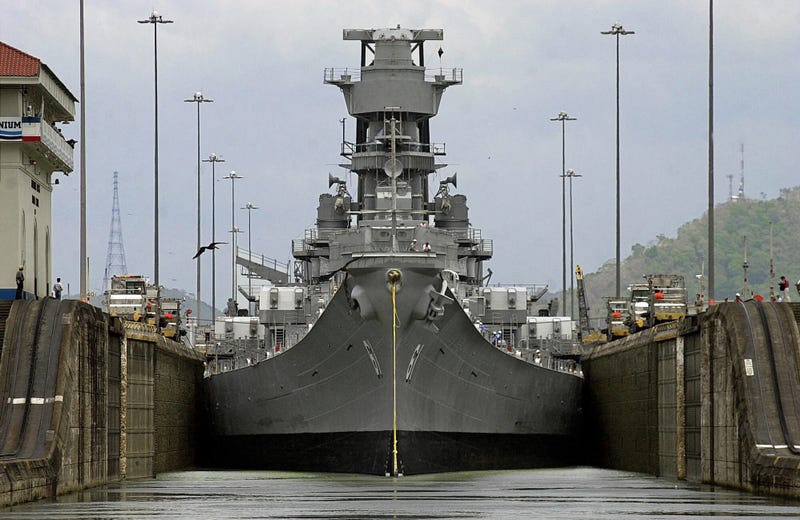
The first man to seriously attempt a canal across the isthmus was Ferdinand de Lessup, builder of the Suez Canal and an entrepreneur par excellence. In the wake of the bitter defeat of the Franco-Prussian War, the elderly yet hale Lessups, and his eternal optimism for the canal, represented a possibility for a new France. Thousands of ordinary Frenchmen and women invested their savings in his canal company.
But Lessups, for all his reputation and energy, scorned technical matters. He had decided on a sea level canal at Panama, and manipulated his board into backing him without a thorough survey or solid plans. His company leaped into action, assuming that "men of genius" would arrive to meet challenges as they arose, just like at Suez.
There were definitely men of genius among the French, but they couldn't meet the challenges of the canal. Yellow fever began to slay men, first by the scores and then by the thousand, including the entire family of the local director. The Culebra Cut, the most critical part of the canal, slid continuously. Everything had to be imported to Panama, from massive dredges to Jamaican laborers, and the money ran out. The collapse of the French Panama Company destroyed Jessups reputation and nearly brought down the republic. Work stalled for decades.
Until the unlikely, almost accident figure of President Theodore Roosevelt. Americans had long favored a Nicaraguan canal, closer to the United States and with a more pro-American government. However, the Nicaraguan route was relatively long and twisty, and in a complex series of international intrigues, Roosevelt's administration bought the remains of the French company for $40 million (a song, relatively speaking), and fomented a revolution in Panama, when the Colombian government balked.
The American canal project succeed because it lead with medical hygiene, including a massive anti-mosquito campaign based on recent breakthroughs in epidemiology, as well as a cadre of tough railroad managers. The canal was essentially a matter of rail transport, of moving spoilage from the cut to dump piles as efficiently as possible. The French effort broke down continuously. The American effort was a well-oiled machine.
McCullough covers the grandeur of the effort, as well as it's darker side. There was a color line in Panama stricter than any Jim Crow law, where white Americans had every luxury and the best of healthcare, and the mostly black labor force from Trinidad and Tobago had comparatively high death rates and no amenities. The scale was monumental, from the cut to the the 1000 foot locks. The Panama Canal was the largest engineering project in history, a masterpiece of technological sublime. This book is the proper marker of its origins and place in history.
The first man to seriously attempt a canal across the isthmus was Ferdinand de Lessup, builder of the Suez Canal and an entrepreneur par excellence. In the wake of the bitter defeat of the Franco-Prussian War, the elderly yet hale Lessups, and his eternal optimism for the canal, represented a possibility for a new France. Thousands of ordinary Frenchmen and women invested their savings in his canal company.
But Lessups, for all his reputation and energy, scorned technical matters. He had decided on a sea level canal at Panama, and manipulated his board into backing him without a thorough survey or solid plans. His company leaped into action, assuming that "men of genius" would arrive to meet challenges as they arose, just like at Suez.
There were definitely men of genius among the French, but they couldn't meet the challenges of the canal. Yellow fever began to slay men, first by the scores and then by the thousand, including the entire family of the local director. The Culebra Cut, the most critical part of the canal, slid continuously. Everything had to be imported to Panama, from massive dredges to Jamaican laborers, and the money ran out. The collapse of the French Panama Company destroyed Jessups reputation and nearly brought down the republic. Work stalled for decades.
Until the unlikely, almost accident figure of President Theodore Roosevelt. Americans had long favored a Nicaraguan canal, closer to the United States and with a more pro-American government. However, the Nicaraguan route was relatively long and twisty, and in a complex series of international intrigues, Roosevelt's administration bought the remains of the French company for $40 million (a song, relatively speaking), and fomented a revolution in Panama, when the Colombian government balked.
The American canal project succeed because it lead with medical hygiene, including a massive anti-mosquito campaign based on recent breakthroughs in epidemiology, as well as a cadre of tough railroad managers. The canal was essentially a matter of rail transport, of moving spoilage from the cut to dump piles as efficiently as possible. The French effort broke down continuously. The American effort was a well-oiled machine.
McCullough covers the grandeur of the effort, as well as it's darker side. There was a color line in Panama stricter than any Jim Crow law, where white Americans had every luxury and the best of healthcare, and the mostly black labor force from Trinidad and Tobago had comparatively high death rates and no amenities. The scale was monumental, from the cut to the the 1000 foot locks. The Panama Canal was the largest engineering project in history, a masterpiece of technological sublime. This book is the proper marker of its origins and place in history.

"The gate will only open somewhere interesting."
Or so I paraphrase the keywarden, as he opens a path from the artificial axis universe stored within the generation ship Thistledown to the planet Lamarckia, and ushers our protagonist, Olmy, on a secret mission to scout a renegade colony of anti-technology utopians. The problem is that the keywarden lies, or at least only partially tells the truth.
Greg Bear's whole thing is a kind of Ultra-Orthodox Hard SciFi, a dazzling display of ideas where the characters and plot take a back seat, and this book delivers. Lamarckia, the centerpiece of the book, is a planet dominated by the ecoi, continental scale organisms that express themselves as scions, sub-organs ranging from tree-analogous to mobile tenders and spies to stranger creatures that influence whole weather systems. The renegade utopians were 5000 colonists under the leader Able Lenk, but his community has fractured politically, and is riven by famine, war, and threatened by the ecoi, which they lack the scientific base to understand.
Olmy's ostensible mission is to find a clavicle, a device which would open a gate back to Thistledown, but instead he arrives in the middle of a war between Lenk and the renegade Brion, and then signs up on a scientific voyage to circumnavigate the world. The book takes on a tinge of Moby Dick, with a captain obsessed with finding a queen of the ecoi, a mythical self-aware center to the landscape. The actual plot wanders, and Olmy is a cipher as a protagonist.
I read this book because it came first in my Eon collection, which probably was a mistake. I'm looking forward to Thistledown as a setting.
Or so I paraphrase the keywarden, as he opens a path from the artificial axis universe stored within the generation ship Thistledown to the planet Lamarckia, and ushers our protagonist, Olmy, on a secret mission to scout a renegade colony of anti-technology utopians. The problem is that the keywarden lies, or at least only partially tells the truth.
Greg Bear's whole thing is a kind of Ultra-Orthodox Hard SciFi, a dazzling display of ideas where the characters and plot take a back seat, and this book delivers. Lamarckia, the centerpiece of the book, is a planet dominated by the ecoi, continental scale organisms that express themselves as scions, sub-organs ranging from tree-analogous to mobile tenders and spies to stranger creatures that influence whole weather systems. The renegade utopians were 5000 colonists under the leader Able Lenk, but his community has fractured politically, and is riven by famine, war, and threatened by the ecoi, which they lack the scientific base to understand.
Olmy's ostensible mission is to find a clavicle, a device which would open a gate back to Thistledown, but instead he arrives in the middle of a war between Lenk and the renegade Brion, and then signs up on a scientific voyage to circumnavigate the world. The book takes on a tinge of Moby Dick, with a captain obsessed with finding a queen of the ecoi, a mythical self-aware center to the landscape. The actual plot wanders, and Olmy is a cipher as a protagonist.
I read this book because it came first in my Eon collection, which probably was a mistake. I'm looking forward to Thistledown as a setting.

In the near future, an immense hollowed-out asteroid has appeared in the solar system, slotting neatly into Earth orbit. The Stone, as it's called by the American explorers, has six habitable chambers in a classic O'Neill configuration, and two alarming mysteries. First, the seventh chamber is larger than the length the asteroid, stretching down an artificial linear singularity to unimaginable distances. Second, the Stone's derelict cities contain libraries with books published centuries ahead, and those histories say that in a few weeks, NATO and the USSR will start a nuclear war that kills billions. Can the explorers of the Stone figure out its mysteries in time to change history?
Bear's answer is a resounding "No". The bombs go off, billions die, and our heroes are unable to change fate. There's a great deal of realism as seen through the eyes of our primary heroes, mathematician Patricia Vasquez, the engineer and manager Lanier, and Soviet soldier Mirsky. But as the bombs fall, Deus descends from his machina: The post-human inhabitants of the Stone have moved millions of kilometers down the seventh chamber to Axis city, where they are divided into political camps matching a philosophical split going back to the millennial past (in their timeline) nuclear war, and a present plan to end their own war with the alien Jarts through turning their city into a super-weapon.
There's a lot of cool stuff, and some great retro Cold War paranoia. But I'm not sure the big ideas about the nature of the infinite tubular universe really click. And while I'm not yet in the camp of "Greg Bear can't write women", which some people reviewing Legacy said, the few sex scenes felt obligatory and weirdly fetishistic.
Bear's answer is a resounding "No". The bombs go off, billions die, and our heroes are unable to change fate. There's a great deal of realism as seen through the eyes of our primary heroes, mathematician Patricia Vasquez, the engineer and manager Lanier, and Soviet soldier Mirsky. But as the bombs fall, Deus descends from his machina: The post-human inhabitants of the Stone have moved millions of kilometers down the seventh chamber to Axis city, where they are divided into political camps matching a philosophical split going back to the millennial past (in their timeline) nuclear war, and a present plan to end their own war with the alien Jarts through turning their city into a super-weapon.
There's a lot of cool stuff, and some great retro Cold War paranoia. But I'm not sure the big ideas about the nature of the infinite tubular universe really click. And while I'm not yet in the camp of "Greg Bear can't write women", which some people reviewing Legacy said, the few sex scenes felt obligatory and weirdly fetishistic.

If you want to mark the start of 'modern' literature, The Canterbury Tales are a strong candidate. About thirty poems and prose pieces, framed as pilgrims to Canterbury telling stories to amuse each other.
In theory, Chaucer is readable by someone fluent in English with a little help. I say in theory, because spelling and word definitions have changed, along with syntax and grammar. Middle English is very different from what we speak, and I'm here to enjoy myself, not to puzzle over a poem with a dictionary. The problem is that poetry in translation always suffers. I read the 2008 Raffel translation, and he does his best, but the result is still middling, if you'll pardon the pun.
Some tales are shockingly good. Anything bawdy, involving sex or butt jokes, comes through just fine. There's a shocking degree of women's agency in some stories, particularly in the Wife of Bath's tale, as well as an exploration of society in the late 14th century. I enjoyed the sheer erudition of Chaucer's knowledge, as his story-tellers shifted between Classical allusions, Christian theology, and contemporary geography to make their points. Apparently each of the narrators speaks in a distinct regional dialect, which doesn't really come through in this. Some characters quote Seneca, some Saint Augustine, some no one at all. The problem is that the good bits are sandwiched between long passages blathering on about virtue. Chaucer may be a deserved classic, and the starting point of modern story-telling, but old does not mean I'm automatically impressed.
In theory, Chaucer is readable by someone fluent in English with a little help. I say in theory, because spelling and word definitions have changed, along with syntax and grammar. Middle English is very different from what we speak, and I'm here to enjoy myself, not to puzzle over a poem with a dictionary. The problem is that poetry in translation always suffers. I read the 2008 Raffel translation, and he does his best, but the result is still middling, if you'll pardon the pun.
Some tales are shockingly good. Anything bawdy, involving sex or butt jokes, comes through just fine. There's a shocking degree of women's agency in some stories, particularly in the Wife of Bath's tale, as well as an exploration of society in the late 14th century. I enjoyed the sheer erudition of Chaucer's knowledge, as his story-tellers shifted between Classical allusions, Christian theology, and contemporary geography to make their points. Apparently each of the narrators speaks in a distinct regional dialect, which doesn't really come through in this. Some characters quote Seneca, some Saint Augustine, some no one at all. The problem is that the good bits are sandwiched between long passages blathering on about virtue. Chaucer may be a deserved classic, and the starting point of modern story-telling, but old does not mean I'm automatically impressed.