You need to sign in or sign up before continuing.
Take a photo of a barcode or cover
553 reviews by:
gabberjaws


Wow.
I feel like this book doesn’t get enough credit for how wonderful it is. Sure, 90% of its reviews are rave pieces, people talking about how these little tales kept them up at night. But… does anyone talk about how great the storytelling component to this book is? Because lemme tell you guys, it was downright masterful.
Each story was short, high in tension, and wonderfully crafted. The prose was lyrical, the art for each tale fit perfectly with the story’s mood and tone. They may not have all been scary (Remember? I don’t scare easy? It’s a thing) but they were well-told and original, and there was something about each of them that sorta… stayed with you.
My personal favorite was His Face All Red. It’s a short tale about two brothers and, I swear to you. It was chilling. Like, I spent a long time thinking about that story. It was just… you know what. Read it. It was good. It was gripping. And it was just so simple.
Most of these stories were, actually. Simple, I mean. And that, I think, is what made them so great. They’re tales you could picture yourself being told as a child to send you to sleep without fuss. They were folksy and tense and artfully simple. And the art? LORD. Imagine French Children’s Illustration but for a horror book? That’s what this is. This was Madeline fighting woodland murder monsters.
Carroll hasn’t published anything since TTW. At least, I don’t think she has. But damn, if/when she does, I will read it happily.
This review and more here
I feel like this book doesn’t get enough credit for how wonderful it is. Sure, 90% of its reviews are rave pieces, people talking about how these little tales kept them up at night. But… does anyone talk about how great the storytelling component to this book is? Because lemme tell you guys, it was downright masterful.
Each story was short, high in tension, and wonderfully crafted. The prose was lyrical, the art for each tale fit perfectly with the story’s mood and tone. They may not have all been scary (Remember? I don’t scare easy? It’s a thing) but they were well-told and original, and there was something about each of them that sorta… stayed with you.
My personal favorite was His Face All Red. It’s a short tale about two brothers and, I swear to you. It was chilling. Like, I spent a long time thinking about that story. It was just… you know what. Read it. It was good. It was gripping. And it was just so simple.
Most of these stories were, actually. Simple, I mean. And that, I think, is what made them so great. They’re tales you could picture yourself being told as a child to send you to sleep without fuss. They were folksy and tense and artfully simple. And the art? LORD. Imagine French Children’s Illustration but for a horror book? That’s what this is. This was Madeline fighting woodland murder monsters.
Carroll hasn’t published anything since TTW. At least, I don’t think she has. But damn, if/when she does, I will read it happily.
This review and more here

I think I’ve already mentioned that I severely dislike withholding important information as a plot device. It’s a cheap trick – one employed waaaay too many times in YA fiction – and I’m sad to say that Darkness Follows used it, too.
If you read my review for Broken Sky (or saw my IG or Twitter), then you know that I LOVED the first book. I thought it was original and gritty, and well-written. It took my by surprise. But even though I expected to, I didn’t love this one as much as I loved its predecessor.
The sequel picks up a few months(?) after the last book left off, with Amity captured by Gunnison’s men, deemed a traitor to her nation, and shipped off to Harmony 5 – one of this world’s versions of a concentration camp. She’s more or less a changed woman now – The Guns have beaten and broken her into… not submission, exactly, but almost. Which, if you’ve read the first book, you’ll find weird becauseLast we saw her, Amity was escaping the war with Collie
So, basically you’re thrown into this book with the knowledge that something went horrible awry. And it doesn’t take too long to figure that this something has a lot to do with the actions of Collis Reed. And here comes the issue that I mentioned at the beginning of this review – the mystery revolving around Amity’s capture was held too close to the vest. Which would have been fine if it had been crucial to the storyline – if holding on to this secret for as long as everyone did actually made a difference in the grand scheme of things. But it didn’t.
I could have also forgiven this withholding of information if the two narrators hadn’t known it. But at some point in the story, both our narrators (Amity and Mac, this time) knew this information, and still chose to dance around it. By the time it was revealed thatCollie had seemingly betrayed Amity, (surprise, surprise) I’d not only already figured it out, but I’d also built it up in my head to be much worse than it was. So when the reveal finally came, it was anticlimactic.
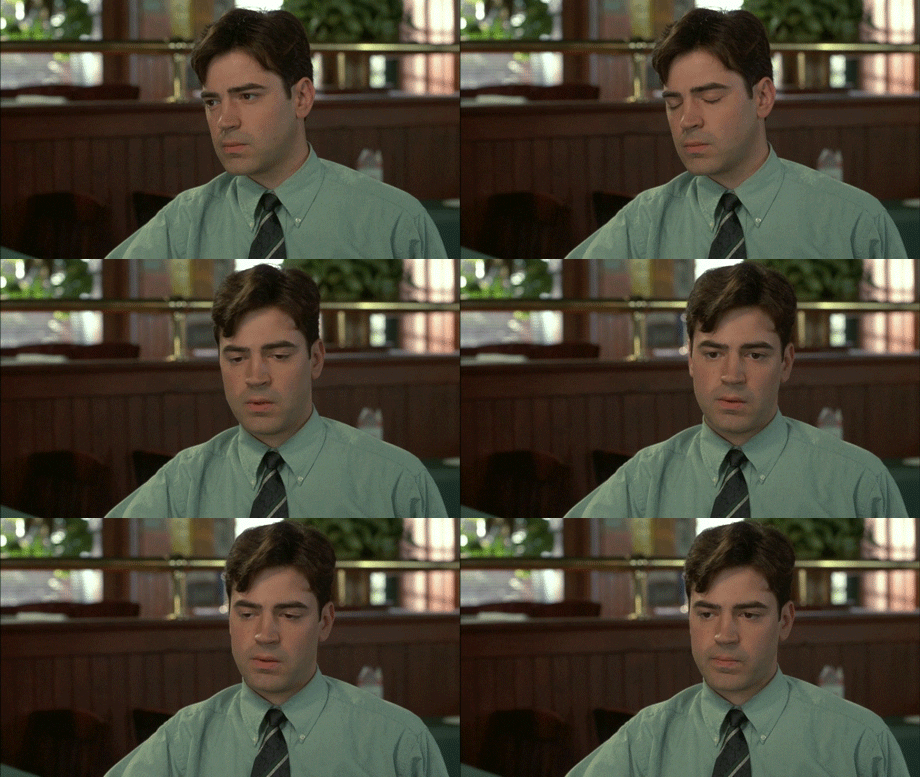
This is just one of the handful of things that made Darkness Follows a bit of a let-down. Pacing, again, was an issue. There was a lot of buildup. Slow, slow, buildup. Picture a single man pushing a giant tire up a hill. He huffs, he puffs, he slips sometimes, but eventually, he gets that tire to the crest of the hill. But instead of letting it roll down to the bottom on its own, like you’d expect, he latches tightly onto the tire and tries to control how fast it slides down the hill.
So the tire’s journey down the slope is jerky, too. Stops and starts, with sudden rushes of momentum in between. And then, finally, once he sees the slope leveling out into flat terrain, only then does he let go, and allows the tire to roll down the rest of the way at it’s own pace.
The pacing of this book was exactly like that. Jerky, with random bursts of speed, and with a ridiculously fast paced final few chapters. It was boggling – even worse than the first book, where I actually LIKEDthe slow buildup. I’ll admit that the ending for this was much less rushed than the first one, but the weird pacing throughout the rest of it kind of takes away from that.
I also don’t know how I feel about any of the characters any more. Collie and Mac, so far, are the only ones who feel real. Amity.. while I understand that Harmony 5 changed her (obviously. How could it not?) the changes don’t seem to be very consistent. She waffles a lot between her new self and her old self, and that doesn’t really make much sense to me considering all she’s been through. And Ingo? I loved Ingo in the first book. And idk if this is me reacting to a potential love triangle, but I feel like he’s lost a lot of his charm. Again, I get he’s been through a lot, but his interactions with Amity now feel… wooden. But I don’t know. Maybe this is all just me.
Now for the things I did like!
1) I liked the Hitler and WWII parallels. I feel like Weatherly’s use of star signs as the device of segregation just makes it all seem so much more ridiculous and heinous. Gunnison was a respected leader, a great orator, and a man who firmly believed he was doing the best for his nation by cleansing it of people he deemed “impure”, and then went and committed mass genocide. Sound like someone you’ve heard of?
2) I liked Amity’s mixed feelings on the whole Collie situation. I also like how the Collie situation was dealt with. He’s not completely redeemable, but he’s not completely despicable either – he’s in this gray area that can either take him down a path of tremendous growth, or one of darkness. Either way, it’ll be interesting to see where he goes.
3) Weird pacing and withholding of information as a plot device aside, this is still a really good series. It’s riveting, and in terms of premise, it’s wholly original. Weatherly is not afraid to take risks with her plot, as she showed us with the ending of this novel. She let you suspect, sure, but I don’t think anyone was truly prepared for what happened in that ending. I sure wasn’t.
Regardless of my issues with this book, I still recommend it to anyone who’s into Dystopian novels, and anyone who’s looking for a fresh dystopian. It’s got it’s problems, but so far, the Broken Sky Trilogy has been engaging, well-written, and a wonderfully dramatic read, and I personally cannot wait to get my paws on the next one.

This review and more here
If you read my review for Broken Sky (or saw my IG or Twitter), then you know that I LOVED the first book. I thought it was original and gritty, and well-written. It took my by surprise. But even though I expected to, I didn’t love this one as much as I loved its predecessor.
The sequel picks up a few months(?) after the last book left off, with Amity captured by Gunnison’s men, deemed a traitor to her nation, and shipped off to Harmony 5 – one of this world’s versions of a concentration camp. She’s more or less a changed woman now – The Guns have beaten and broken her into… not submission, exactly, but almost. Which, if you’ve read the first book, you’ll find weird because
So, basically you’re thrown into this book with the knowledge that something went horrible awry. And it doesn’t take too long to figure that this something has a lot to do with the actions of Collis Reed. And here comes the issue that I mentioned at the beginning of this review – the mystery revolving around Amity’s capture was held too close to the vest. Which would have been fine if it had been crucial to the storyline – if holding on to this secret for as long as everyone did actually made a difference in the grand scheme of things. But it didn’t.
I could have also forgiven this withholding of information if the two narrators hadn’t known it. But at some point in the story, both our narrators (Amity and Mac, this time) knew this information, and still chose to dance around it. By the time it was revealed that
This is just one of the handful of things that made Darkness Follows a bit of a let-down. Pacing, again, was an issue. There was a lot of buildup. Slow, slow, buildup. Picture a single man pushing a giant tire up a hill. He huffs, he puffs, he slips sometimes, but eventually, he gets that tire to the crest of the hill. But instead of letting it roll down to the bottom on its own, like you’d expect, he latches tightly onto the tire and tries to control how fast it slides down the hill.
So the tire’s journey down the slope is jerky, too. Stops and starts, with sudden rushes of momentum in between. And then, finally, once he sees the slope leveling out into flat terrain, only then does he let go, and allows the tire to roll down the rest of the way at it’s own pace.
The pacing of this book was exactly like that. Jerky, with random bursts of speed, and with a ridiculously fast paced final few chapters. It was boggling – even worse than the first book, where I actually LIKEDthe slow buildup. I’ll admit that the ending for this was much less rushed than the first one, but the weird pacing throughout the rest of it kind of takes away from that.
I also don’t know how I feel about any of the characters any more. Collie and Mac, so far, are the only ones who feel real. Amity.. while I understand that Harmony 5 changed her (obviously. How could it not?) the changes don’t seem to be very consistent. She waffles a lot between her new self and her old self, and that doesn’t really make much sense to me considering all she’s been through. And Ingo? I loved Ingo in the first book. And idk if this is me reacting to a potential love triangle, but I feel like he’s lost a lot of his charm. Again, I get he’s been through a lot, but his interactions with Amity now feel… wooden. But I don’t know. Maybe this is all just me.
Now for the things I did like!
1) I liked the Hitler and WWII parallels. I feel like Weatherly’s use of star signs as the device of segregation just makes it all seem so much more ridiculous and heinous. Gunnison was a respected leader, a great orator, and a man who firmly believed he was doing the best for his nation by cleansing it of people he deemed “impure”, and then went and committed mass genocide. Sound like someone you’ve heard of?
2) I liked Amity’s mixed feelings on the whole Collie situation. I also like how the Collie situation was dealt with. He’s not completely redeemable, but he’s not completely despicable either – he’s in this gray area that can either take him down a path of tremendous growth, or one of darkness. Either way, it’ll be interesting to see where he goes.
3) Weird pacing and withholding of information as a plot device aside, this is still a really good series. It’s riveting, and in terms of premise, it’s wholly original. Weatherly is not afraid to take risks with her plot, as she showed us with the ending of this novel. She let you suspect, sure, but I don’t think anyone was truly prepared for what happened in that ending. I sure wasn’t.
Regardless of my issues with this book, I still recommend it to anyone who’s into Dystopian novels, and anyone who’s looking for a fresh dystopian. It’s got it’s problems, but so far, the Broken Sky Trilogy has been engaging, well-written, and a wonderfully dramatic read, and I personally cannot wait to get my paws on the next one.
This review and more here

First of all, who the hell wrote this blurb? Because not only does it do nothing for the book, it's also misleading as fuck. I honestly had no clue as what this book was about until I read the prologue. There were just so many questions. So, before I get to actually reviewing this, I'm going to clear up a few questions you may have had upon reading the blurb.
What is this about?
Going to take this moment to write my own summary of this book. I've seen other people do this in their reviews. I've just been too lazy.
"Amity Vancour is a Peacefighter - a pilot who competes in one-on-one airstrike matches against an opponent from a another country, to determine the outcome of a political debate. The tiered Fights are a fair and mostly non-lethal. If your plane gets shot down, you lose, and the opponents country wins the vote. It's like coin toss, but with bigger stakes and decidedly more dangerous playing field.
Peacefighting is in Amity's blood. She's a legacy, and to her, there is no greater honor than being a Peacefighter. But Amity soon discovers that Peacefighting isn't as noble as she imagined. Now she's accused of murder and treason, and is on the run from authorities. When everything she's believed to be true turns out to be a lie, who can Amity trust?"
What gives with the setting? An echo of 1940's America? Is this, like, an AU historical fiction?
I was worried about this, too. 1940's America? It... it wasn't the most pleasant time. Racism, flimsy women's rights, WW2? Yeah, no. A book set in this time, AU or not, would have been messy - especially if the author chose to gloss over how bad it was an only focus on, what, the glamour of it.
But I'm pleased to report that, no, this is not a historical fiction AU. It's a dystopian novel set in the future. Waaay in the future, if I had to guess. It just feels very 1940's. From the clothes people where when they're off duty, the music they listen to, the fighter pilots, the WW2 and Hitler parallels. All these elements scattered throughout the novel come together in a way that feels a little 1940's.
But it's set in an America very far in the future. Many wars have taken place, and for some reason, we've regressed technology-wise, which, I'll admit, does contribute to the confusion of when the events of this book take place. But I can tell you it's definitely in the future. All the signs are there: It's Sacrament now, not Sacramento. It's Angeles, minus the Los. It's the Western Seaboard and the Central State, not the West Coast and East Coast. The central part of Hollywood, where the walk of fame would be, is now called The Heat (short for Heatcalf City). The Hollywood Hills are now called the Holy Hills, because most of the letters from the infamous and iconic Hollywood sign are gone.
And now for the review:
I'm going to be completely honest with you. I had no idea what to expect going into this book (thanks, blurb) I didn't know what it was about, I didn't didn't really know the setting, and I hadn't read any reviews of it to find out, because I didn't want it to affect my feelings on the book. Hell, the only reason I even chose to read this one was curiosity. That, and I thought the cover was really pretty. I went into this with zero expectations.
Broken Sky turned out to be one of the freshest things I've read in a while. Considering that most of the things I've read in the past year have been retellings, 'cause they're all the rage, this is hardly surprising. But this book was also a very original Dystopian piece. Yes, the old tropes of Evil Dictator, special girl who fights for justice, giant secret that blows up in everyone's faces, are still there. It's the little elements that build up the book that were original.
THE PREMISE:
I liked it. I liked the futuristic, 1940's vibes. The concept of peacefighting (I'm still not over the oxymoron) was weird at first, but, you know, once I let it sit for a while, it kinda made sense ?? I liked the craziness with Gunnison and the whole segregating people according to star signs and horoscopes. I really enjoyed that. I don't think I've ever seen anyone play around with star signs in fiction like this. And unlike a certain series (*cough* Divergent *cough*), the business of finding people Discordant and tossing them into correction camps made sense. You can look at someone's horoscope or whatever and find out how they'll affect your plans. I got it. I liked it. I thought it was a pretty interesting thing to write about.
THE CHARACTERS:
I'm going to be completely honest (and when am I anything but) and say that the character development could have been done better. I liked Amity. She was tough, and noble, and she knew who she was, but she didn't really change all the much by the end of the book. Sure, she's a little more jaded now, but eh, not much has changed. I liked Collie. Cynical, charming, sweet-smartass Collie. I liked him, and I hated that cliffhanger at the end.
(ノ°Д°)ノ︵ |
THE WRITING:
Not really much to say here. It was engaging, concise. Weatherly didn't bother with flowery prose and complicated similes. The strongest tool in her arsenal was her wording. Seemingly normal sentences turned out to mean a great deal in the future.
(Eg: When I finished the book, I hated the twist at the end, because I felt like it came completely off-field. But now that I've let it sit, I've realized that the signs were there all along. Little word choices. Minor details that I didn't pay close attention to in favor of bigger more pressing details. Do I still hate it, regardless? You betcha.)
Pacing was an issue. There were some slow bits in the middle and it took a long time for the book to get to the Complication and the Body of the story - which actually isn't the problem I have. I think the time spent building the story was great - except that then the author went and bloody rushed the ending. Such a crime, because that buildup was great.
THE ROMANCE:
Amity and Collie were cute. Very cute. Their beginning was a little blegh for my taste. (blegh = sugary/ cliche) but once their relationship solidified? Man. They had their fights, but for the most part they were just a very steady couple. They trusted each other, they had each other's backs.
I like Ingo. I love his sardonic way of speaking and his wry air. BUT IF THERE'S A LOVE TRIANGLE IN THE NEXT BOOK I WILL FLIP MY SHIT.
THE PLOT:
Except for a few, not-so-tightly-tied ends at the final bits of the book, I think the plot was pretty good. This also may have something to do with the pacing issues. WHY WAS THAT ENDING SO RUSHED AND CHOPPY. GOD.
TL;DR
I really enjoyed this. Read it in two sittings. It was a fun, engaging read, and it was written so well that even the twists I called were revealed to me with a little surprise tacked on. Really. That's rare. So, yeah, I recommend this book. If you're looking for a well-written, original dystopian, read this. If you're looking for something that has a historical fiction vibe, while still being modern, read this. If, like me, you read the blurb and were simultaneously confused and intrigued, and couldn't decide whether this was work the time; READ THIS.
(Seriously though, that blurb was awful. If I'd seen this book in a bookstore, I'd have put it back on the shelf. And what a shame that would have been)
I received this book from the publisher in exchange for an honest review.
What is this about?
Going to take this moment to write my own summary of this book. I've seen other people do this in their reviews. I've just been too lazy.
"Amity Vancour is a Peacefighter - a pilot who competes in one-on-one airstrike matches against an opponent from a another country, to determine the outcome of a political debate. The tiered Fights are a fair and mostly non-lethal. If your plane gets shot down, you lose, and the opponents country wins the vote. It's like coin toss, but with bigger stakes and decidedly more dangerous playing field.
Peacefighting is in Amity's blood. She's a legacy, and to her, there is no greater honor than being a Peacefighter. But Amity soon discovers that Peacefighting isn't as noble as she imagined. Now she's accused of murder and treason, and is on the run from authorities. When everything she's believed to be true turns out to be a lie, who can Amity trust?"
What gives with the setting? An echo of 1940's America? Is this, like, an AU historical fiction?
I was worried about this, too. 1940's America? It... it wasn't the most pleasant time. Racism, flimsy women's rights, WW2? Yeah, no. A book set in this time, AU or not, would have been messy - especially if the author chose to gloss over how bad it was an only focus on, what, the glamour of it.
But I'm pleased to report that, no, this is not a historical fiction AU. It's a dystopian novel set in the future. Waaay in the future, if I had to guess. It just feels very 1940's. From the clothes people where when they're off duty, the music they listen to, the fighter pilots, the WW2 and Hitler parallels. All these elements scattered throughout the novel come together in a way that feels a little 1940's.
But it's set in an America very far in the future. Many wars have taken place, and for some reason, we've regressed technology-wise, which, I'll admit, does contribute to the confusion of when the events of this book take place. But I can tell you it's definitely in the future. All the signs are there: It's Sacrament now, not Sacramento. It's Angeles, minus the Los. It's the Western Seaboard and the Central State, not the West Coast and East Coast. The central part of Hollywood, where the walk of fame would be, is now called The Heat (short for Heatcalf City). The Hollywood Hills are now called the Holy Hills, because most of the letters from the infamous and iconic Hollywood sign are gone.
And now for the review:
I'm going to be completely honest with you. I had no idea what to expect going into this book (thanks, blurb) I didn't know what it was about, I didn't didn't really know the setting, and I hadn't read any reviews of it to find out, because I didn't want it to affect my feelings on the book. Hell, the only reason I even chose to read this one was curiosity. That, and I thought the cover was really pretty. I went into this with zero expectations.
Broken Sky turned out to be one of the freshest things I've read in a while. Considering that most of the things I've read in the past year have been retellings, 'cause they're all the rage, this is hardly surprising. But this book was also a very original Dystopian piece. Yes, the old tropes of Evil Dictator, special girl who fights for justice, giant secret that blows up in everyone's faces, are still there. It's the little elements that build up the book that were original.
THE PREMISE:
I liked it. I liked the futuristic, 1940's vibes. The concept of peacefighting (I'm still not over the oxymoron) was weird at first, but, you know, once I let it sit for a while, it kinda made sense ?? I liked the craziness with Gunnison and the whole segregating people according to star signs and horoscopes. I really enjoyed that. I don't think I've ever seen anyone play around with star signs in fiction like this. And unlike a certain series (*cough* Divergent *cough*), the business of finding people Discordant and tossing them into correction camps made sense. You can look at someone's horoscope or whatever and find out how they'll affect your plans. I got it. I liked it. I thought it was a pretty interesting thing to write about.
THE CHARACTERS:
I'm going to be completely honest (and when am I anything but) and say that the character development could have been done better. I liked Amity. She was tough, and noble, and she knew who she was, but she didn't really change all the much by the end of the book. Sure, she's a little more jaded now, but eh, not much has changed. I liked Collie. Cynical, charming, sweet-smartass Collie. I liked him, and I hated that cliffhanger at the end.
(ノ°Д°)ノ︵ |
THE WRITING:
Not really much to say here. It was engaging, concise. Weatherly didn't bother with flowery prose and complicated similes. The strongest tool in her arsenal was her wording. Seemingly normal sentences turned out to mean a great deal in the future.
(Eg: When I finished the book, I hated the twist at the end, because I felt like it came completely off-field. But now that I've let it sit, I've realized that the signs were there all along. Little word choices. Minor details that I didn't pay close attention to in favor of bigger more pressing details. Do I still hate it, regardless? You betcha.)
Pacing was an issue. There were some slow bits in the middle and it took a long time for the book to get to the Complication and the Body of the story - which actually isn't the problem I have. I think the time spent building the story was great - except that then the author went and bloody rushed the ending. Such a crime, because that buildup was great.
THE ROMANCE:
Amity and Collie were cute. Very cute. Their beginning was a little blegh for my taste. (blegh = sugary/ cliche) but once their relationship solidified? Man. They had their fights, but for the most part they were just a very steady couple. They trusted each other, they had each other's backs.
I like Ingo. I love his sardonic way of speaking and his wry air. BUT IF THERE'S A LOVE TRIANGLE IN THE NEXT BOOK I WILL FLIP MY SHIT.
THE PLOT:
Except for a few, not-so-tightly-tied ends at the final bits of the book, I think the plot was pretty good. This also may have something to do with the pacing issues. WHY WAS THAT ENDING SO RUSHED AND CHOPPY. GOD.
TL;DR
I really enjoyed this. Read it in two sittings. It was a fun, engaging read, and it was written so well that even the twists I called were revealed to me with a little surprise tacked on. Really. That's rare. So, yeah, I recommend this book. If you're looking for a well-written, original dystopian, read this. If you're looking for something that has a historical fiction vibe, while still being modern, read this. If, like me, you read the blurb and were simultaneously confused and intrigued, and couldn't decide whether this was work the time; READ THIS.
(Seriously though, that blurb was awful. If I'd seen this book in a bookstore, I'd have put it back on the shelf. And what a shame that would have been)
I received this book from the publisher in exchange for an honest review.

It is one in the morning, and I have a long day ahead of me.
Review to come
Review to come


you know, I think I'd like this series a heck of a lot more if the writing style wasn't so dull and droning. I wish these characters were a little more lively. ugh.

I honestly don't think there'll ever be a day where this isn't adorable as heck.
I JUST WISH THERE WERE MORE, YOU KNOW?
I JUST WISH THERE WERE MORE, YOU KNOW?

2.5 stars
TRIGGER WARNING: CUTTING
This book. Where do I even start?
Okay, look. I love Urban Fantasy. Live for it, even. And in all my years of reading, I have never - NEVER - had this much trouble with an Urban Fantasy book. Usually all it takes is a couple pages for me to know whether or not I'm going to enjoy a UF book. NOT THIS ONE THOUGH. NOPE.
You know what? Imma make this easy for you guys. It's breakdown time.
THE WORLD BUILDING:
Confusing as heck. Look, I know there was a section at the beginning dedicated to teach me what kind of world I was entering - but it didn't help. The world this story is set in is an AU. A mangled form of our modern day world. And okay, AUs are fine. New worlds are cool as heck. But the names of things were too close to real world names, and that muddied things a ton. For instance, Moonsday and Sunsday were days of the week in this world. But didn't correspond with Monday and Sunday.
And even when you leave aside the muddied similarities to our world, there wasn't really much world building to speak of. Everything was so bloody vague
THE CHARACTERS:
Bland. None of them were the least bit stand-out. Simon was a cookie cutter alpha male, and Meg had about as much personality as cardboard box. I imagine things easily and vividly, but I couldn't build a face for a single character in this novel. The POVs - and there were a lot of them - blended into each other. I know it's written in the third person, but some distinction wouldn't have hurt anybody.
THE WRITING:
I honestly had the hardest time believing this was an adult novel. The writing was juvenile. It didn't even feel YA level. Middle-grade, maybe. It was all tell and no show. The prose had no cadence whatsoever, and tended to drone. I found myself questioning word-choice pretty often.
THE PLOT:
*inhales*
70% OF THIS BOOK WAS MEG SORTING/DELIVERING MAIL.
*exhales*
THE PREMISE:
Literally the only thing that kept me going till the end. I liked the idea of earth natives and shifters and whatnot. I liked the idea of the human vs Other conflict. I liked the whole prophet-is-property angle. I liked the ideas, and I was curious as to where the story would go. BUT LORD THIS WAS POORLY EXECUTED.
TL;DR:
Written In Red could have been good. It could have been fun and enjoyable. But with it's paper-flat characters and lackluster writing, this was nothing but a giant disappointment. Worst part is, I'm actually gonna read the rest of the series.
BECAUSE I'M A MASOCHIST. UGH.
TRIGGER WARNING: CUTTING
This book. Where do I even start?
Okay, look. I love Urban Fantasy. Live for it, even. And in all my years of reading, I have never - NEVER - had this much trouble with an Urban Fantasy book. Usually all it takes is a couple pages for me to know whether or not I'm going to enjoy a UF book. NOT THIS ONE THOUGH. NOPE.
You know what? Imma make this easy for you guys. It's breakdown time.
THE WORLD BUILDING:
Confusing as heck. Look, I know there was a section at the beginning dedicated to teach me what kind of world I was entering - but it didn't help. The world this story is set in is an AU. A mangled form of our modern day world. And okay, AUs are fine. New worlds are cool as heck. But the names of things were too close to real world names, and that muddied things a ton. For instance, Moonsday and Sunsday were days of the week in this world. But didn't correspond with Monday and Sunday.
And even when you leave aside the muddied similarities to our world, there wasn't really much world building to speak of. Everything was so bloody vague
THE CHARACTERS:
Bland. None of them were the least bit stand-out. Simon was a cookie cutter alpha male, and Meg had about as much personality as cardboard box. I imagine things easily and vividly, but I couldn't build a face for a single character in this novel. The POVs - and there were a lot of them - blended into each other. I know it's written in the third person, but some distinction wouldn't have hurt anybody.
THE WRITING:
I honestly had the hardest time believing this was an adult novel. The writing was juvenile. It didn't even feel YA level. Middle-grade, maybe. It was all tell and no show. The prose had no cadence whatsoever, and tended to drone. I found myself questioning word-choice pretty often.
THE PLOT:
*inhales*
70% OF THIS BOOK WAS MEG SORTING/DELIVERING MAIL.
*exhales*
THE PREMISE:
Literally the only thing that kept me going till the end. I liked the idea of earth natives and shifters and whatnot. I liked the idea of the human vs Other conflict. I liked the whole prophet-is-property angle. I liked the ideas, and I was curious as to where the story would go. BUT LORD THIS WAS POORLY EXECUTED.
TL;DR:
Written In Red could have been good. It could have been fun and enjoyable. But with it's paper-flat characters and lackluster writing, this was nothing but a giant disappointment. Worst part is, I'm actually gonna read the rest of the series.
BECAUSE I'M A MASOCHIST. UGH.


I’ve said it about a thousand times at this point, so one more time won’t hurt anyone: DIZZIE* IS MY OTPs OF OTPs. And because of this, I will read literally any retelling of P&P I can get my hands on** – which is how I wound up reading this one.
As far as retellings go, Eligible does a pretty decent job of making Pride and Prejudice modern. It’s not the best – The Lizzie Bennet Diaries and The Secret Diary of Lizzie Bennet still hold those titles, but it’s alright. I say “pretty decent” because I guess things could have been done a little better? I mean, is it really normal for a well-to-do American family to have a black maid who was practically family, but not know when she died and not attend the funeral as a family unit? Serious question. I am not American. I don’t know if this is normal in Cincinnati. To me, it sounds a little dated – believable if the book was set around the same time as The Help, but in 2016? Really?
But then again, considering everything that’s been going on of late, maybe I’m wrong.
If you’re an Austen purist interested in reading this book, I’d advise against it. Eligible, while a fun retelling of the story we all know and love, lacks all the subtleties of the original Austen classic. It’s loud, it’s in your face, and it’s not afraid to get a little bit crude every now and again. But if you’re like me and not to fussed about the retellings staying true to their subtle, sly Austen roots, then by all means, read the heck out of this.
I don’t really have much to say about this book other than the fact that I enjoyed it. I liked Curtis’s reimagination of this story. The message is the same, and the overall story is pretty much the same was well. I liked that there was an LGBTQIA aspect included in the book. I would have liked to maybe see more POC (it IS 2016. I mean, hello?). I didn’t particularly like Liz and Darcy’s ending?The two of them randomly getting engaged at Jane’s wedding without at least talking about dating? It felt a little cheap, and a little bit old fashioned. I also wasn’t a giant fan of Liz’s character. She wasn’t the most likable person, which was sad, because Elizabeth Bennet is one of my all-time favorite literary heroines, and I felt like her character had been put through a sieve for this one.
Still, it was a fun read, and I’ll give it a thumbs up.
*This was truer before Kanej came along and ruined my life, but you know, let’s just pretend?
**P&P is one of my all-time favorite books, as well, so, you know, it’s kind of a double draw.
As far as retellings go, Eligible does a pretty decent job of making Pride and Prejudice modern. It’s not the best – The Lizzie Bennet Diaries and The Secret Diary of Lizzie Bennet still hold those titles, but it’s alright. I say “pretty decent” because I guess things could have been done a little better? I mean, is it really normal for a well-to-do American family to have a black maid who was practically family, but not know when she died and not attend the funeral as a family unit? Serious question. I am not American. I don’t know if this is normal in Cincinnati. To me, it sounds a little dated – believable if the book was set around the same time as The Help, but in 2016? Really?
If you’re an Austen purist interested in reading this book, I’d advise against it. Eligible, while a fun retelling of the story we all know and love, lacks all the subtleties of the original Austen classic. It’s loud, it’s in your face, and it’s not afraid to get a little bit crude every now and again. But if you’re like me and not to fussed about the retellings staying true to their subtle, sly Austen roots, then by all means, read the heck out of this.
I don’t really have much to say about this book other than the fact that I enjoyed it. I liked Curtis’s reimagination of this story. The message is the same, and the overall story is pretty much the same was well. I liked that there was an LGBTQIA aspect included in the book. I would have liked to maybe see more POC (it IS 2016. I mean, hello?). I didn’t particularly like Liz and Darcy’s ending?
Still, it was a fun read, and I’ll give it a thumbs up.
*This was truer before Kanej came along and ruined my life, but you know, let’s just pretend?
**P&P is one of my all-time favorite books, as well, so, you know, it’s kind of a double draw.