Take a photo of a barcode or cover
1.44k reviews by:
emberology


When I was little and old movies weren't mainly restricted to one channel, I used to spend afternoons watching Johnny Weissmuller's Tarzan movies. Naturally, Cheeta's "autobiography" seemed fun and nostalgic, when I spotted it in the library.
Now, Cheeta ended up in the Guinness Book of World Records due to his age, and Tony Gentry, the co-owner of the original Cheeta (real name Jiggs), claimed that one of his other chimpanzees appeared in all Tarzan movies and lied about its age. In October 2008, Me Cheeta was published, and two months later an article revealed the truth: Cheeta was actually a composite of several chimpanzees, who took turns to play the character.
Considering this, Me Cheeta shouldn't be read as fact, but merely as an entertaining game of fiction mixed with some facts. Because it really is entertaining, that much is true, and I enjoyed spending a few days with the old Hollywood crowd, no matter how many of the stories of stars are actually false.
Cheeta's observations about humans and his surroundings from a chimpanzee's point of view are in turn sarcastic (animals are needed for show business, so they're "rescued" from the cruel life of the jungle and "rehabilitated") or enthusiastic (for Cheeta, it's great to be in New York as a youngster, because it's suitable for climbing). On the other hand, some of the human habits just seem weird to him, like the white "homeopathic medicine" that Gilbert Roland and Constance Bennett enjoy snorting.
To Cheeta, animals in the jungle and humans have both similarities and differences. The mating in parties is wild, and the studio bosses act like kings of the jungle. It could be said that attention is purposefully drawn to animals being treated like property (there have been many instances in movie history where animals have died during production), which could be one of the points in writing the book in the first place.
Despite the fictional aspect, Me Cheeta was still a somewhat enjoyable and a light start for the year, and I did get a bit teary-eyed when Weissmuller and Cheeta met once more, although that was probably utter rubbish as well. This might feel like a big sham to some, but what I can say? I'm partial when it comes to animals.
Now, Cheeta ended up in the Guinness Book of World Records due to his age, and Tony Gentry, the co-owner of the original Cheeta (real name Jiggs), claimed that one of his other chimpanzees appeared in all Tarzan movies and lied about its age. In October 2008, Me Cheeta was published, and two months later an article revealed the truth: Cheeta was actually a composite of several chimpanzees, who took turns to play the character.
Considering this, Me Cheeta shouldn't be read as fact, but merely as an entertaining game of fiction mixed with some facts. Because it really is entertaining, that much is true, and I enjoyed spending a few days with the old Hollywood crowd, no matter how many of the stories of stars are actually false.
Cheeta's observations about humans and his surroundings from a chimpanzee's point of view are in turn sarcastic (animals are needed for show business, so they're "rescued" from the cruel life of the jungle and "rehabilitated") or enthusiastic (for Cheeta, it's great to be in New York as a youngster, because it's suitable for climbing). On the other hand, some of the human habits just seem weird to him, like the white "homeopathic medicine" that Gilbert Roland and Constance Bennett enjoy snorting.
To Cheeta, animals in the jungle and humans have both similarities and differences. The mating in parties is wild, and the studio bosses act like kings of the jungle. It could be said that attention is purposefully drawn to animals being treated like property (there have been many instances in movie history where animals have died during production), which could be one of the points in writing the book in the first place.
Despite the fictional aspect, Me Cheeta was still a somewhat enjoyable and a light start for the year, and I did get a bit teary-eyed when Weissmuller and Cheeta met once more, although that was probably utter rubbish as well. This might feel like a big sham to some, but what I can say? I'm partial when it comes to animals.

The modern "I live on coffee, I chain smoke, I ponder my messed up personal life, and occasionally do a little murder solving, a murder that is extremely brutal and unnecessarily described in detail, because let's shock people a bit" thrillers/detective stories aren't my favorite thing in the world to spend my time with. Agatha Christies are addictive and Raymond Chandlers are perfect for an atmospheric evening, but a pile of Henning Mankells and Stieg Larssons have been abandoned within the first thirty or forty or so pages. I just can't deal with formulaic and flat plots, characters that dissolve into grey goop, and clumsy writing.
I do try to rehabilitate myself from my attitude (because I really like detective stories, so there has to be something from the 1990s-2000s that I like) with books that have an unusual twist or at least something that smells like non-ordinary. Chelsea Cain's Heartsick did manage to light a small spark, but in the end it didn't turn out to be as great as I thought, so I didn't bother writing anything about it. In principal, the idea was great, because female serial killers are rare both in real life and maybe in literature, too.
Darkly Dreaming Dexter was chosen as the next victim, because I used to watch the TV show. Lindsay's interpretation of a detective story/thriller is interesting and fresh, though, so I probably would have read this at some point anyway.

In some ways, our boy Dexter is a pretty regular psychopath: blends in the crowd, calm and collected, unable to feel empathy/pity/regret, and is a skillful manipulator. The only difference is that Dexter's foster father encouraged him to only kill criminals. No one knows, not colleagues nor his foster sister Deborah, that Miami police department is paying a serial killer's salary, a serial killer who loves cleanliness and order but is repelled by blood. Then another serial killer arrives in the city and wants Dexter's attention.
Although Miami isn't described that much, so the location could be any city in the country (my pet peeve in thrillers and detective stories, by the way), I was constantly thinking about the TV show while reading. My brain filled all the gaps, and I saw very clearly images of Dexter's department, hot and sunny streets, Hawaii shirts, and rustling palm trees in the tropical night.
I ran into trouble only when some of the characters were described as being different than what I'd grown used to. The book Dexter seems to be have more of a Patrick Bateman type of charm that draws women to him, Deb a curvacious bomb shell, and LaGuerta an unprofessional idiot. Basically, the only female characters are either bland (Rita), obnoxious (LaGuerta), or otherwise annoying (Deb).
However, despite its few shortcomings, Darkly Dreaming Dexter is still better written and more addictive than others of its kind, and its not unnecessarily padded with extra stuff. I also heard something about the book series taking a different turn right at the end than the TV show did, which would be perfect (the first installment already had a couple of differences in the plot, so I'm looking forward to where Lindsay is taking me next). I haven't yet grown attached to Dexter, but hopefully it'll happen in the future. After all, Michael C. Hall's performance was so good, that you almost didn't want Dexter to get caught. The battle of good and evil and all the grey morals in both the protagonist and the viewer were the best parts of the show.
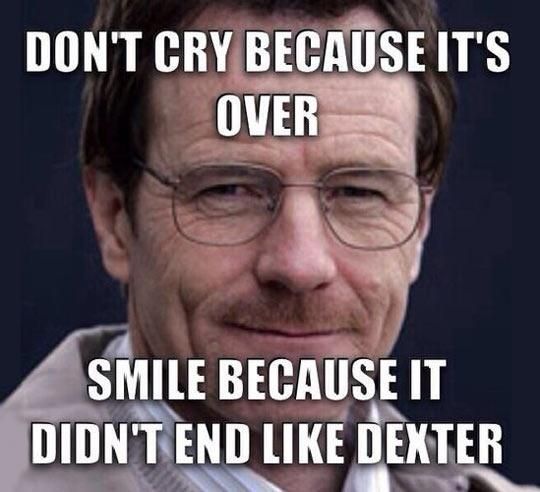
I do try to rehabilitate myself from my attitude (because I really like detective stories, so there has to be something from the 1990s-2000s that I like) with books that have an unusual twist or at least something that smells like non-ordinary. Chelsea Cain's Heartsick did manage to light a small spark, but in the end it didn't turn out to be as great as I thought, so I didn't bother writing anything about it. In principal, the idea was great, because female serial killers are rare both in real life and maybe in literature, too.
Darkly Dreaming Dexter was chosen as the next victim, because I used to watch the TV show. Lindsay's interpretation of a detective story/thriller is interesting and fresh, though, so I probably would have read this at some point anyway.
In some ways, our boy Dexter is a pretty regular psychopath: blends in the crowd, calm and collected, unable to feel empathy/pity/regret, and is a skillful manipulator. The only difference is that Dexter's foster father encouraged him to only kill criminals. No one knows, not colleagues nor his foster sister Deborah, that Miami police department is paying a serial killer's salary, a serial killer who loves cleanliness and order but is repelled by blood. Then another serial killer arrives in the city and wants Dexter's attention.
Although Miami isn't described that much, so the location could be any city in the country (my pet peeve in thrillers and detective stories, by the way), I was constantly thinking about the TV show while reading. My brain filled all the gaps, and I saw very clearly images of Dexter's department, hot and sunny streets, Hawaii shirts, and rustling palm trees in the tropical night.
I ran into trouble only when some of the characters were described as being different than what I'd grown used to. The book Dexter seems to be have more of a Patrick Bateman type of charm that draws women to him, Deb a curvacious bomb shell, and LaGuerta an unprofessional idiot. Basically, the only female characters are either bland (Rita), obnoxious (LaGuerta), or otherwise annoying (Deb).
However, despite its few shortcomings, Darkly Dreaming Dexter is still better written and more addictive than others of its kind, and its not unnecessarily padded with extra stuff. I also heard something about the book series taking a different turn right at the end than the TV show did, which would be perfect (the first installment already had a couple of differences in the plot, so I'm looking forward to where Lindsay is taking me next). I haven't yet grown attached to Dexter, but hopefully it'll happen in the future. After all, Michael C. Hall's performance was so good, that you almost didn't want Dexter to get caught. The battle of good and evil and all the grey morals in both the protagonist and the viewer were the best parts of the show.

I'll write more when I finish the entire series, but so far the gist is this: despite the entirely drool-worthy art the story hasn't yet grabbed me as much as I had hoped. I'm loving the mixture of noir and occultism, though, so maybe it just takes time to get the ball properly rolling.
%20%231).jpg)
Bitch Planet, a prison planet, is a place for all misbehaving females. Females who are excised from the society before the cancer spreads. This cancer of non-compliance is abhorred and feared, and it's the kind of disease that isn't only the object of disgust for the males in the dystopian world of Bitch Planet, but also for some of the men and women in our reality. Bitch Planet houses all the problem-infested women who dare to be themselves and who should have been allowed to roam free on Earth, because they should be the future. In the shower scene, a reversal of exploitation tropes, their naked bodies are of different shapes and sizes, not objects of voyeurism or inhumanly proportioned representations of fantasies.
What happens when the Fathers try to evaluate and fix Penny, an obese woman whose ideal version turns out to be herself? She's happy with just the way she looks. The men are confused and disappointed. It can't be right. Obesity is a fault. It's a disgusting mistake, a malfunction, that needs to be corrected. It's not womanly.
It's not just about the men, though. Women have no trouble promoting a parasitic worm diet on television or judging the appearance of others based on predetermined beauty standards. They have no trouble reinforcing the idea of compliance and bowing down to everyone until you're a complete wreck under all the pressure of acting like you have no personality. The division between masculinity and feminity is deeply engrained in the society, and if you dare to jump out of your box of a servile woman who has no right to express her opinion unless it conforms to the norms, you deserve to be imprisoned.
Dystopia isn't usually my thing, but the neon-coloured shackled hand showing the middle finger sums up Bitch Planet perfectly (and the fake advertisements at the back of each issue are freaking hilarious). It wants to make an impact on how women evaluate themselves, other people, and the society around them, and it wants to make it loudly, but it also has a tongue-in-cheek attitude about it all.
It's a shame the plot doesn't fully come together and that the characters don't seem to have a lot of personality outside of the message they represent. The art and general atmosphere and energy hark back to Barbarella (1968) and 60s and 70s trippy B-movies, though, and that's completely fantastic. The exaggeration of gender issues works, because they're simultaneously so uncomfortably close to today's society that you can't miss the relevancy.
DeConnick's voice is a welcome addition to the comic industry, and it's amazing how a brand new comic has already inspired countless of readers to express themselves more fully and embrace who they are, supposed imperfections and all. For that, Bitch Planet deserves all the praise it's gotten and will get. I'm looking forward to seeing how the story develops in the next volume.
What happens when the Fathers try to evaluate and fix Penny, an obese woman whose ideal version turns out to be herself? She's happy with just the way she looks. The men are confused and disappointed. It can't be right. Obesity is a fault. It's a disgusting mistake, a malfunction, that needs to be corrected. It's not womanly.
It's not just about the men, though. Women have no trouble promoting a parasitic worm diet on television or judging the appearance of others based on predetermined beauty standards. They have no trouble reinforcing the idea of compliance and bowing down to everyone until you're a complete wreck under all the pressure of acting like you have no personality. The division between masculinity and feminity is deeply engrained in the society, and if you dare to jump out of your box of a servile woman who has no right to express her opinion unless it conforms to the norms, you deserve to be imprisoned.
Dystopia isn't usually my thing, but the neon-coloured shackled hand showing the middle finger sums up Bitch Planet perfectly (and the fake advertisements at the back of each issue are freaking hilarious). It wants to make an impact on how women evaluate themselves, other people, and the society around them, and it wants to make it loudly, but it also has a tongue-in-cheek attitude about it all.
It's a shame the plot doesn't fully come together and that the characters don't seem to have a lot of personality outside of the message they represent. The art and general atmosphere and energy hark back to Barbarella (1968) and 60s and 70s trippy B-movies, though, and that's completely fantastic. The exaggeration of gender issues works, because they're simultaneously so uncomfortably close to today's society that you can't miss the relevancy.
DeConnick's voice is a welcome addition to the comic industry, and it's amazing how a brand new comic has already inspired countless of readers to express themselves more fully and embrace who they are, supposed imperfections and all. For that, Bitch Planet deserves all the praise it's gotten and will get. I'm looking forward to seeing how the story develops in the next volume.

Ok, first: the last issue's article about Cary Grant's love affair with acid is fucking hilarious. Good Housekeeping let him describe his experiences? Unreal. I definitely won't be telling my mom about Grant taking a dump on his doctor's floor, that'll crush her dreams.
Anyway.
The Fade Out. The ending gave me shivers. It's perfect, because in the tradition of the best film noirs, it's not hopeful and doesn't wrap everything into a tidy little bow. It leaves you unsure of what will happen next, yet sure that whatever will occur, it won't be anything nice. The lingering doom is upon every character, and some it reaches far quicker than others.
The art deserves yet another mention, because the colors and linework are just amazing. The lights of L.A., whether natural or electricity, either pop from the background or loom ominously through a window into a dark and musty room.
The movie industry is full of tragic fates, and I feel sad that there's plenty of material where you can take inspiration from. I wonder what secrets have never come to light? When you know something about what went on behind the scenes, watching even the most sweet and saccharine black and white movie from the golden age of Hollywood makes you a bit of melancholic.
Anyway.
The Fade Out. The ending gave me shivers. It's perfect, because in the tradition of the best film noirs, it's not hopeful and doesn't wrap everything into a tidy little bow. It leaves you unsure of what will happen next, yet sure that whatever will occur, it won't be anything nice. The lingering doom is upon every character, and some it reaches far quicker than others.
The art deserves yet another mention, because the colors and linework are just amazing. The lights of L.A., whether natural or electricity, either pop from the background or loom ominously through a window into a dark and musty room.
The movie industry is full of tragic fates, and I feel sad that there's plenty of material where you can take inspiration from. I wonder what secrets have never come to light? When you know something about what went on behind the scenes, watching even the most sweet and saccharine black and white movie from the golden age of Hollywood makes you a bit of melancholic.

I sensed an evening with a bowl of ice cream and Josie Schuller, the deadly and gorgeous contract killer, would be fun. I was right. When you think about it, being a 1960s housewife is a perfect smoke screen. The laconic husband (who kind of lacks personality) is wrapped up in his own affairs, not interested enough to actually suspect any of the excuses. I mean, why would a perfect little domestic goddess lie? What motive could she have, when all she ever does is gossip with the neighbors, do grocery shopping, cook, and clean. Not much what's going on between the couple feels genuine, but it's deliberate and makes the contrast of the situation more interesting.
As it emerges at one point in the story, the juxtaposition of being a cold-blooded killer and a wife ready to serve her family a hot dinner with a wide smile might become an issue at some point. Constantly switching between two different personalities can be dangerous, but also take its toll mentally. I'm hoping that aspect will be explored later, because juggling between two worlds might cause Josie, as good as she is, to make mistakes and therefore cause more tension.
And she really is good. Skilled in close combat, relentless, sassy, brutal. She's determined and isn't afraid to get down and dirty, even though a little blood on the dress is irksome. At first, the plot focuses on setting the scene by showing her working with one victim at a time, which might be boring when repeated too much, so fortunately a bigger plot line appears when her boss questions her professionalism. There's the issue of the mother-in-law, too, and I can't wait what happens with that in the next issues. Contrary to some of the complaints, there's actually plenty of material left to be dealt with, and countless of possibilities for plot development. I'm sure the next volume addresses some of the things left unexplained.
The art completes the package. The linework's amazing and I love the color palette, which has a bit of that retro-comic feel to it. It all fits to the sense of fun, and I appreciate that this doesn't try to be a deep satire about the 60s. The lack of an elaborate plot works for its advantage. Like a psychotic Doris Day movie with weapons thrown in the mix.
As it emerges at one point in the story, the juxtaposition of being a cold-blooded killer and a wife ready to serve her family a hot dinner with a wide smile might become an issue at some point. Constantly switching between two different personalities can be dangerous, but also take its toll mentally. I'm hoping that aspect will be explored later, because juggling between two worlds might cause Josie, as good as she is, to make mistakes and therefore cause more tension.
And she really is good. Skilled in close combat, relentless, sassy, brutal. She's determined and isn't afraid to get down and dirty, even though a little blood on the dress is irksome. At first, the plot focuses on setting the scene by showing her working with one victim at a time, which might be boring when repeated too much, so fortunately a bigger plot line appears when her boss questions her professionalism. There's the issue of the mother-in-law, too, and I can't wait what happens with that in the next issues. Contrary to some of the complaints, there's actually plenty of material left to be dealt with, and countless of possibilities for plot development. I'm sure the next volume addresses some of the things left unexplained.
The art completes the package. The linework's amazing and I love the color palette, which has a bit of that retro-comic feel to it. It all fits to the sense of fun, and I appreciate that this doesn't try to be a deep satire about the 60s. The lack of an elaborate plot works for its advantage. Like a psychotic Doris Day movie with weapons thrown in the mix.

Since I've managed to get myself addicted to the Buffy the Vampire Slayer comic, I didn't hesitate checking out the continuation of the first two Alien movies. Rewatching them was obviously loads of fun, and I'm starting to admire Ripley even more. The first film's claustrophobic atmosphere, the characters, the iconic scenes (like the bursting chest, which we all so fondly remember), and when Ripley finally manages to gain the respect of others (of which all but one are men) etc. When the aliens start wreaking havoc, it's just an exciting ride from start to finish, and I can't stress enough how much I love Geiger's design of the alien. The sequel is also entertaining, but I feel like its action-oriented approach doesn't work as well as the first one's stylistic choices and slow-burn sci-fi horror.
Anyway, at first I had a hard time getting into the comics, because my head just can't take even the slightest bit of scientific jargon. When the story got wind under its wings, reading flowed more easier. Some new interesting creatures appear when the teams explore more worlds, and overall the plots are alright. Devastating things happen, which makes the universe even more claustrophobic. Some aspects work, some not.
Addressing the art is kind of difficult, because it occasionally varies drastically between issues, ranging from beautiful linework and coloring to scenes that are just muddy color blotches. Some of it reminds me of certain 80s action flicks, which I appreciate in terms of color and overall style, but some characters were so poorly drawn they just looked like caricatures of themselves.
In Nightmare Asylum the text boxes and bubbles have for some reason been left uncolored, which makes it difficult to determine who the narrator is in each frame. An inexplicable personality change also occurs: before Newt was participating and trying to survive the best she could, but suddenly she's a wet puddle, who only sighs after her lover's body. Furthermore, I don't see why it's necessary to accentuate the curves of every single female character, even though they're wearing baggy jumpsuits. It's like they're participating in a wet jumpsuit competition. In space.
Although the stories are full of action, they're at the same time complex by examining the nature and biology of the alien colonies, but also the relationships of the humans the creatures are trying to squash. A recurrent theme of the universe is overestimating the power of the aliens. Thinking you're in complete control is a mistake. When something like the Bionational corporation is trying to exploit the creatures by hiding behind free enterprise and capitalism, chaos ensues.
The Aliens universe is also a great way to examine fear and its different forms. Can a human be as empty as the aliens and pretend to not know what fear is, like they do? In order to survive, is becoming an alien the best thing to pursue? Androids have also been developed further by giving them the belief that they're humans, and that creates one of the most harrowing scenes in the whole omnibus.
I have to agree with others about the ridiculously unnecessary name changes. It's Newt and Hicks. No reason to pretend otherwise, even though it messes with the timeline of the third film (which is crap anyway, so...).
The stories are bound to become repetitive and older material rehashed further in the next omnibuses (and some of the characters were admittedly horrifyingly one-dimensional), but just because I'm intrigued by where the things were left and because I still had fun with the stories, I'm continuing with the series in the future. I feel like the movies and the comics are different animals (or creatures) with slightly different forms and biology, and the enjoyment one gets from them is different, but they also complement each other.
Anyway, at first I had a hard time getting into the comics, because my head just can't take even the slightest bit of scientific jargon. When the story got wind under its wings, reading flowed more easier. Some new interesting creatures appear when the teams explore more worlds, and overall the plots are alright. Devastating things happen, which makes the universe even more claustrophobic. Some aspects work, some not.
Addressing the art is kind of difficult, because it occasionally varies drastically between issues, ranging from beautiful linework and coloring to scenes that are just muddy color blotches. Some of it reminds me of certain 80s action flicks, which I appreciate in terms of color and overall style, but some characters were so poorly drawn they just looked like caricatures of themselves.
In Nightmare Asylum the text boxes and bubbles have for some reason been left uncolored, which makes it difficult to determine who the narrator is in each frame. An inexplicable personality change also occurs: before Newt was participating and trying to survive the best she could, but suddenly she's a wet puddle, who only sighs after her lover's body. Furthermore, I don't see why it's necessary to accentuate the curves of every single female character, even though they're wearing baggy jumpsuits. It's like they're participating in a wet jumpsuit competition. In space.
Although the stories are full of action, they're at the same time complex by examining the nature and biology of the alien colonies, but also the relationships of the humans the creatures are trying to squash. A recurrent theme of the universe is overestimating the power of the aliens. Thinking you're in complete control is a mistake. When something like the Bionational corporation is trying to exploit the creatures by hiding behind free enterprise and capitalism, chaos ensues.
The Aliens universe is also a great way to examine fear and its different forms. Can a human be as empty as the aliens and pretend to not know what fear is, like they do? In order to survive, is becoming an alien the best thing to pursue? Androids have also been developed further by giving them the belief that they're humans, and that creates one of the most harrowing scenes in the whole omnibus.
I have to agree with others about the ridiculously unnecessary name changes. It's Newt and Hicks. No reason to pretend otherwise, even though it messes with the timeline of the third film (which is crap anyway, so...).
The stories are bound to become repetitive and older material rehashed further in the next omnibuses (and some of the characters were admittedly horrifyingly one-dimensional), but just because I'm intrigued by where the things were left and because I still had fun with the stories, I'm continuing with the series in the future. I feel like the movies and the comics are different animals (or creatures) with slightly different forms and biology, and the enjoyment one gets from them is different, but they also complement each other.

