Take a photo of a barcode or cover

mburnamfink 's review for:
Silent Knights: Blowing the Whistle on Military Accidents and Their Cover-Ups
by John J. Nance, Alan E. Diehl
What would you do if you learned that some organization was killing over 700 American servicemen and women a year? That the material losses were in the range of several billion dollars annually, impacting strategic readiness in both the short and long term. What if I told you that ranks of the victims extended from the most junior enlisted and flying officers, to generals, Cabinet Secretaries, and even the family of the President of the United States.
Well, if the perpetrating organization with the US military's own awful safety culture, the answer is denial and nothing, to the extent that veteran accident investigator Alan Diehl turned whistleblower and wrote this book. Silent Knights is aimed squarely at the intersection of several of my interests, but even for people less obsessed with air power, it is a thrilling and tragic story that goes HARD from beginning to end, starting the death of Lt. Tom Selfridge, the first aviation fatality in 1908, and continuing through the mid-90s.
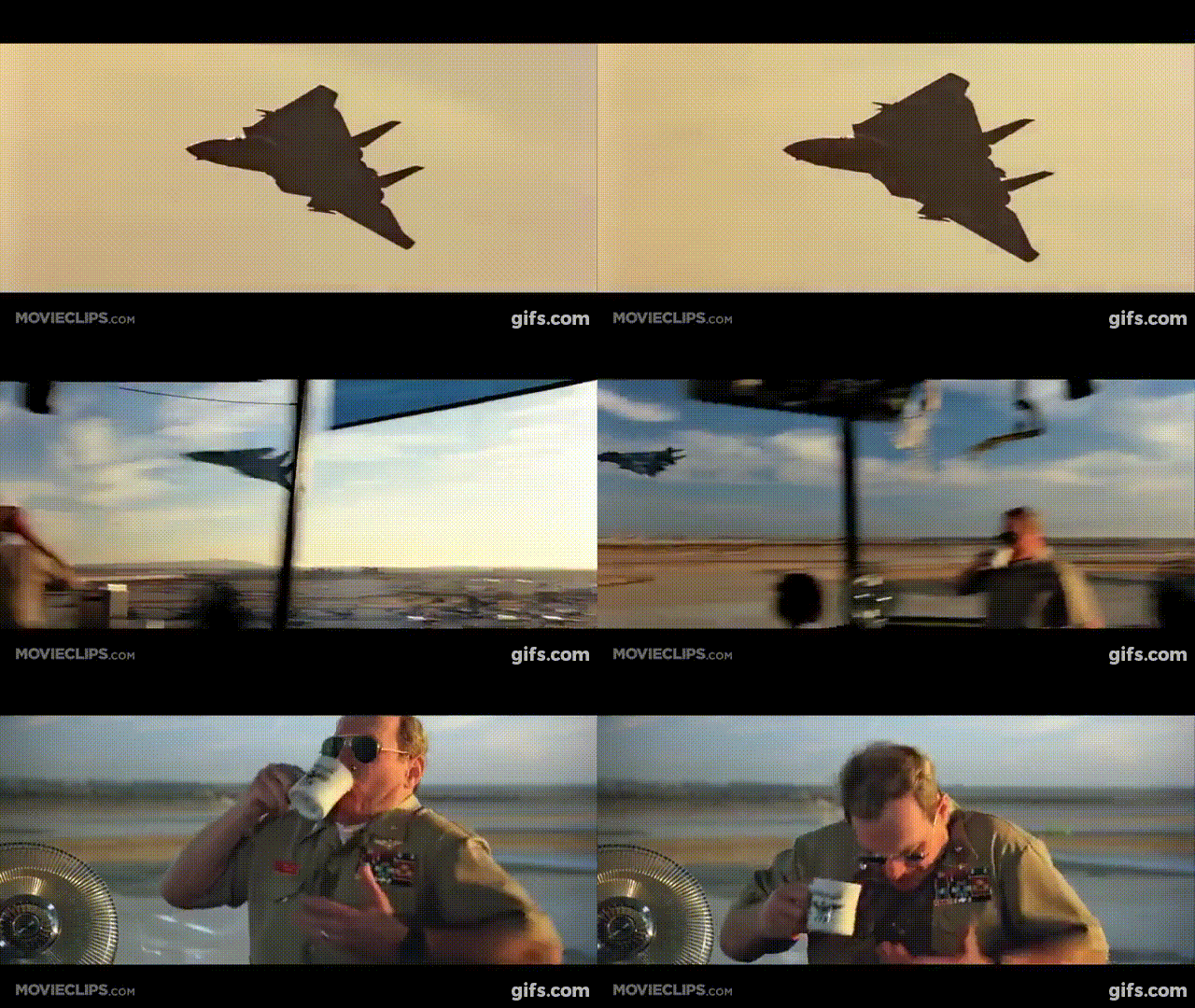
Maverick buzzing the tower in Top Gun. According to Diehl, F-14 accidents doubled after the movie came out
In the civilian world, air safety is ensured by a tripartite system. Operators, airlines such as United and Southwest, fly and maintain the aircraft. The Federal Aviation Authority (FAA) is the regulator, setting the standards and rules required for safety. And the National Transit Safety Bureau (NTSB) is an independent investigatory agency, responsible for figuring out want went wrong when planes crash, and how it can be prevented. The ongoing 737 MAX debacle is notable as an extended failure in the process, where lax design and manufacturing standards at Boeing, combined with regulatory deference from the FAA, lead to multiple fatal crashes, which are noteworthy because commercial aviation crashes are so rare.
However, the authority of the FAA and NTSB do not extend to the military. The military investigates itself, and as Diehl reveals in the dozens of case studies in this book, the primary goal of these investigations is to coverup and scapegoat. Rather than specialist investigators, investigations are done as tertiary duties by serving officers who lack both expertise and time to do a proper job, and who know that their future careers depend on being good soldiers who arrive at the proper conclusions: this was a tragic and unique accident due to a combination of pilot error and/or mechanical failure. There are no lessons to be learned, please ignore that this will repeat next month. At an even more basic level, the military keeps two separate sets of books on each accident, an Accident Investigative Review which is public and entirely bullshit, and a confidential Safety Investigative Review, which may contain some truth.
Following the professional principles of human factors engineering, Diehl argues that in his career, many accidents were the result of a systematic lapses in safety culture. Military aircraft are often old, poorly maintained, and not upgraded to even civilian standards in terms of navigation equipment, engine and avionic system reliability. Military operations which involve flying low, in darkness, or in bad weather, are inherently more dangerous than commercial flights, which mostly take place at over 30,000 feet in good conditions, however this inherent danger is not matching with a similar care for necessary equipment, such as night-vision goggle compatible cockpit lighting, ergonomically designed instruments that are easy to read, or even parachutes, as with the USAF Academy T-3A basic trainer!
An authoritarian culture that orders must be followed is necessary in war, but in training and peace time, this authoritarian attitude, along with macho pilot culture, leads to unnecessary risk taking. Weaker pilots are assigned dangerous aircraft and missions out of some sense that Darwinian winnowing is necessary (and shame if you happen to be a passenger or underneath this plane). Hotdog flying has lead to many deaths, including the 24 fatalities of the 1994 Green Ramp disaster at Fort Bragg, where an out of control F-16 crashed into a gathered body of paratroopers, and Fairchild B-52 crash, where notably unsafe pilot Lieutenant Colonel Arthur "Bud" Holland lost control of his bomber at low level while training for an air show.
Diehl wrote during the peace dividend era of the 1990s, when an overstretched military had to make do with less. Safety and training are ongoing up-front expenses, while accidents could be written off in many ways. Real safety culture would require an admission of failure and potential accountability on the part of senior leaders, such as former Air Force Chief of Staff General McPeak, and various junior "favored sons". While there are many honest and capable people working in the military, the whole system is designed to protect itself at the expense of victims and a few designated scapegoats, usually non-flying officers like maintainers and air traffic controllers who in fact had no ability to alter the course of events.
Diehl is strident in his criticism, and I believe he is absolutely correct. War is inherently dangerous, and this danger means that military personnel should have the best chance to accomplish the mission and return home. But dying during training or due to pride and corner-cutting is a shameful betrayal of heroism and sacrifice. More generally, the tripartite aviation system of independent bodies for Do/Regulate/Investigate offers a strong model for successful policy outcomes in many dimensions.
Diehl makes a modest policy proposal of establishing an independent Military Transit Safety Bureau to handle investigations in an open and competent manner. Perhaps the Air Force could also follow FAA guidelines, particularly when it operates civilian derived transport aircraft. I might also suggest opening the Pandora's Box of relaxing the Feres Doctrine, which gives the military sovereign immunity against accidental deaths. After all, this is America, and if want anything to change you'll have to sue.
The one weakness of this book is that it is over 20 years old now, and perhaps events have moved on. Have things gotten better since this book was published? Well, Commerce Secretary Ron Brown's death, along with 34 others in a military transport crash has not been repeated. The long wars in Afghanistan and Iraq shifted the focus from accidents to IEDs, although there certainly have been plenty of accidents since then (sorry, paywall link. Let me know if you want to read it). Major Beau Biden died of brain cancer, which both he and his father believe was caused by the presence of burn pits during his deployments. The extensive ProPublica reporting on the 2017 USS McCain collision, which killed 10 sailors through exhaustion and poor safety culture, suggests that nothing has changed; that the worst enemy of the American serviceman squats in an immense five-sided building outside Arlington Virginia.
Well, if the perpetrating organization with the US military's own awful safety culture, the answer is denial and nothing, to the extent that veteran accident investigator Alan Diehl turned whistleblower and wrote this book. Silent Knights is aimed squarely at the intersection of several of my interests, but even for people less obsessed with air power, it is a thrilling and tragic story that goes HARD from beginning to end, starting the death of Lt. Tom Selfridge, the first aviation fatality in 1908, and continuing through the mid-90s.
Maverick buzzing the tower in Top Gun. According to Diehl, F-14 accidents doubled after the movie came out
In the civilian world, air safety is ensured by a tripartite system. Operators, airlines such as United and Southwest, fly and maintain the aircraft. The Federal Aviation Authority (FAA) is the regulator, setting the standards and rules required for safety. And the National Transit Safety Bureau (NTSB) is an independent investigatory agency, responsible for figuring out want went wrong when planes crash, and how it can be prevented. The ongoing 737 MAX debacle is notable as an extended failure in the process, where lax design and manufacturing standards at Boeing, combined with regulatory deference from the FAA, lead to multiple fatal crashes, which are noteworthy because commercial aviation crashes are so rare.
However, the authority of the FAA and NTSB do not extend to the military. The military investigates itself, and as Diehl reveals in the dozens of case studies in this book, the primary goal of these investigations is to coverup and scapegoat. Rather than specialist investigators, investigations are done as tertiary duties by serving officers who lack both expertise and time to do a proper job, and who know that their future careers depend on being good soldiers who arrive at the proper conclusions: this was a tragic and unique accident due to a combination of pilot error and/or mechanical failure. There are no lessons to be learned, please ignore that this will repeat next month. At an even more basic level, the military keeps two separate sets of books on each accident, an Accident Investigative Review which is public and entirely bullshit, and a confidential Safety Investigative Review, which may contain some truth.
Following the professional principles of human factors engineering, Diehl argues that in his career, many accidents were the result of a systematic lapses in safety culture. Military aircraft are often old, poorly maintained, and not upgraded to even civilian standards in terms of navigation equipment, engine and avionic system reliability. Military operations which involve flying low, in darkness, or in bad weather, are inherently more dangerous than commercial flights, which mostly take place at over 30,000 feet in good conditions, however this inherent danger is not matching with a similar care for necessary equipment, such as night-vision goggle compatible cockpit lighting, ergonomically designed instruments that are easy to read, or even parachutes, as with the USAF Academy T-3A basic trainer!
An authoritarian culture that orders must be followed is necessary in war, but in training and peace time, this authoritarian attitude, along with macho pilot culture, leads to unnecessary risk taking. Weaker pilots are assigned dangerous aircraft and missions out of some sense that Darwinian winnowing is necessary (and shame if you happen to be a passenger or underneath this plane). Hotdog flying has lead to many deaths, including the 24 fatalities of the 1994 Green Ramp disaster at Fort Bragg, where an out of control F-16 crashed into a gathered body of paratroopers, and Fairchild B-52 crash, where notably unsafe pilot Lieutenant Colonel Arthur "Bud" Holland lost control of his bomber at low level while training for an air show.
Diehl wrote during the peace dividend era of the 1990s, when an overstretched military had to make do with less. Safety and training are ongoing up-front expenses, while accidents could be written off in many ways. Real safety culture would require an admission of failure and potential accountability on the part of senior leaders, such as former Air Force Chief of Staff General McPeak, and various junior "favored sons". While there are many honest and capable people working in the military, the whole system is designed to protect itself at the expense of victims and a few designated scapegoats, usually non-flying officers like maintainers and air traffic controllers who in fact had no ability to alter the course of events.
Diehl is strident in his criticism, and I believe he is absolutely correct. War is inherently dangerous, and this danger means that military personnel should have the best chance to accomplish the mission and return home. But dying during training or due to pride and corner-cutting is a shameful betrayal of heroism and sacrifice. More generally, the tripartite aviation system of independent bodies for Do/Regulate/Investigate offers a strong model for successful policy outcomes in many dimensions.
Diehl makes a modest policy proposal of establishing an independent Military Transit Safety Bureau to handle investigations in an open and competent manner. Perhaps the Air Force could also follow FAA guidelines, particularly when it operates civilian derived transport aircraft. I might also suggest opening the Pandora's Box of relaxing the Feres Doctrine, which gives the military sovereign immunity against accidental deaths. After all, this is America, and if want anything to change you'll have to sue.
The one weakness of this book is that it is over 20 years old now, and perhaps events have moved on. Have things gotten better since this book was published? Well, Commerce Secretary Ron Brown's death, along with 34 others in a military transport crash has not been repeated. The long wars in Afghanistan and Iraq shifted the focus from accidents to IEDs, although there certainly have been plenty of accidents since then (sorry, paywall link. Let me know if you want to read it). Major Beau Biden died of brain cancer, which both he and his father believe was caused by the presence of burn pits during his deployments. The extensive ProPublica reporting on the 2017 USS McCain collision, which killed 10 sailors through exhaustion and poor safety culture, suggests that nothing has changed; that the worst enemy of the American serviceman squats in an immense five-sided building outside Arlington Virginia.